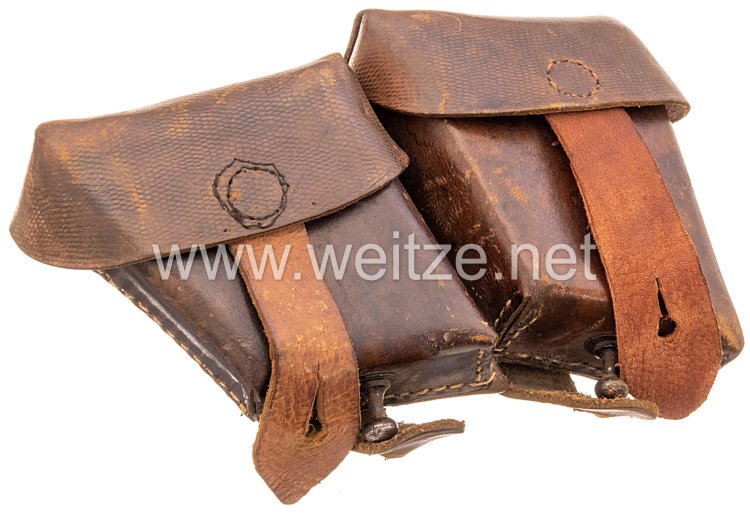
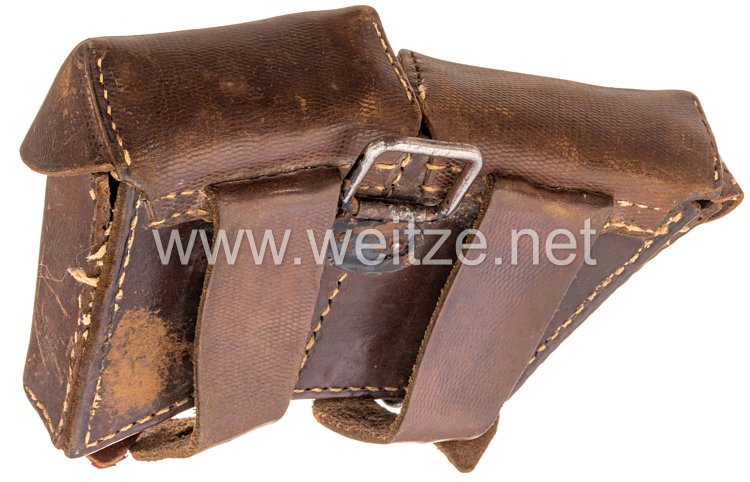
Austria/Austro-Hungarian Monarchy World War I Ammunition Pouch for Rifle M 1908

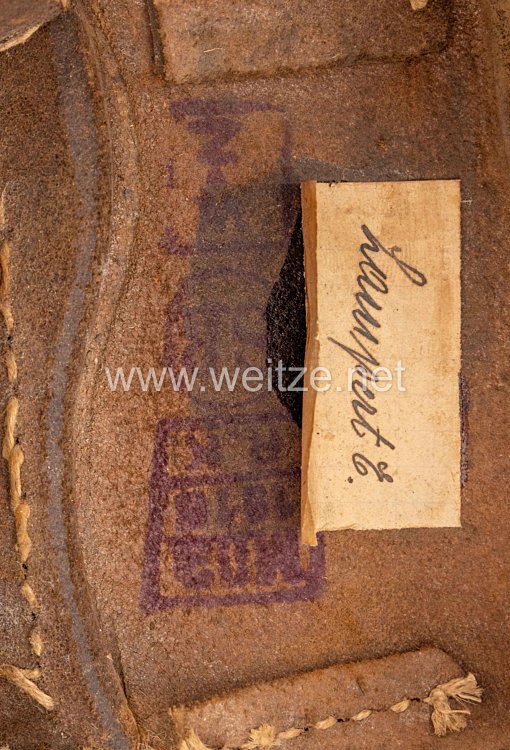
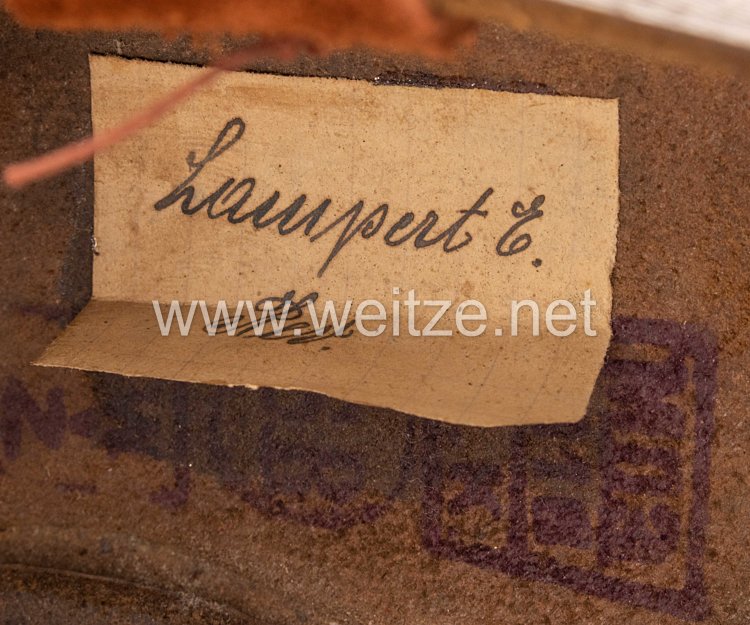
Circa 1918. Brown leather with metal fittings, label glued inside lid reading “Lampert E. Rev.”, below it chamber stamp M11a 1918 R. 13. SB WZ. Seams partially widened or torn, one leather tongue replaced. Condition 2-.
433912
120,00

Austria/Austro-Hungarian Monarchy World War I Ammunition Pouch for Rifle M 1908

The cartridge pouch for the M 1908 rifle represents a characteristic piece of equipment from the Austro-Hungarian Army during World War I. This particular example from 1918 documents the standard equipment of Austro-Hungarian infantry in the late phase of the war and provides insight into the industrial production of military equipment under the difficult conditions of the final war years.

The Mannlicher M 1895/08, for which this cartridge pouch was designed, was a further development of the proven Mannlicher M 1895. The 1908 modification primarily concerned the sighting device and minor technical improvements. The rifle fired the 8×50mmR cartridge and was loaded using stripper clips containing five rounds each. Soldiers typically carried several of these cartridge pouches on their belt to ensure sufficient ammunition for combat situations.

The construction of the cartridge pouch followed Austro-Hungarian military regulations and was made from robust brown leather. The metal fittings served both for attachment to the belt and for secure closure of the lid. Inside, the pouch provided space for multiple stripper clips, arranged so that the soldier could quickly access them. The practical design enabled rapid ammunition retrieval even under combat conditions.

The label glued inside the lid reading “Lampert E. Rev.” indicates the inspector or control officer, while the chamber stamp “M11a 1918 R. 13. SB WZ” provides important information about its manufacture. Such stamps were mandatory in the Austro-Hungarian military system and served to trace production. The marking “M11a” refers to the chamber office department, “1918” indicates the production year, while the additional abbreviations point to the specific production facility and control authority.

The year 1918 marks the last and most desperate year of war for the Dual Monarchy. Industrial production was under enormous pressure, raw materials became scarce, and manufacturing quality increasingly suffered under wartime conditions. This possibly explains the condition of this piece with widened and torn seams and a replaced leather tongue. Such repairs were quite common in the field, as replacements were not always readily available.

Leather processing for military equipment followed strict quality standards in the Austro-Hungarian Monarchy. Various suppliers throughout the entire monarchy – from Vienna to Prague to Budapest – were commissioned with production. The brown coloring of the leather was not only aesthetic but also practical, as it made dirt less visible and made the material more resistant to weather conditions.

In tactical deployment, ammunition supply was of crucial importance. An infantryman of the Austro-Hungarian Army typically carried 90 to 100 cartridges, distributed across multiple cartridge pouches. During attacks or prolonged engagements, this supply could be quickly exhausted, making ammunition supply lines of paramount importance. The cartridge pouches therefore had to be not only functional but also durable.

The condition of the object – with signs of use, repairs, and the stamp from the final year of war – makes it an authentic historical witness to the material culture of World War I. Such equipment items were often discarded, repurposed, or lost after the war, making preserved examples historically valuable today. They document not only military equipment but also industrial capacities, supply problems, and the daily life of soldiers at the front.

The Austro-Hungarian Army dissolved in autumn 1918 with the collapse of the monarchy. Equipment items were distributed among successor states or taken home by soldiers. Many pieces found civilian or military use in the interwar period in the new states of Austria, Hungary, Czechoslovakia, and Yugoslavia. This cartridge pouch survived more than a century and preserves the memory of a vanished epoch of European history.