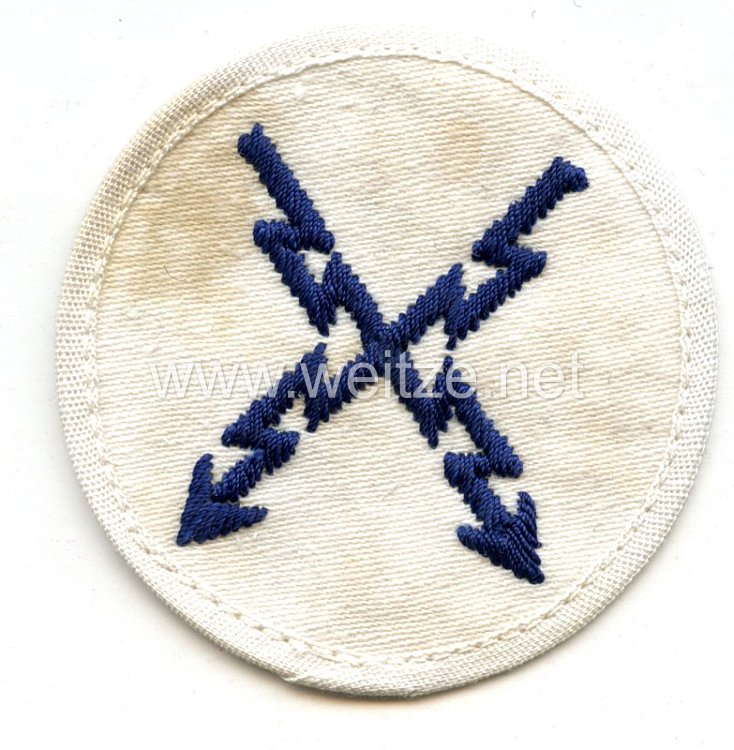
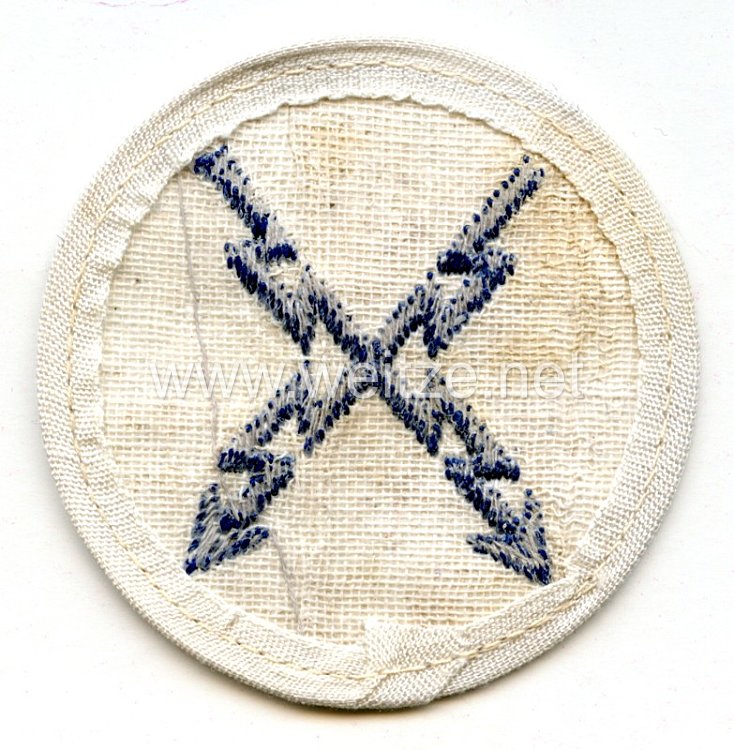
Kriegsmarine Sleeve Insignia for Teleprinter Career Path
The Kriegsmarine Sleeve Badge for Teletype Career Path represents a fascinating example of the complex career and specialization identification system within the German Navy during World War II. These special badges served to visually identify specialist personnel and reflected the increasing technological sophistication of naval warfare.
Teletypes, also known as teleprinters, were of enormous importance for modern naval warfare from the 1930s onward. They enabled the rapid and precise transmission of orders, situation reports, and encrypted messages between land stations, ships, and fleet formations. The Kriegsmarine recognized early on the necessity of training highly qualified personnel for the operation and maintenance of these complex devices.
The career path badges of the Kriegsmarine were regulated by various directives, particularly the Dress Regulations for the Kriegsmarine (M.Dv. No. 456). These regulations specified exactly which badges were to be worn on which uniform parts and in what form. The teletype career path belonged to the technical specialist careers within the communications services.
This particular badge was intended for the white blouse, indicating the summer uniform or tropical uniform. The Kriegsmarine strictly distinguished between different uniform variants: the dark blue work and dress uniform, the white summer uniform, and special tropical suits. Each of these uniforms required appropriately adapted badges, with dark blue or black embroidery typically used on white backgrounds to ensure sufficient contrast.
The sleeve badges were normally worn on the left upper arm and displayed the respective specialization through specific symbols. For communications personnel, these were frequently stylized lightning bolts or technical symbols symbolizing the electrical nature of their work. The teletype career path as an independent specialization only developed with the increasing deployment of this technology in the late 1930s.
Training as a teletype operator in the Kriegsmarine was demanding and included not only the operation of the equipment but also basic knowledge in electrical engineering, Morse code, encryption procedures, and communications tactics. Graduates of this training were highly valued specialists who were deployed both ashore in naval command centers and aboard larger warships.
The manufacture of such badges was carried out by various authorized manufacturers who worked according to the exact specifications of the Kriegsmarine. Quality varied depending on the year of production and manufacturer, with early wartime productions often exhibiting higher craftsmanship quality than later production under wartime conditions.
The condition 2 rating of this badge indicates a worn but well-preserved example. In the collector hierarchy, this typically denotes a piece with slight signs of use but without significant damage, repairs, or material loss. Such badges were preserved in large numbers as souvenirs after demobilization in 1945 or entered the military collectibles market.
The historical significance of these badges lies not only in their military function but also in their testimonial value regarding the technological development of naval warfare. Teletype technology revolutionized maritime communications and enabled coordination over great distances that would have been unthinkable previously. At the same time, the badge makes visible the specialization and professionalization of the Kriegsmarine, which developed various technical career paths with their own training routes and career structures.
Today, such badges serve as important artifacts for understanding the organizational structure and technological priorities of the German Navy during World War II. They represent a period when naval forces were rapidly adapting to new communications technologies that would fundamentally change the nature of maritime command and control.