Model 1913 Saber for Officers of the Russian Infantry, with Applied Order of St. George, Awarded for Valor

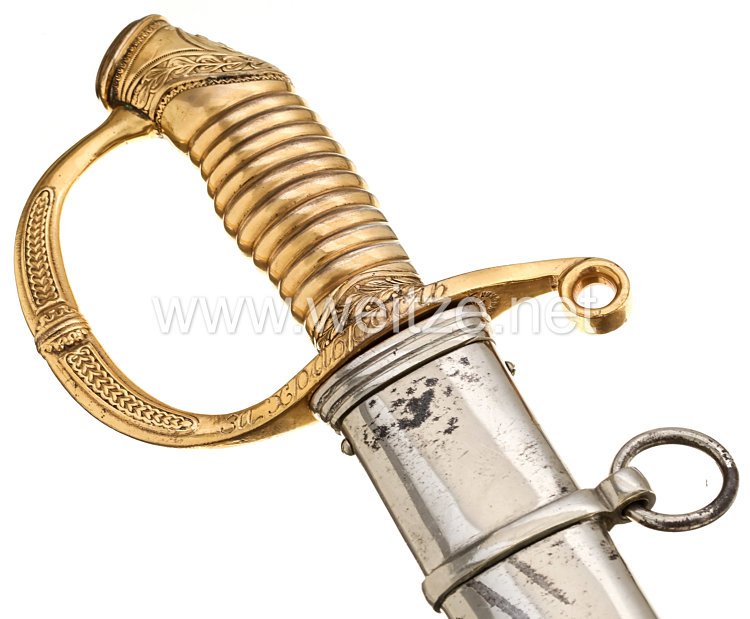
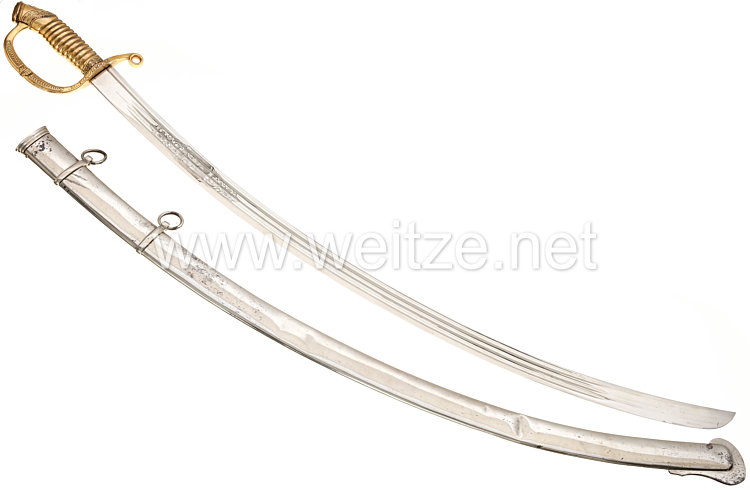
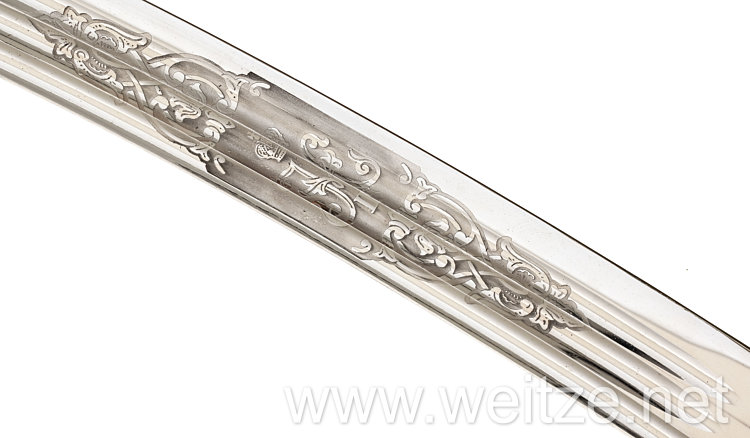
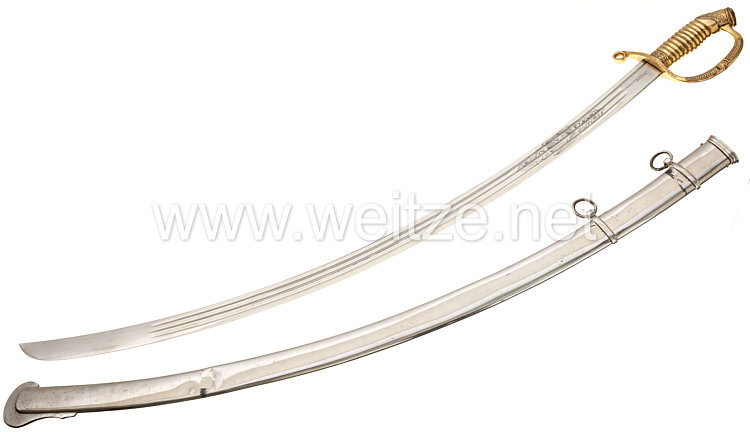
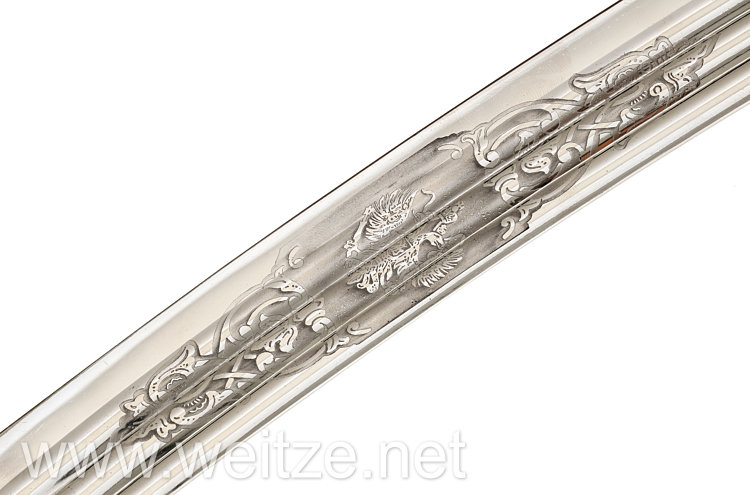
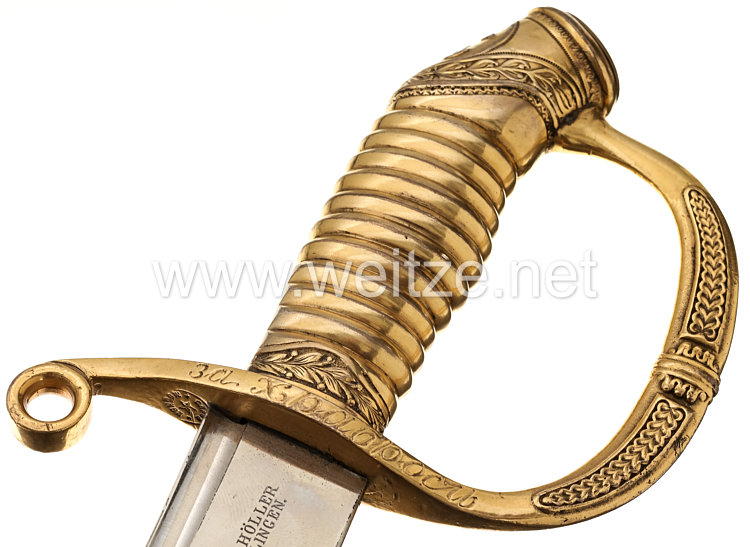
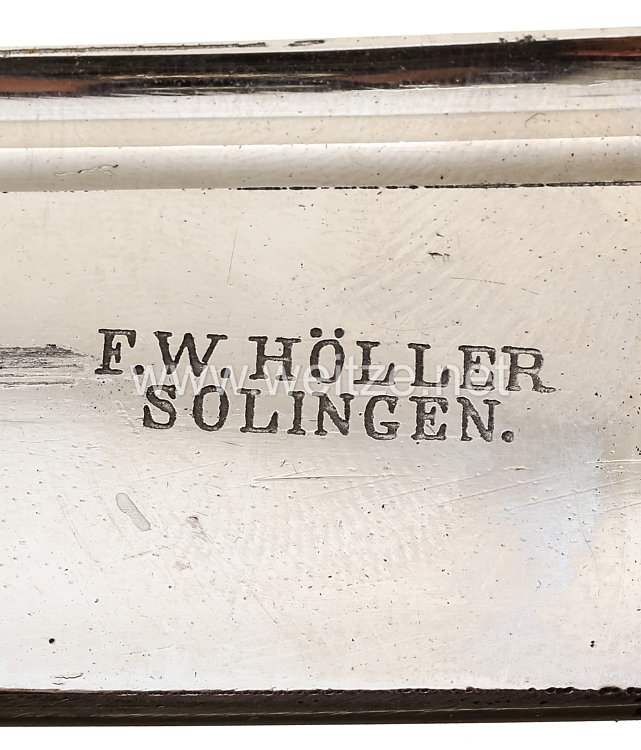
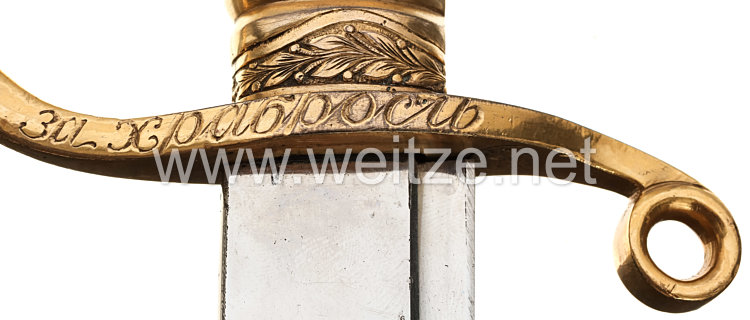
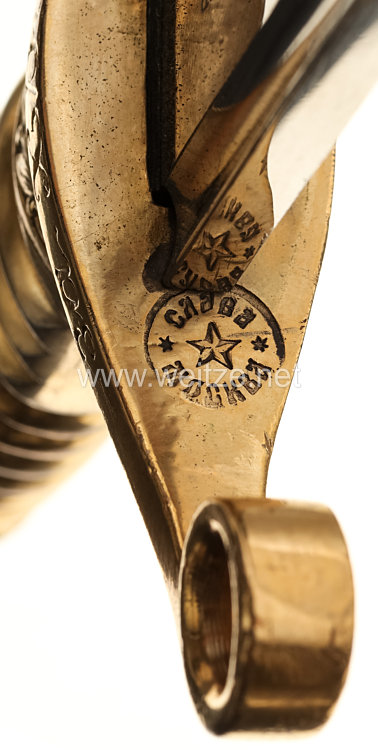
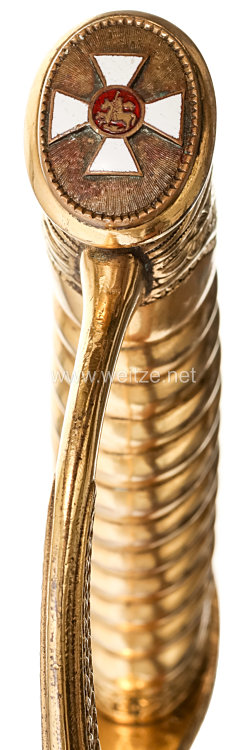
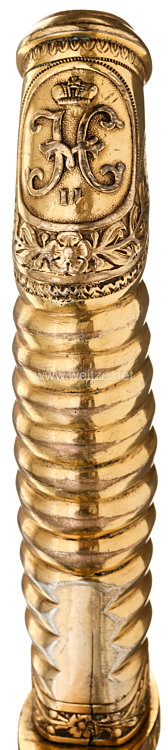
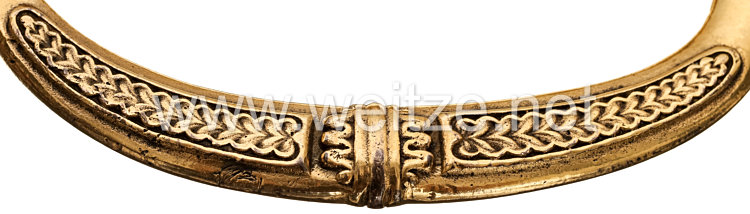
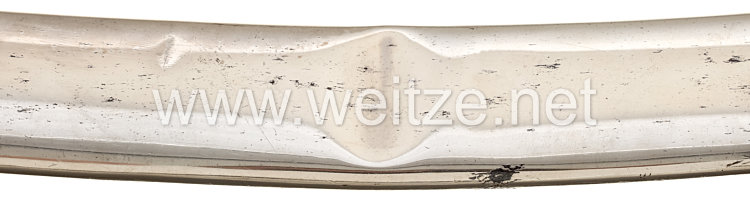
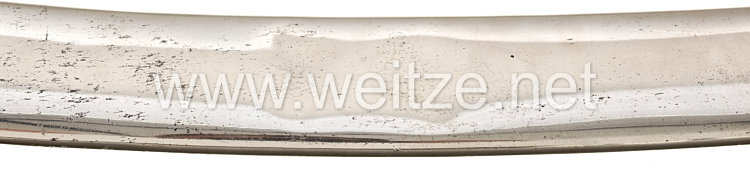
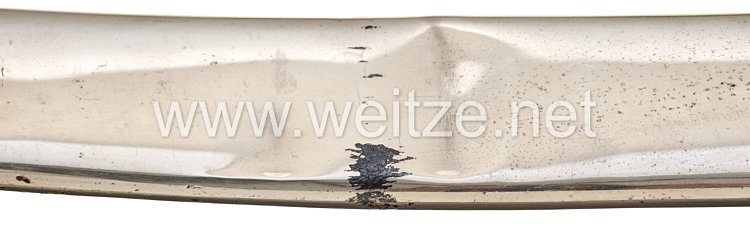
Double-edged triple-fullered nickel-plated blade, etched floral cartouches with Tsarist cipher “N II” and Russian double-headed eagle. Maker's mark “F. W. Höller Solingen” on the reverse edge. Gilt brass guard with floral decoration, cipher “N II”. Cyrillic inscription “For Valor” engraved on both sides of the crossguard, as well as maker's stamp “Slava Moskva”. Applied enameled miniature of the Order of St. George on the pommel, possibly made in exile. With matching, though non-regulation scabbard of nickel-plated steel, partially slightly dented. Length 99 cm.

Price upon request.
216811

Model 1913 Saber for Officers of the Russian Infantry, with Applied Order of St. George, Awarded for Valor

The Russian Infantry Officer's Sabre Model 1913 represents a significant chapter in the development of Russian edged weapons and simultaneously marks the end of an era. As one of the last officially introduced sabre types of the Russian Empire before World War I, it embodies the military tradition of the Tsarist era in its final form.

The Model 1913 was introduced during military reforms under Tsar Nicholas II (reigned 1894-1917), whose cipher “N II” characteristically appears on the blades of these weapons. The introduction occurred during a period of intense modernization of the Russian armed forces following the bitter experiences of the Russo-Japanese War (1904-1905). While firearms increasingly dominated battlefields, the officer's sabre retained its significance as a status symbol and sign of military authority.

The construction of the M 1913 followed proven European standards. The triple-fullered blade was a technical feature that combined stability with reduced weight. The fullers (elongated grooves in the blade) decreased weight without compromising structural integrity. The nickel plating served as corrosion protection and gave the weapon a ceremonial appearance.

Particularly noteworthy is the manufacturer's mark “F. W. Höller Solingen”. The city of Solingen in the Rhineland had been the center of European blade production for centuries. Russia traditionally sourced high-quality blades from Solingen, which were then fitted with hilts in Russian workshops. This German-Russian trade relationship was firmly established until World War I. The Höller firm was one of several Solingen manufacturers that produced for various European armies.

The brass stirrup guard with its gilding and floral decoration corresponds to typical Russian aesthetics of the period. The stirrup guard provided hand protection and became the standard form for Russian officer sabres from the late 19th century. The Tsar's cipher on the hilt underscored loyalty to the monarch and the officer's position as a direct servant of the Crown.

Of particular historical significance is the Cyrillic engraving “За Храбрость” (Za Chrabrost - For Bravery) on the crossguard. This inscription identifies the sabre as an honor weapon. In the Russian army, the bestowal of weapons “For Bravery” was a significant decoration that recognized personal courage in combat. Such awards were strictly regulated and recorded in the officer's service records.

The manufacturer's stamp “Slava Moskva” (Slava = Glory) indicates a Moscow workshop that possibly performed the assembly and finishing. Moscow housed several significant arms manufactories that produced for the army.

The most extraordinary feature of this sabre is the enameled miniature of the Order of St. George on the pommel. The Imperial Military Order of Saint George was Russia's highest military decoration for officers, founded in 1769 by Catherine the Great. The Order was divided into four classes, with the fourth class being most frequently awarded. The attachment of the Order to a weapon was unusual and could indicate a later modification, possibly in exile.

After the October Revolution of 1917 and the subsequent Civil War, hundreds of thousands of officers, soldiers, and civilians fled Russia. This White Emigration dispersed across Europe, Asia, and America. Emigrated officers often preserved their uniforms and weapons as the last material connection to their lost homeland. In exile communities, especially in Paris, Berlin, and Belgrade, workshops emerged that manufactured military insignia and decorations for veterans - partly as replacements for lost originals, partly to maintain military tradition.

The mentioned “exile production” of the enameled miniature could indicate this practice. Many emigrants had their weapons embellished with additional decorations to document their awards or affirm their identity as Tsarist officers.

The non-regulation scabbard is also typical for the turbulent history of such objects. During the Revolution, Civil War, and emigration, original scabbards were often lost and replaced with available alternatives.

Today, such sabres are important witnesses to a vanished world. They document not only the military equipment of Tsarist Russia but also the personal stories of bravery, loss, and exile that shaped the 20th century.