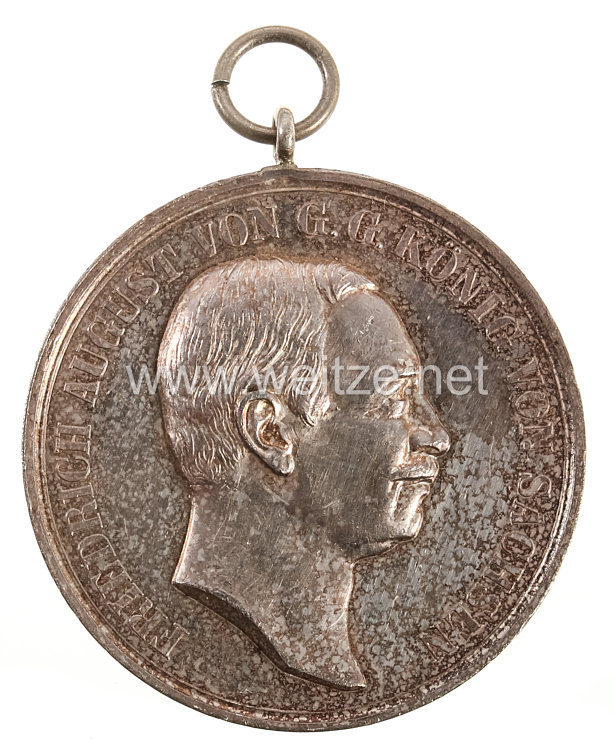
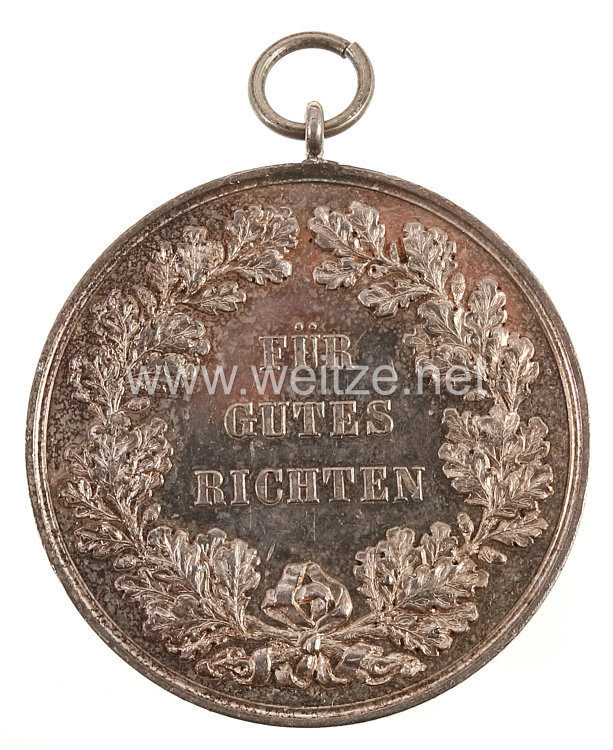
Saxony Kingdom Friedrich-August 1904-1918 Large Silver Artillery Marksmanship Medal "For Good Aiming"

with portrait "Friedrich-August King of Saxony", silver 42 mm, condition 2.
375211
200,00

Saxony Kingdom Friedrich-August 1904-1918 Large Silver Artillery Marksmanship Medal "For Good Aiming"

The Saxon silver artillery shooting medal "Für Gutes Richten" (For Good Aiming) represents a significant testament to the military decoration practice in the Kingdom of Saxony during the reign of King Friedrich August III (1904-1918). This medal was awarded to artillerymen who distinguished themselves through exceptional marksmanship and outstanding shooting performance.

Historical Context

Friedrich August III, the last King of Saxony, ascended to the throne in 1904 and reigned until his abdication in November 1918 at the end of World War I. His reign was characterized by the modernization of the Saxon army and its integration into the Imperial German armed forces. The Kingdom of Saxony, despite being part of the German Empire, maintained its own contingent within the German army, including its own artillery units.

Artillery assumed an increasingly important role in military warfare in the early 20th century. Technological developments, particularly the introduction of quick-firing guns and improved sighting devices, required highly skilled gunners. The systematic training and motivation of artillerymen through awards such as this shooting medal was therefore of considerable strategic importance.

Description and Design

The medal was crafted from silver and measures 42 mm in diameter, making it a substantial decoration. The obverse displays the portrait of King Friedrich August, surrounded by his titles. This representation of the monarch emphasizes the personal connection between the sovereign and the decorated soldiers, as well as the recognition of their achievements by the King himself.

The reverse typically bears the inscription "Für Gutes Richten", often complemented by military symbols such as crossed gun barrels or other artillery-specific emblems. The design followed the heraldic and artistic traditions of the Saxon royal house and reflects the aesthetics of the Wilhelmine era.

Award Practice

These shooting medals were awarded during regular shooting exercises and competitions of Saxon artillery units. The Saxon army conducted systematic shooting training in which soldiers had to demonstrate their skills. The best marksmen received these medals in recognition of their performance.

There were various grades of shooting medals: alongside the large silver medal, smaller versions existed as well as bronze variants for lower performance levels. The large silver medal represented a particularly honorable decoration and was awarded only to the most outstanding marksmen.

Military Historical Significance

In the context of World War I (1914-1918), artillery gained unprecedented importance. The "Queen of Weapons" dominated the battlefields and caused the majority of casualties. Soldiers who had earned such shooting medals before the war formed the backbone of experienced artillery crews deployed in the great material battles of the war.

Saxon artillery units fought on all fronts of World War I and earned a reputation for professionalism and reliability. The peacetime training promoted by the shooting medal system proved valuable for warfare.

The End of the Monarchy

With the November Revolution of 1918 and Friedrich August III's abdication on November 13, 1918, not only did the monarchy in Saxony end, but also the tradition of these royal decorations. The medals from the era of Friedrich August III thus became the last of their kind and document a vanished military and political order.

Collector Value and Preservation

Today, these medals are sought-after collector's items that document the military culture of the German Empire. The stated condition 2 (according to numismatic grading scale) indicates a very well-preserved specimen with only minor signs of wear. Such pieces are particularly valuable for researching Saxon military history and decoration practices in the German Empire.