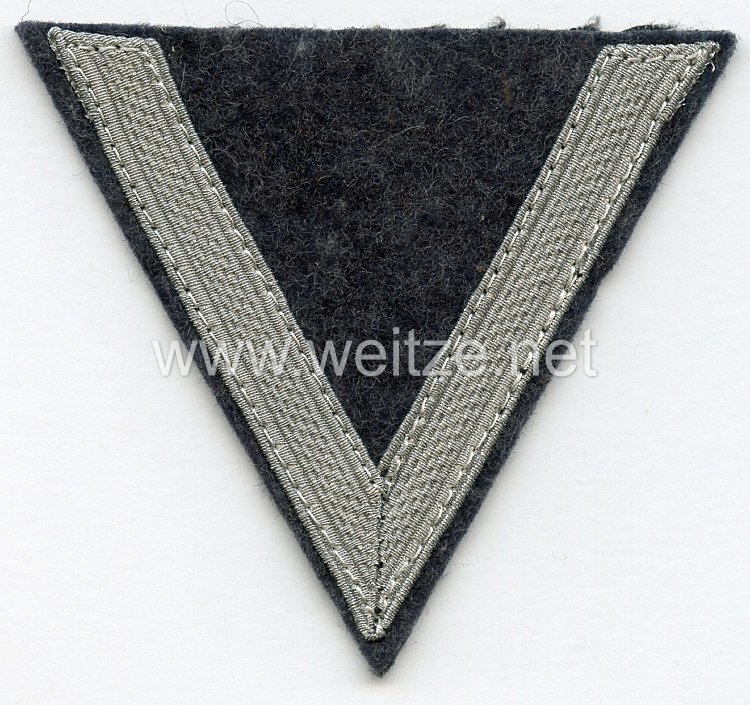
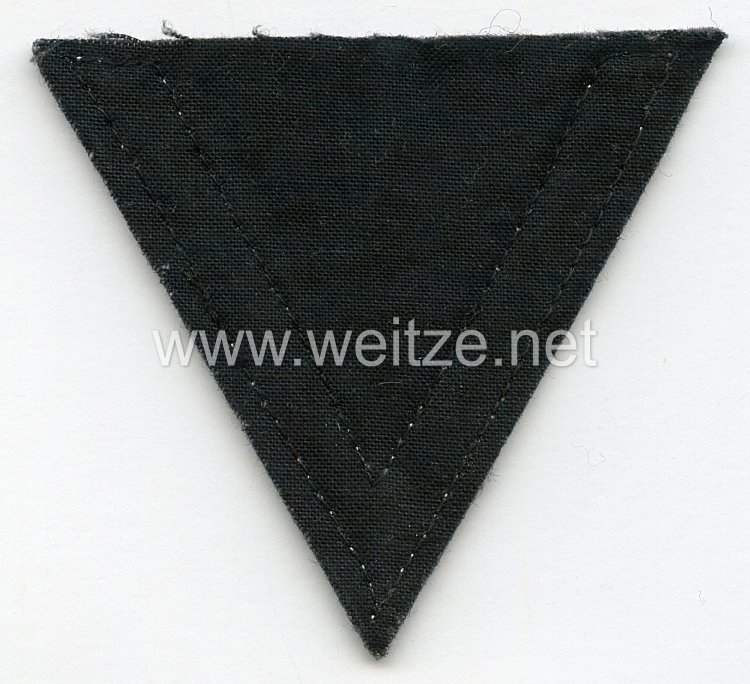
Luftwaffe Sleeve Insignia Private First Class
The Luftwaffe sleeve insignia for Gefreiter (lance corporal) represents a significant example of the military rank insignia of the Third Reich, used in the German Air Force between 1935 and 1945. These badges were essential components of the complex system for identifying ranks and played an important role in the military hierarchy of the Wehrmacht.
The Luftwaffe was officially founded on February 26, 1935, after National Socialist Germany publicly rejected the restrictions of the Treaty of Versailles. Under the leadership of Hermann Göring, the Luftwaffe quickly developed into one of the most modern air forces of its time. With the establishment of this branch of service, a comprehensive system of uniforms and rank insignia was introduced that differed from those of the Army (Heer) and Navy (Kriegsmarine).
The rank of Gefreiter formed the lowest level of enlisted ranks above the simple soldier (Flieger in the Luftwaffe). This rank designation had a long history in German military tradition and was already used in the Prussian Army. The Gefreiter was exempt from certain guard duties and was considered an experienced soldier who had distinguished himself through reliability and loyalty to duty.
The sleeve insignia for Luftwaffe Gefreiter were worn on the left upper arm of the uniform jacket in accordance with the Wehrmacht dress regulations. They typically consisted of a single chevron made from aluminum braid or lace. The characteristic light blue or blue-gray base color of Luftwaffe uniforms formed the background for these rank insignia, which stood out clearly through their metallic color.
The production of these insignia was carried out by various military and civilian manufacturers authorized by the Wehrmacht. Quality and workmanship could vary depending on the manufacturer, year of production, and intended use. Early examples from the pre-war period and the first years of the war often showed higher craftsmanship quality than later productions, where material shortages and accelerated manufacturing led to simplified designs.
The wearing system of these insignia was precisely regulated. They were either sewn directly onto the uniform or attached to a cloth-backed carrier that was then affixed to the uniform. The exact position on the upper arm was specified in service regulations to ensure a uniform appearance of the troops.
In the daily military life of the Luftwaffe, these rank insignia played an important practical role. They enabled immediate recognition of a soldier's rank and thus his position in the military hierarchy. This was particularly important for the chain of command and military discipline. Gefreiter held certain privileges over simple Flieger but did not yet carry junior leadership responsibilities like Obergefreiter or non-commissioned officers.
During the course of the war, millions of these insignia were produced and issued. The Luftwaffe grew from approximately 20,000 personnel in 1935 to over 1.9 million members by 1944. A significant proportion of these soldiers held the rank of Gefreiter, making these insignia among the most common rank badges of the Luftwaffe.
From a military-historical perspective, these insignia are today important testimonies of German military history of the 20th century. They document not only the rank system and uniforming of the Luftwaffe but also the craft standards, production methods, and material conditions of their time of origin. For collectors and historians, they offer insights into the organizational structure and daily life of the Wehrmacht.
The preservation and scientific documentation of such military-historical objects is important for understanding this era. They serve in museums and collections as illustrative material for historical research and education, whereby the historical context and critical examination of the history of National Socialism must always be paramount.