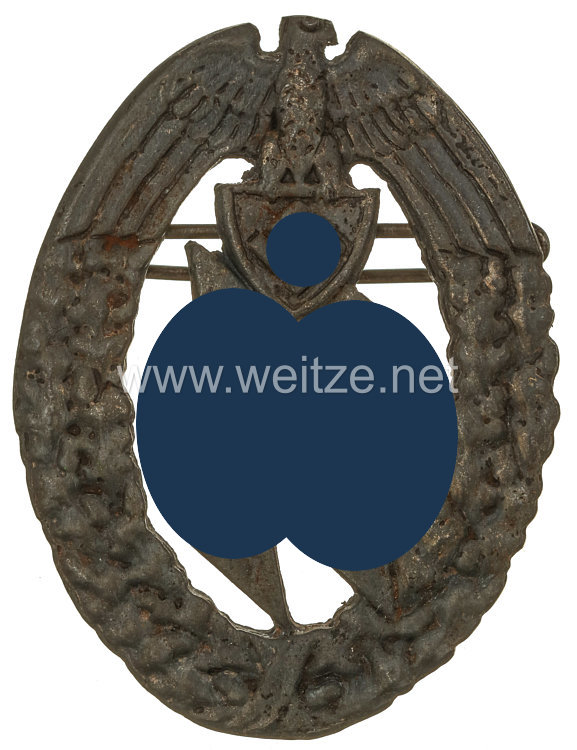
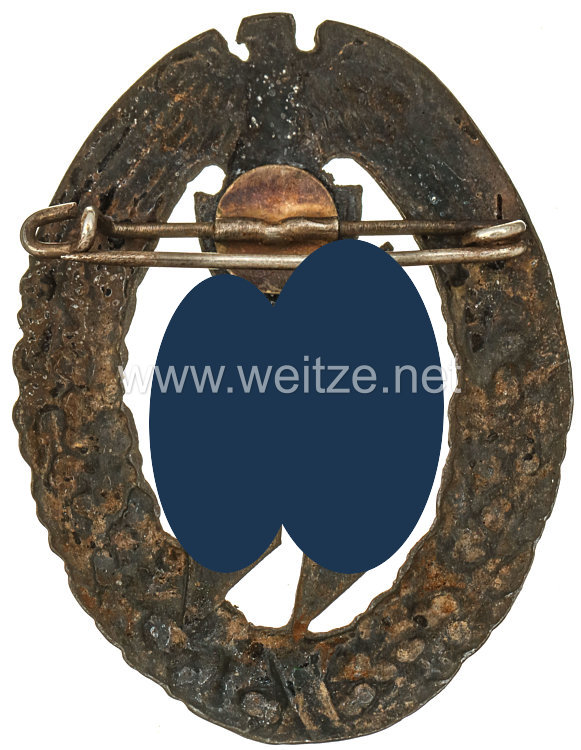
Erinnerungsabzeichen in Bronze der Einsatzstaffel der DM in Kroatien
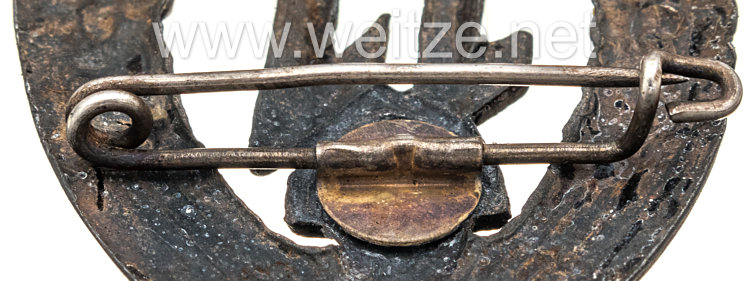
um 1943. Steckabzeichen aus Feinzink hohlgeprägt und getönt, rückseitig an ergänzter Tragenadel. Getragen, Zustand 2-.
Dazu die Fotokopie einer Verleihungsurkunde zu dem Abzeichen.
Das Erinnerungsabzeichens der Einsatzstaffel in Bronze wurde an alle alle Angehörigen der ES verliehen, die einen ununterbrochenen 6-monatigen Dienst in der ES versehen hatten.
Die Einsatzstaffel der Deutschen Mannschaft war eine paramilitärische nationalsozialistische Miliz im Unabhängigen Staat Kroatien während des Zweiten Weltkrieges. Für Personalfragen und politische Erziehung war formell der deutsche „Volksgruppenführer“ Branimir Altgayer zuständig, faktisch aber kommandierte der spätere Hauptsturmführer der Waffen-SS Jakob Lichtenberger die Mannschaft. In der DM sollten „erbgesunde, rassisch und weltanschaulich einwandfreie Männer über 21 (in Ausnahmefällen über 18) Jahre zwecks mannschaftlicher Erziehung und körperlicher Ertüchtigung“ zusammengefasst werden. Die Einsatzstaffel der Deutschen Mannschaft wurde vom kroatischen Staatsführer Ante Pavelić durch das „Gesetzesdekret über die Errichtung einer Miliz der Deutschen Volksgruppe im Rahmen der Kroatischen Ustascha-Miliz im Unabhängigen Staate Kroatien“ vom 31. Juli 1941 gebildet. Der Einsatz der ES erfolgte im Rahmen der Ustascha-Milizen, wobei die Hauptaufgabe der Schutz der von Deutschen bewohnten Ortschaften war. Zunächst war die Stärke der ES auf ein Bataillon begrenzt, doch aufgrund der wachsenden Bedrohung durch Partisanen wurden bald zusätzliche Einheiten gebildet. Bis zum 1. Juni 1942 erreichte die ES eine Stärke von 1.500 Mann, während zwei Reserve-Bataillone weitere 1.200 Mann umfassten. Entsprechend der Vereinbarung zwischen der kroatischen Regierung und der deutschen Besatzungsmacht vom 16. September 1941 sollten die Volksdeutschen in eigenen Verbänden innerhalb der kroatischen Armee dienen. 10 Prozent der Wehrpflichtigen eines Jahrganges sollten jedoch in der Waffen-SS, dienen. Ab Juni 1942 sollten die deutschen Wehrpflichtigen zwischen 17 und 30 Jahren auf Beschluss Heinrich Himmlers in der 7. SS-Freiwilligen-Gebirgs-Division „Prinz Eugen“ Dienst tun. Bis Ende April 1943 wurde die ES aufgelöst und die Mannschaften in Einheiten der Waffen-SS und der Polizei überführt.
Soldaten der Einsatzstaffel trugen ab 1941 anfänglich Uniformen der Kroatischen Heimwehr (Hrvatsko Domobranstvo), ab Anfang 1942 dann Uniformen im Stil der Waffen-SS. Auf dem rechten schwarzen Kragenspiegel trugen sie zwei einfache, senkrecht stehende weiße / silberne Wolfsangeln, auf dem linken schwarzen Kragenspiegel die den linken Kragenspiegeln der Waffen-SS nachempfundenen weißen / silbernen Dienstgradabzeichen mit sechszackigen Sternen (die aus der k.u.k.- und kroatischen Tradition übernommen wurden).
Dazu die Fotokopie einer Verleihungsurkunde zu dem Abzeichen.
Das Erinnerungsabzeichens der Einsatzstaffel in Bronze wurde an alle alle Angehörigen der ES verliehen, die einen ununterbrochenen 6-monatigen Dienst in der ES versehen hatten.
Die Einsatzstaffel der Deutschen Mannschaft war eine paramilitärische nationalsozialistische Miliz im Unabhängigen Staat Kroatien während des Zweiten Weltkrieges. Für Personalfragen und politische Erziehung war formell der deutsche „Volksgruppenführer“ Branimir Altgayer zuständig, faktisch aber kommandierte der spätere Hauptsturmführer der Waffen-SS Jakob Lichtenberger die Mannschaft. In der DM sollten „erbgesunde, rassisch und weltanschaulich einwandfreie Männer über 21 (in Ausnahmefällen über 18) Jahre zwecks mannschaftlicher Erziehung und körperlicher Ertüchtigung“ zusammengefasst werden. Die Einsatzstaffel der Deutschen Mannschaft wurde vom kroatischen Staatsführer Ante Pavelić durch das „Gesetzesdekret über die Errichtung einer Miliz der Deutschen Volksgruppe im Rahmen der Kroatischen Ustascha-Miliz im Unabhängigen Staate Kroatien“ vom 31. Juli 1941 gebildet. Der Einsatz der ES erfolgte im Rahmen der Ustascha-Milizen, wobei die Hauptaufgabe der Schutz der von Deutschen bewohnten Ortschaften war. Zunächst war die Stärke der ES auf ein Bataillon begrenzt, doch aufgrund der wachsenden Bedrohung durch Partisanen wurden bald zusätzliche Einheiten gebildet. Bis zum 1. Juni 1942 erreichte die ES eine Stärke von 1.500 Mann, während zwei Reserve-Bataillone weitere 1.200 Mann umfassten. Entsprechend der Vereinbarung zwischen der kroatischen Regierung und der deutschen Besatzungsmacht vom 16. September 1941 sollten die Volksdeutschen in eigenen Verbänden innerhalb der kroatischen Armee dienen. 10 Prozent der Wehrpflichtigen eines Jahrganges sollten jedoch in der Waffen-SS, dienen. Ab Juni 1942 sollten die deutschen Wehrpflichtigen zwischen 17 und 30 Jahren auf Beschluss Heinrich Himmlers in der 7. SS-Freiwilligen-Gebirgs-Division „Prinz Eugen“ Dienst tun. Bis Ende April 1943 wurde die ES aufgelöst und die Mannschaften in Einheiten der Waffen-SS und der Polizei überführt.
Soldaten der Einsatzstaffel trugen ab 1941 anfänglich Uniformen der Kroatischen Heimwehr (Hrvatsko Domobranstvo), ab Anfang 1942 dann Uniformen im Stil der Waffen-SS. Auf dem rechten schwarzen Kragenspiegel trugen sie zwei einfache, senkrecht stehende weiße / silberne Wolfsangeln, auf dem linken schwarzen Kragenspiegel die den linken Kragenspiegeln der Waffen-SS nachempfundenen weißen / silbernen Dienstgradabzeichen mit sechszackigen Sternen (die aus der k.u.k.- und kroatischen Tradition übernommen wurden).