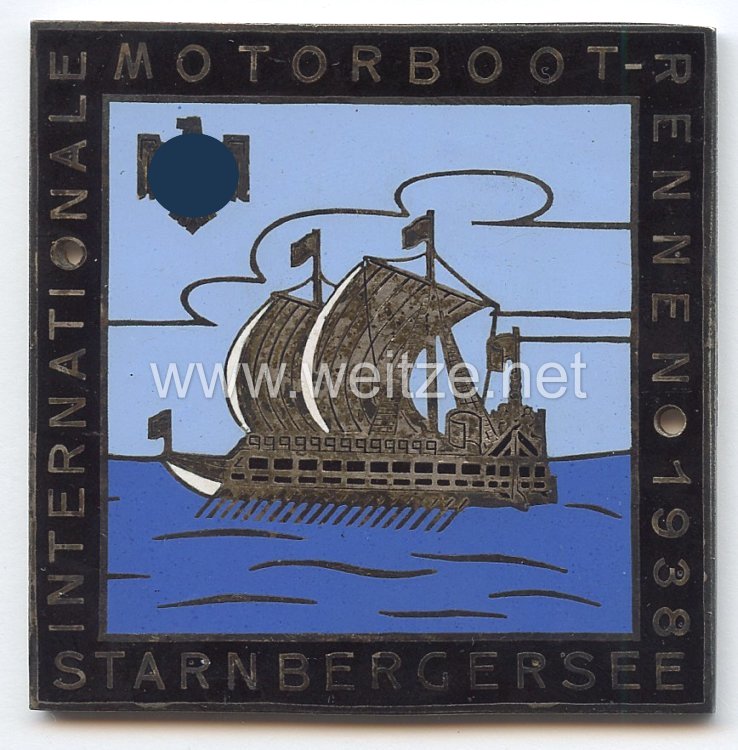
National Socialist Reich League for Physical Exercise (NSRL) - Non-Wearable Participant Plaque - “International Motorboat Races 1938 Starnberger See”

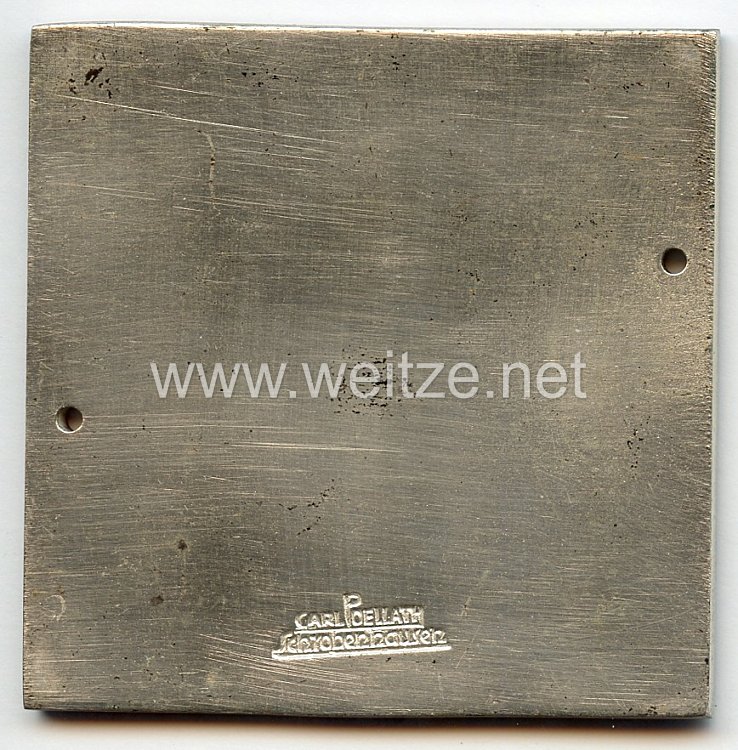
Silver-plated and enameled iron, 68 x 70 mm, with 2 holes, maker: Carl Poellath Schrobenhausen, condition 2.
331610
280,00

National Socialist Reich League for Physical Exercise (NSRL) - Non-Wearable Participant Plaque - “International Motorboat Races 1938 Starnberger See”

The Nationalsozialistische Reichsbund für Leibesübungen (NSRL), or National Socialist League of the Reich for Physical Exercise, was the central sports organization of Nazi Germany. Following the seizure of power in 1933, all German sports associations were forcibly integrated into this umbrella organization, which was subordinate to the Reich Sports Leader. This participant plaque documents an International Motorboat Race at Lake Starnberg in 1938, a prestigious sporting event designed to demonstrate the sporting and technological ambitions of the Nazi regime.

The NSRL was created in 1938 by renaming the Deutscher Reichsbund für Leibesübungen (DRL), or German Reich League for Physical Exercise, to make the ideological orientation of sports even more explicit. Under the leadership of Reich Sports Leader Hans von Tschammer und Osten (1887-1943), sports were completely placed in the service of Nazi ideology. At its peak, the organization encompassed over 40,000 sports clubs with several million members.

Lake Starnberg in Upper Bavaria was a preferred venue for motorboat races in the 1930s. The waters offered ideal conditions for high-speed racing, and the scenic surroundings were perfect for propaganda events. International motorboat races were specifically promoted by the Nazi regime to demonstrate technical superiority and athletic prowess. These events attracted not only German but also international participants and served the regime's external presentation.

The plaque itself is a typical example of the NSRL's culture of commemoration. It was manufactured by the renowned maker Carl Poellath from Schrobenhausen, a company that had specialized in the production of badges, medals, and plaques since 1778. The Poellath firm was one of the main suppliers to Nazi organizations and produced a variety of insignia for the Party, Wehrmacht, and various subdivisions.

The technical execution of the plaque demonstrates the high craftsmanship of the period: silver-plated iron with enameling, dimensions of 68 x 70 mm, and two holes for mounting. As a non-wearable plaque, it was not intended for wearing on uniforms but served as a keepsake or for display. The enameling in the typical colors of Nazi organizations and the precise workmanship make such pieces characteristic testimonies of contemporary metalworking art.

The year 1938 was significant for the Nazi regime, marked by the annexation of Austria in March (Anschluss) and the Munich Agreement in September. Sporting events such as the motorboat race at Lake Starnberg served to convey an image of normality and peacefulness while aggressive expansion policies were simultaneously being pursued. Motor sports held particular significance as they symbolized technical progress and speed – values that the regime claimed for itself.

Motorboat racing was a popular sport in the interwar period, combining both athletic and technical aspects. Germany had a strong tradition in motorboat sports and produced several world record holders. The races were frequently staged with great propagandistic effort, with press coverage and newsreels highlighting the superiority of German technology and engineering.

From a historical perspective, such plaques are important contemporary documents. They not only evidence the organization and execution of sporting events under the Nazi regime but also the systematic appropriation of sports for ideological purposes. Every sporting event was used to spread the National Socialist worldview and demonstrate the supposed superiority of the “Aryan race.”

Today, these objects are subjects of study for historians and collectors of military-historical items. They document the omnipresence of Nazi symbolism in everyday life and the total permeation of all areas of life by Nazi ideology. The preservation of such objects in museums and collections serves historical education and enlightenment about this dark period of German history.