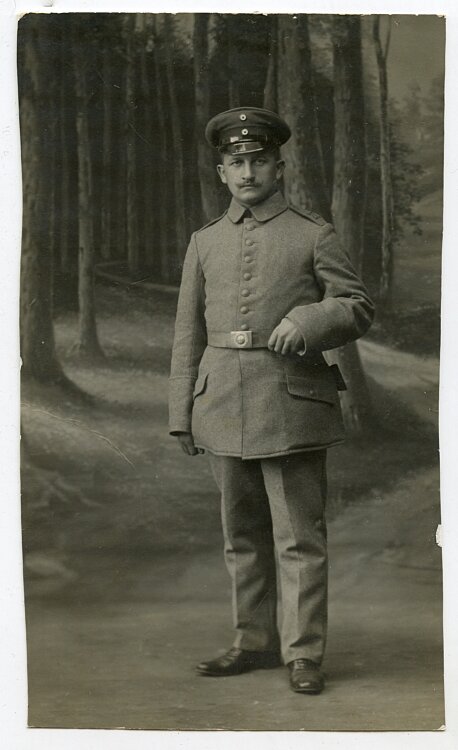
World War I Photograph, Prussian Member of the 27th Regiment
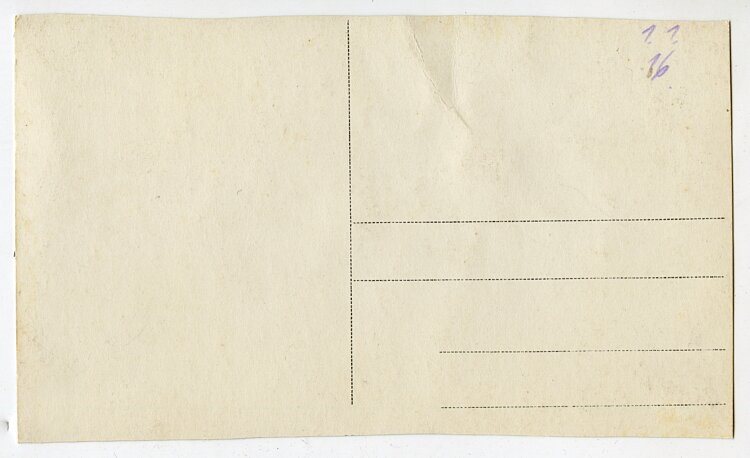
This photograph from the First World War depicts a member of the 27th Regiment of the Prussian Army and represents an authentic testament to the military portrait photography of that dramatic era. The postcard-sized image exemplifies a widespread practice whereby soldiers had their photographs taken to leave a memento for their loved ones or to document their military identity.
The 27th Regiment most likely refers to the Infantry Regiment No. 27, which had a long and distinguished history in the Prussian Army. This regiment was originally established in the 18th century and was garrisoned in Wolfenbüttel in the Duchy of Brunswick. As part of the X Army Corps, the regiment participated in numerous campaigns, including the German unification wars of the 19th century and ultimately the First World War from 1914 to 1918.
Military portrait photography evolved into a significant phenomenon in the late 19th century. With the spread of photographic technology, studio portraits of soldiers became increasingly affordable and popular. These photographs served multiple purposes: they were personal mementos for families, documents of military affiliation, and expressions of pride in one's uniform and service to the fatherland. The postcard format, as seen in this specimen, was particularly practical as it could be easily mailed and preserved.
The uniform and equipment visible in such photographs followed strict Prussian uniform regulations. At the outbreak of the First World War, Prussian infantrymen still wore the characteristic Pickelhaube (spiked helmet) and the traditional field-gray uniform, which had replaced the older, more colorful uniforms since 1910. The regiment number was typically visible on shoulder straps or on the helmet. As the war progressed, uniforms became increasingly simplified and adapted to the requirements of trench warfare, with the Stahlhelm M1916 (steel helmet) replacing the Pickelhaube from 1916 onwards.
The 27th Infantry Regiment experienced intense combat operations on various fronts during the First World War. Like most German infantry regiments, it was involved in the mobilization of August 1914 and participated in the initial offensives of the war. The unit fought on both the Western Front in France and Belgium and at times on the Eastern Front. The soldiers experienced the horrors of modern warfare: trench warfare, artillery bombardments, gas attacks, and the devastating battles of attrition such as at Verdun and the Somme.
The condition of the photograph, with its trimmed edges, is typical of the handling of such personal documents. Photographs were often cut to fit into frames, lockets, or photo albums. These physical alterations tell their own story about the appreciation and use of the image by its owners over the decades.
Such photographs today possess significant historical and collectible value. They are not only military-historical documents but also social-historical sources that provide insight into the lives, identities, and experiences of ordinary soldiers. While official war photographs often served propagandistic purposes, private portrait photographs reveal the individual faces behind the uniforms.
For historical research, such photographs are valuable for studying uniform details, rank insignia, and equipment items. They help trace the development of military clothing and equipment and can, when additional information about the photographed person is available, contribute to the reconstruction of biographies and regimental histories.
The preservation of such documents is of great importance for cultural memory. They remind us of a time of tremendous upheaval, of the suffering of millions of soldiers and their families, and of the profound consequences of the First World War for Europe and the world. Each of these images represents an individual fate in a war that redrew the political map of Europe and shaped the 20th century.