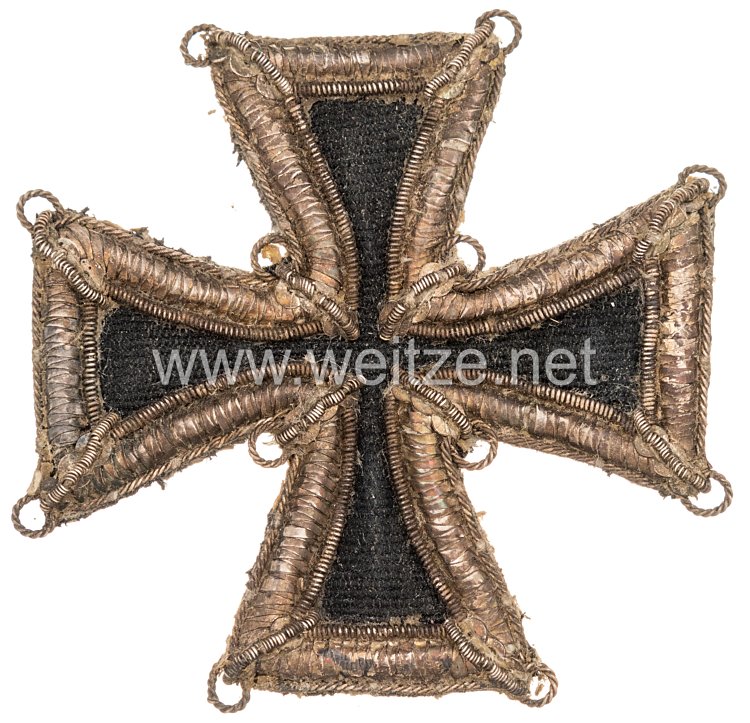
Iron Cross 1813 1st Class - hand-embroidered execution!

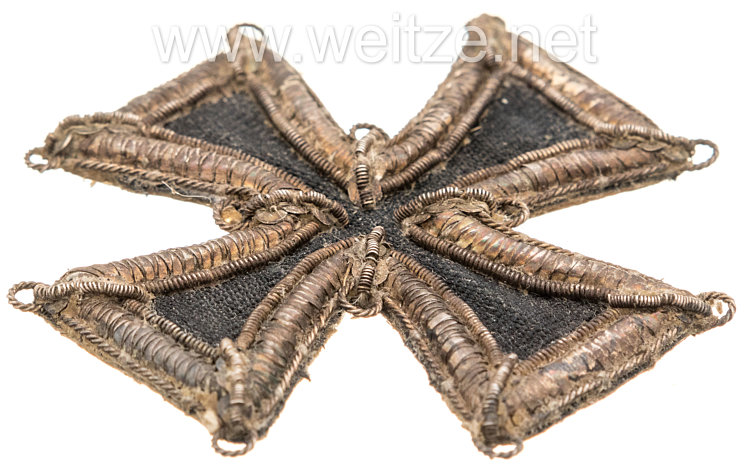
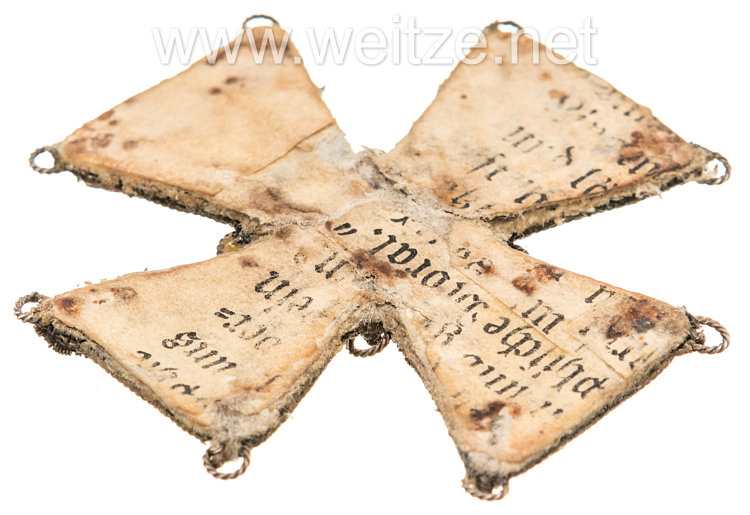
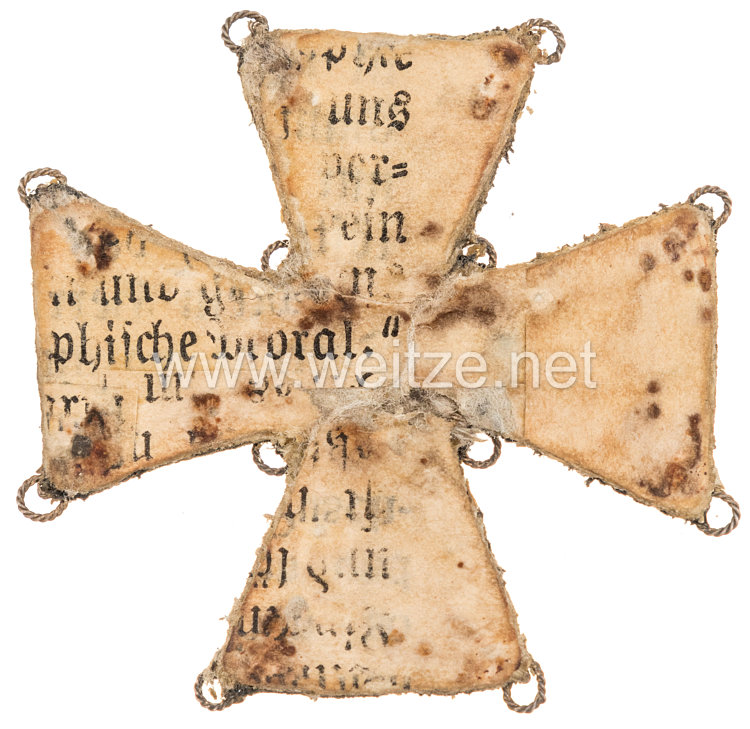
This is a special individual fabrication for the tunic. The representation of the iron core in black silk rep, around the edge a thin continuous silver cord. The silver bezel embroidered in high relief with silver thread, the corners reinforced with sequins and silver wire, on the 4 cross arms each with 2 attachment loops, reverse with old paper backing. Height 42 mm. Worn piece with beautiful patina. Condition 2.
An extremely rare individual piece, very seldom found!
369708
6.500,00

Iron Cross 1813 1st Class - hand-embroidered execution!

The Iron Cross 1st Class of 1813 represents one of the most significant and historically important decorations in Prussian and later German military history. This particular hand-embroidered version represents an extraordinary variant of this prestigious award, which was instituted during the Wars of Liberation against Napoleon.

King Frederick William III of Prussia instituted the Iron Cross on March 10, 1813 in Breslau, at a time when Prussia was engaged in the struggle against Napoleonic domination. The institution occurred on his birthday and on the anniversary of the accession of his deceased consort Queen Louise. The order was intended to recognize military merit without regard to rank or origin—a revolutionary concept for that era.

The design of the Iron Cross came from the architect and master builder Karl Friedrich Schinkel, one of the most important representatives of Prussian Classicism. The characteristic form with its widening arms and concave sides became one of the most recognizable military symbols ever created. The colors black and silver symbolized the Prussian national colors and referred to the iron times of hardship.

The hand-embroidered execution described here represents a particular rarity. While regular Iron Crosses 1st Class were typically manufactured from blackened iron with silver mounting, textile versions also existed for wearing on the uniform coat. These were created with elaborate handwork and demonstrate the high artistry of embroidery crafts of the early 19th century.

The technical execution of this embroidery is remarkable: The iron core of black silk rep imitates the original material of the order. The surrounding silver cord and the highly arched embroidered silver bezel made from silver thread demonstrate the precision and effort invested in such custom pieces. The reinforcement of the corners with sequins and silver wire shows not only aesthetic refinement but also had practical reasons to increase durability.

The Iron Cross 1st Class was worn on the left breast, in contrast to the 2nd Class, which was worn on a ribbon. The four attachment loops on the cross arms of this embroidered variant enabled secure sewing onto the uniform coat. The old paper backing on the reverse served for stabilization and prevented the fabric from being pierced through.

Such custom-made pieces were frequently commissioned by officers who desired a higher quality or more individual version of their order. During the wearing of the uniform coat on duty or for special occasions, these textile variants were preferred, as they were lighter and more comfortable to wear than the heavy metal versions. For parades and special occasions, the original metal version could then be worn.

The Wars of Liberation 1813-1815 were the historical context in which this decoration was awarded. Thousands of Prussian soldiers and volunteers fought in the battles of Großgörschen, Bautzen, Leipzig, and Waterloo. The Iron Cross became a symbol of resistance and bravery and permanently shaped the Prussian-German military tradition.

The awarding practice of the Iron Cross 1813 was remarkably democratic for contemporary standards. Both common soldiers and high-ranking officers could receive the decoration. This stood in clear contrast to traditional knightly orders, which often recognized class barriers. In total, approximately 670 Iron Crosses 1st Class were awarded during the Wars of Liberation.

The preservation and patina of such textile decorations is particularly noteworthy, as fabric and threads are considerably more perishable than metal. The mentioned “beautiful patina” and worn condition lend the piece historical authenticity and testify to its actual use by an order bearer over 200 years ago.

Today, such hand-embroidered versions of the Iron Cross 1813 are extremely rare to find on the collector's market. They represent not only military-historical significance but also artisanal mastery and offer a fascinating insight into the material culture of the Wars of Liberation. Each of these pieces is unique and tells the story of a significant epoch in Prussian and German history.

These embroidered crosses also reflect the social status of their wearers. Officers who could afford to commission such elaborate pieces demonstrated both their pride in the decoration and their financial means. The craftsmanship involved required skilled artisans, likely from specialized military tailoring establishments or court embroiderers who understood the precise specifications required for military decorations.

r