Kriegsmarine Sleeve Insignia Cadets Seaman Career Track
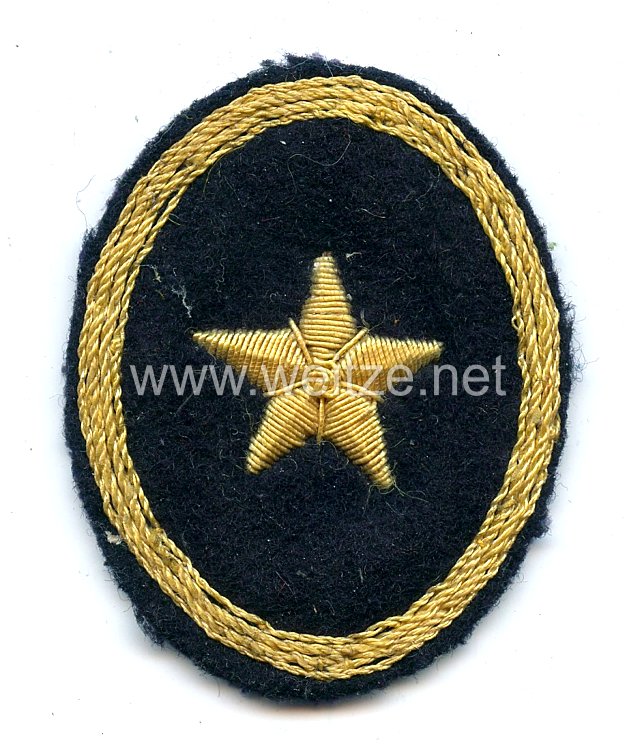
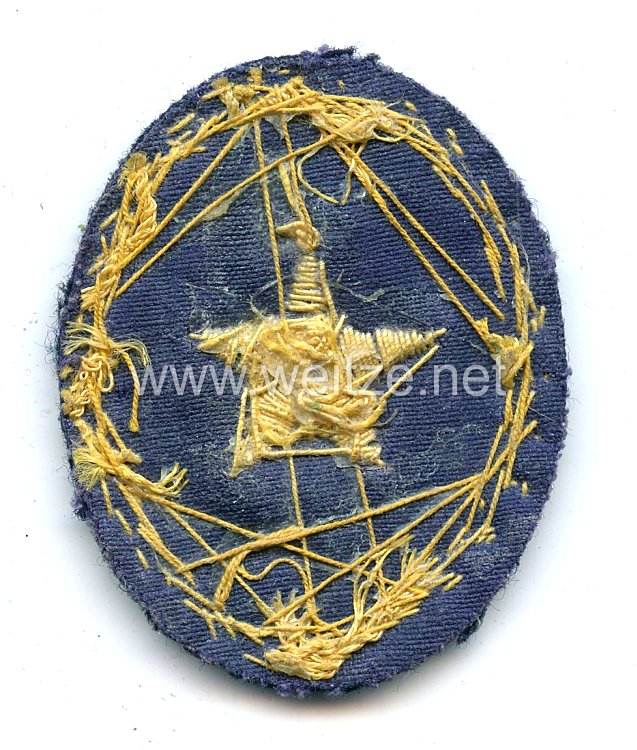
The Kriegsmarine Sleeve Badge for Cadets of the Deck Officer Career Path represents a fascinating artifact of German naval history during World War II. These special badges were an integral part of the Kriegsmarine's rank insignia system and identified young officer candidates on their path through training to become naval officers.
The Kriegsmarine, the official designation of the German Navy from 1935 to 1945, introduced a complex system of uniforms and insignia that differed significantly from the traditions of the Imperial Navy, while still preserving naval traditions. The deck officer career path was one of several officer career tracks within the Kriegsmarine and encompassed the classic training to become a naval officer who would later serve on warships.
Cadets in the Kriegsmarine underwent demanding and structured training that combined theoretical and practical elements. Training typically began with enrollment as a Naval Cadet (Seekadett) and progressed through various stages until receiving a commission as Leutnant zur See (Junior Lieutenant). During this time, cadets wore special sleeve badges that identified their status and affiliation with the deck officer career path.
The seawater-resistant version of these badges was a practical necessity of naval service. Unlike army units, naval personnel were constantly exposed to the corrosive effects of saltwater, humidity, and harsh maritime climate. Therefore, special manufacturing processes were developed to ensure longer durability of the badges. These versions often used special metal alloys or coatings that were resistant to oxidation and corrosion.
Kriegsmarine sleeve badges were worn according to the Uniform Regulations for the Kriegsmarine (Anzugordnung für die Kriegsmarine), which specified in detail which insignia were to be worn on which uniform parts and on which occasions. For cadets, these regulations were particularly important as they had to clearly identify their rank and position within the hierarchy.
The design of cadet badges followed strict guidelines and used traditional maritime symbols. They typically featured intertwined anchors, oak leaves, or other naval-heraldic elements in gold or silver embroidery on a dark blue cloth background. The deck officer career path differed in badge design from other career paths such as engineering, administrative, or medical branches.
The training of naval cadets took place at various institutions, including the Naval Academy Mürwik (Marineschule Mürwik) in Flensburg-Mürwik, which served as the main training facility for naval officers. Additionally, there were practical training periods on training ships and later on operational units. The entire training lasted several years and included navigation, seamanship, weapons technology, tactics, and leadership training.
From a historical perspective, these badges document not only military organization but also the craftsmanship quality of German militaria manufacturers of the 1930s and 1940s. Various companies were contracted to produce these badges, each with their own manufacturing techniques and quality standards.
After the war ended in 1945, the Kriegsmarine was dissolved, and its uniforms and badges became collectors' items. Today, authentic Kriegsmarine badges are sought-after military-historical artifacts that provide important insights into the organizational structure and daily life of the German Navy during World War II.
The preservation of such objects in good condition is of considerable importance for military-historical research and documentation. They enable historians and collectors to trace the development of military rank structures, manufacturing techniques, and the everyday reality of naval personnel. At the same time, they serve as material reminders of an era that was of formative significance for German and European history.