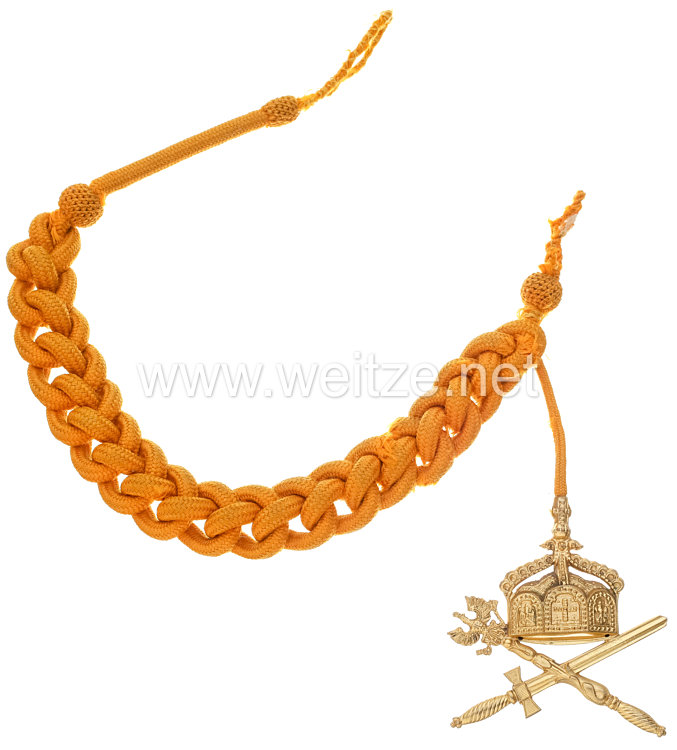
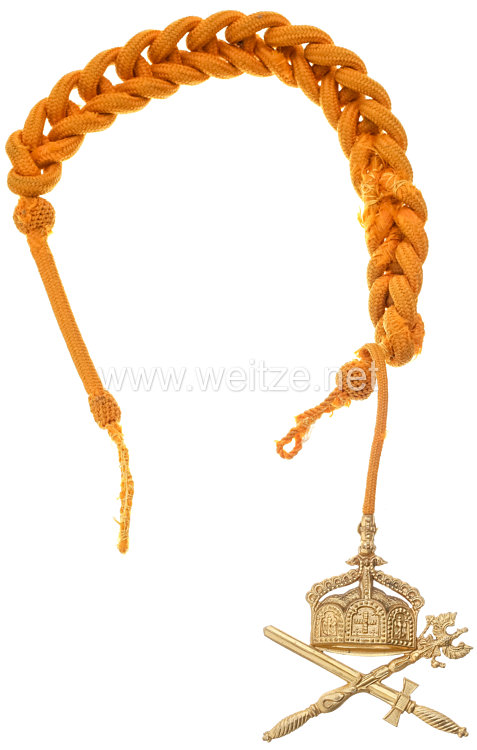
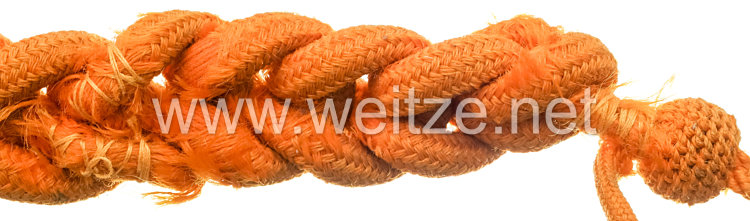
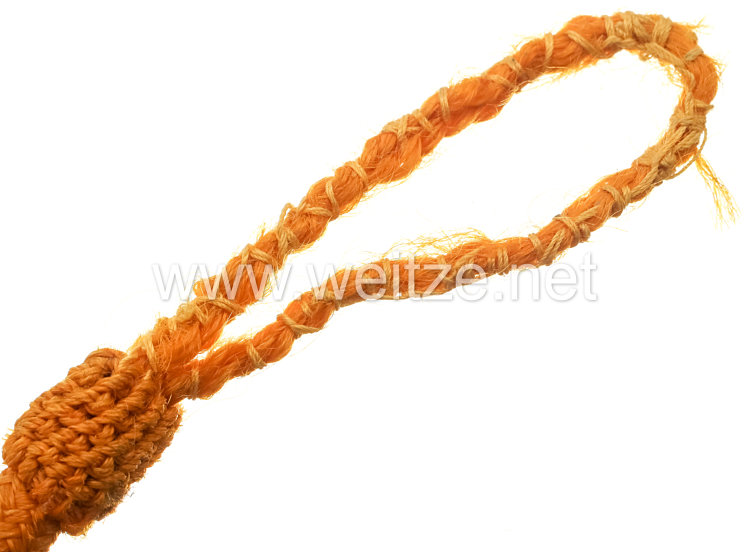
The Schützenschnur (marksman's lanyard) of the German Empire represents a fascinating testament to the military decoration culture of the Wilhelmine era. This special award, presented here in its first class with the characteristic Kaiser badge, was awarded to the best shooting company of those regiments whose chief was Kaiser Wilhelm II himself.
The institution of the Schützenschnur has its roots in the Prussian military tradition of the 19th century. With the increasing importance of marksmanship in modern European armies, Prussia introduced various decorations to promote shooting accuracy and military efficiency. The Allerhöchste Kabinetts-Order (Supreme Cabinet Order) of July 6, 1895, systematically regulated the awarding of marksman's lanyards and created a graduated system of decorations for outstanding shooting performance.
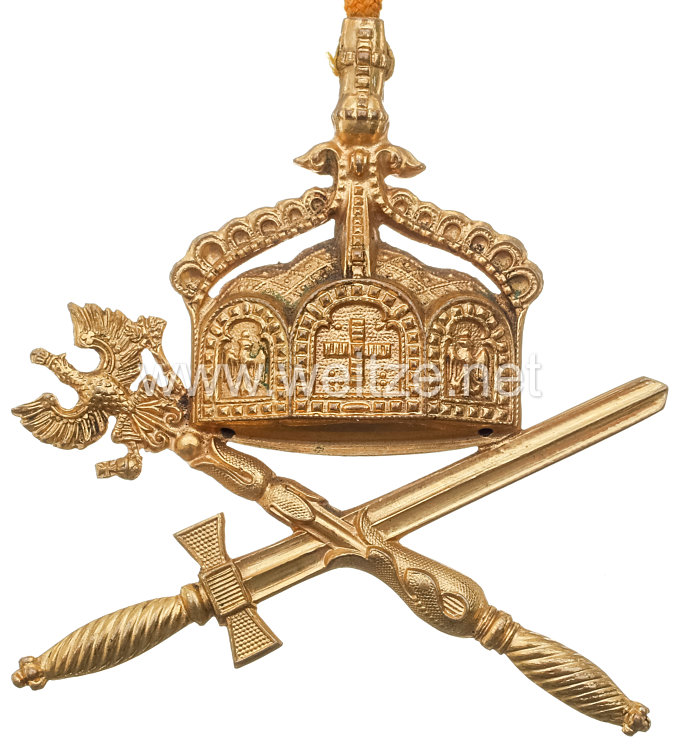
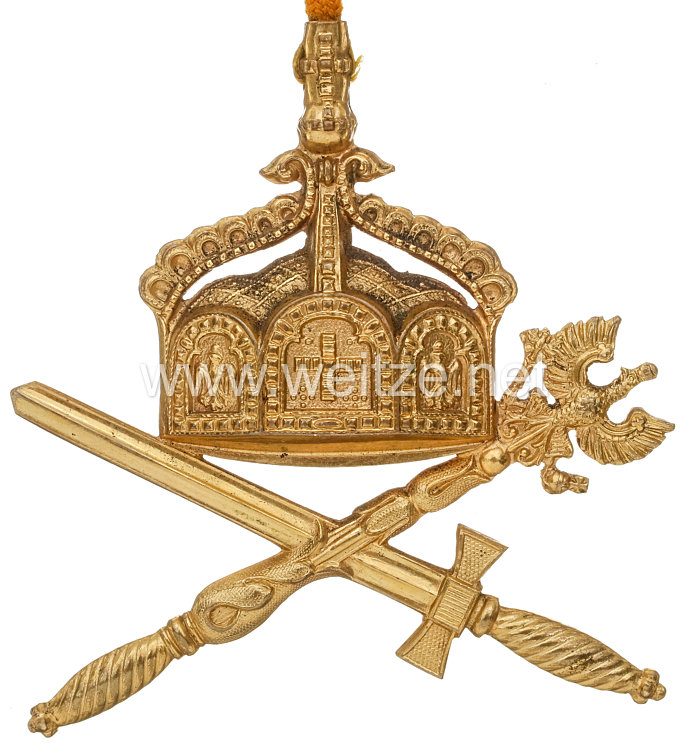
This specimen from around 1900 represents the highest category of these awards. The yellow braided woolen cord identified the first class and was reserved exclusively for the best company of a regiment. The attached gilt Imperial Crown above crossed sword and scepter symbolized the personal connection to the Kaiser as regimental chief and gave this decoration special honor and prestige.
The awarding practice was strictly regulated and bound to objective criteria. Annual shooting competitions were held in the regiments, where companies competed against each other. Evaluation followed a precise point system that considered both individual accuracy and the collective performance of the entire company. Only the company with the best overall performance was allowed to wear the first-class marksman's lanyard.
Particularly noteworthy is the empire-wide distribution of this decoration. Although it had its origins in Prussian military tradition, the marksman's lanyard with Kaiser badge was also worn in Bavarian, Saxon, and Württemberg regiments, provided Kaiser Wilhelm II was their chief. This underscores the integrative function of the Kaiser as supreme warlord of the entire German Empire and efforts toward a unified military culture despite federal structures.
The wearing of the Schützenschnur followed precise regulations. It was worn over the right shoulder and ran diagonally across the chest to the left hip. The Kaiser badge hung visibly on the chest and formed a conspicuous ornament of the uniform. For soldiers, wearing this decoration meant not only personal honor but also considerable esprit de corps and prestige within the military hierarchy.
The manufacture of such marksman's lanyards was carried out by specialized military equipment factories. The woolen cord was braided in elaborate handwork, while the metal badges were made by goldsmiths or specialized manufacturers. The gilding of the Kaiser badge was done through fire gilding or galvanic processes, emphasizing the high quality of these decorations.
In the context of Wilhelmine military culture, the Schützenschnur embodied several important aspects. First, it demonstrated the professionalization of the army and the emphasis on technical skills. Second, it fostered competitive spirit and performance readiness within the troops. Third, it symbolized the personal bond between Kaiser and army, a central element of Prussian-German military tradition.
The Schützenschnur remained in use until the end of World War I and the collapse of the monarchy in 1918. With the abdication of Wilhelm II and the dissolution of the imperial army, these decorations lost their official significance but remained preserved as memorabilia and historical testimonies.
Today, such marksman's lanyards are sought-after collector's items that offer important insights into the military history of the German Empire. They document not only the decoration practice and military culture of the time but also the craftsmanship quality of military effects around 1900. The good condition of this specimen with only slight signs of wear makes it a valuable historical document of this significant epoch of German military history.