Wehrmacht : Komplette Bataillonsstandarte des II. Bataillons Infanterie-Regiment Nr. 119
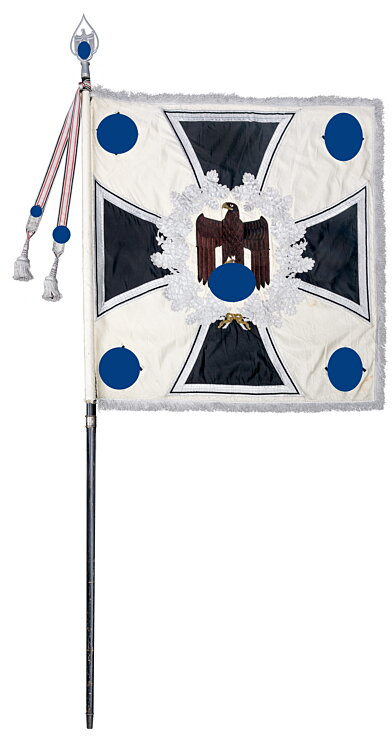
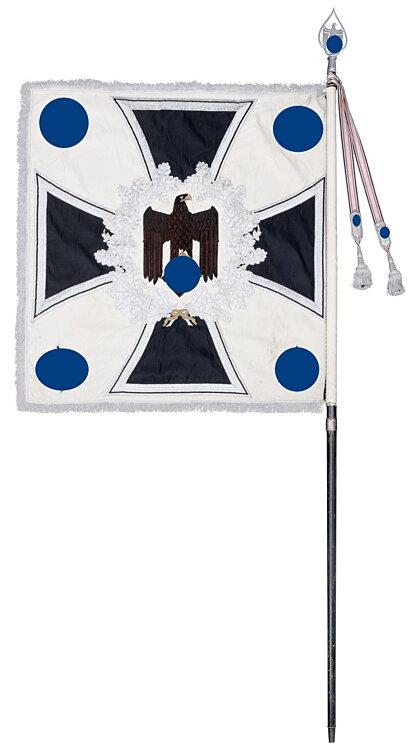
Standort Stuttgart. Vollständig erhaltene Fahne, bestehend aus Fahnenstock (Stange), dem Fahnentuch, der Fahnenspitze, dem Fahnenring und der Fahnenbanderole.
Das Fahnentuch aus einem einzigen Stück weißer Seide mit dreiseitigem silbernem Fransenbehang aus Aluminiumgespinst. Der Saum ringsum laufend als Doppellitze. Beide Seiten zeigen das Eiserne Kreuz aus schwarzer Seide, das mit silbernen Kanten aus
Aluminiumstickerei eingefasst ist. Darauf aufgelegt, der stilisierte
Wehrmachtsadler in feiner schwarz-brauner Handstickerei mit Schattierungen, umgeben von einem gestickten Eichenlaubkranz in feiner, silberfarbiger Aluminiumstickerei. Der Kranz unten von einem goldgestickten Band zusammengehalten. Der Schnabel und die Klauen des Adlers in feiner, vergoldeter, bzw. versilberter Metallstickerei. Das Auge in farbiger Seidenstickerei.
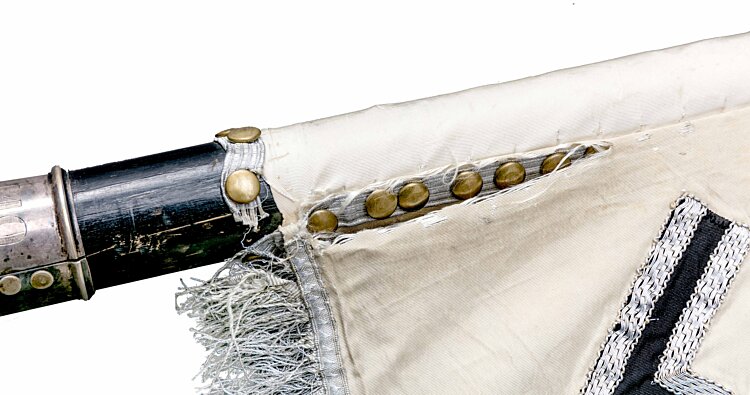
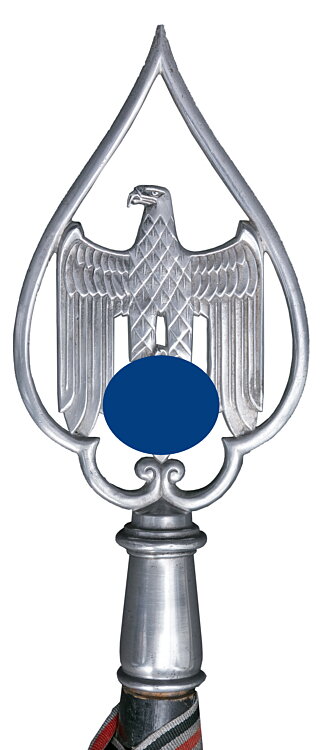
In den vier Ecken auf Vorder- und Rückseite jeweils ein großes Hakenkreuz aus schwarzer Seide mit silbergestickter Aluminiumeinfassung. Die der Stange zugewandte, fransenfreie Seite des Tuches mit Originalbenagelung mit originaler Silberlitze an der Fahnenstange angebracht. Maße des Fahnentuches: 120 x 120 cm. Unter dem Fahnentuch der versilberte Fahnenring mit Gravur: „II. Inf.-Rgt. 119“. Die Fahnenspitze für die Fahnen und Standarten der deutschen Wehrmacht aus Aluminium. Im unteren Rand Herstellerzeichen: „BILDGIESSEREI KRAAS BERLIN S 42“.
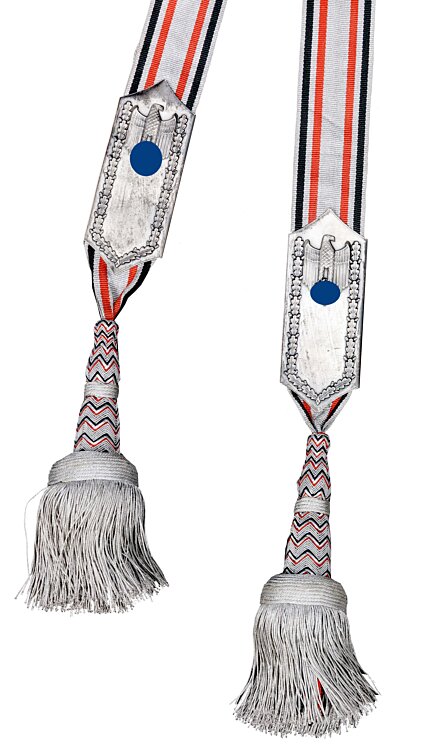
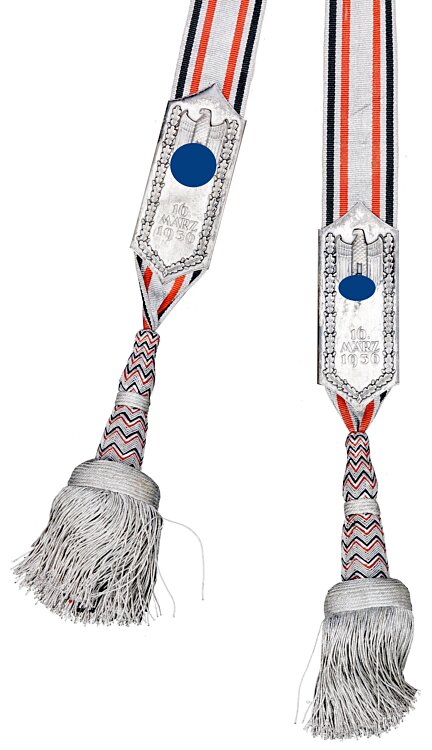
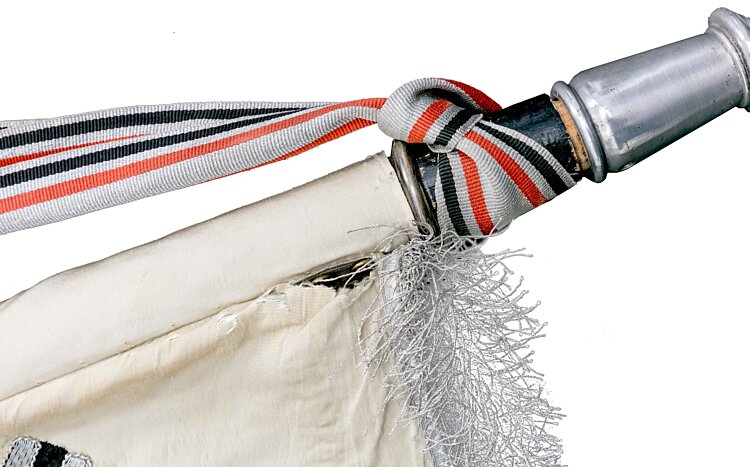
Höhe: 27, 5 cm. Dazu die Fahnenbanderole für die Fahnen und Standarten der deutschen Wehrmacht. Die Banderole aus einem 4,6 cm breiten, silberfarbigen Ripsband mit schwarz-roten Seitenstreifen. Gesamtlänge 172 cm. An den beiden Enden jeweils eine 18,2 cm lange Quaste aus Metallfäden. Die Metallspange mit Wehrmachtsadler und dem rückseitigen Datum „16. März 1935“. Die Spange mit Datum „16. März 1936“ fehlt. Der Fahnenstock (Stange) aus geschwärzter Eiche. Am unteren Ende originaler Fahnenschuh. Gesamtlänge mit Spitze: ca. 300 cm. Altersgemäße Trage- und Gebrauchsspuren.
Das Infanterie-Regiment 119 wurde am 6. Oktober 1936 im Wehrkreis V in Stuttgart aufgestellt. Das Regiment wurde mit der Aufstellung der 25. Infanterie-Division unterstellt.
1940 wurde das Regiment motorisiert und danach als Infanterie-Regiment (motorisiert) 119 umbenannt, ab 15. Oktober 1942 dann zum Grenadier-Regiment (mot.) 119 umbenannt. Das Regiment wurde im Juni 1944 bei der Heeresgruppe Mitte vernichtet.
Regimentskommandeure: Oberst Friedrich Zickwolff Aufstellung – 30. April 1939.
Oberst Kurt Hoffmann 1. Mai 1939 – 31. Dezember 1939.
Oberst Anton Grasser 6. Februar 1940 – 1925. Januar 1942.
Prachtexemplar in schöner Erhaltung. Als komplett erhaltene Fahne bedeutendes
Stück von musealem Wert.
Zustand
Das Fahnentuch aus einem einzigen Stück weißer Seide mit dreiseitigem silbernem Fransenbehang aus Aluminiumgespinst. Der Saum ringsum laufend als Doppellitze. Beide Seiten zeigen das Eiserne Kreuz aus schwarzer Seide, das mit silbernen Kanten aus
Aluminiumstickerei eingefasst ist. Darauf aufgelegt, der stilisierte
Wehrmachtsadler in feiner schwarz-brauner Handstickerei mit Schattierungen, umgeben von einem gestickten Eichenlaubkranz in feiner, silberfarbiger Aluminiumstickerei. Der Kranz unten von einem goldgestickten Band zusammengehalten. Der Schnabel und die Klauen des Adlers in feiner, vergoldeter, bzw. versilberter Metallstickerei. Das Auge in farbiger Seidenstickerei.
In den vier Ecken auf Vorder- und Rückseite jeweils ein großes Hakenkreuz aus schwarzer Seide mit silbergestickter Aluminiumeinfassung. Die der Stange zugewandte, fransenfreie Seite des Tuches mit Originalbenagelung mit originaler Silberlitze an der Fahnenstange angebracht. Maße des Fahnentuches: 120 x 120 cm. Unter dem Fahnentuch der versilberte Fahnenring mit Gravur: „II. Inf.-Rgt. 119“. Die Fahnenspitze für die Fahnen und Standarten der deutschen Wehrmacht aus Aluminium. Im unteren Rand Herstellerzeichen: „BILDGIESSEREI KRAAS BERLIN S 42“.
Höhe: 27, 5 cm. Dazu die Fahnenbanderole für die Fahnen und Standarten der deutschen Wehrmacht. Die Banderole aus einem 4,6 cm breiten, silberfarbigen Ripsband mit schwarz-roten Seitenstreifen. Gesamtlänge 172 cm. An den beiden Enden jeweils eine 18,2 cm lange Quaste aus Metallfäden. Die Metallspange mit Wehrmachtsadler und dem rückseitigen Datum „16. März 1935“. Die Spange mit Datum „16. März 1936“ fehlt. Der Fahnenstock (Stange) aus geschwärzter Eiche. Am unteren Ende originaler Fahnenschuh. Gesamtlänge mit Spitze: ca. 300 cm. Altersgemäße Trage- und Gebrauchsspuren.
Das Infanterie-Regiment 119 wurde am 6. Oktober 1936 im Wehrkreis V in Stuttgart aufgestellt. Das Regiment wurde mit der Aufstellung der 25. Infanterie-Division unterstellt.
1940 wurde das Regiment motorisiert und danach als Infanterie-Regiment (motorisiert) 119 umbenannt, ab 15. Oktober 1942 dann zum Grenadier-Regiment (mot.) 119 umbenannt. Das Regiment wurde im Juni 1944 bei der Heeresgruppe Mitte vernichtet.
Regimentskommandeure: Oberst Friedrich Zickwolff Aufstellung – 30. April 1939.
Oberst Kurt Hoffmann 1. Mai 1939 – 31. Dezember 1939.
Oberst Anton Grasser 6. Februar 1940 – 1925. Januar 1942.
Prachtexemplar in schöner Erhaltung. Als komplett erhaltene Fahne bedeutendes
Stück von musealem Wert.
Zustand