Kriegsmarine Uniform Buttons

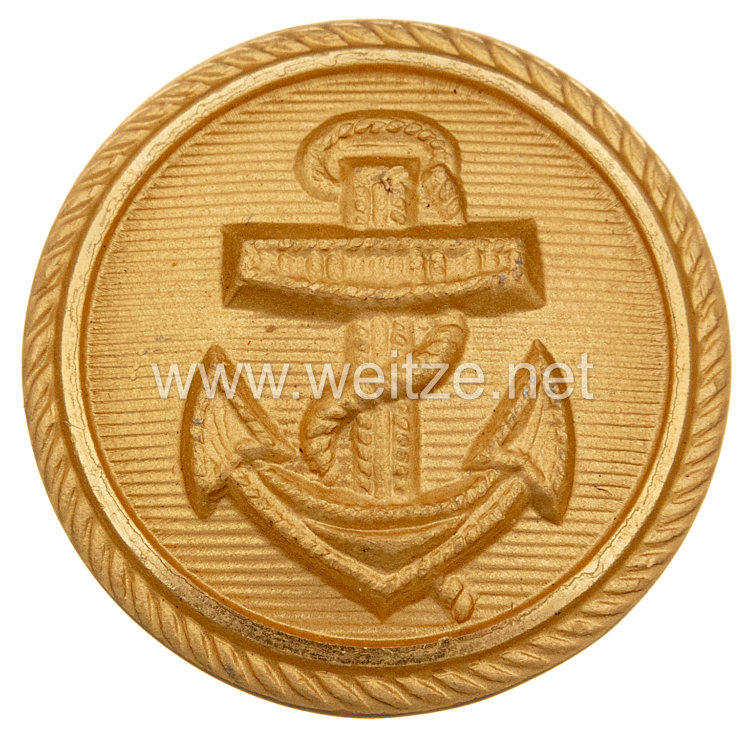
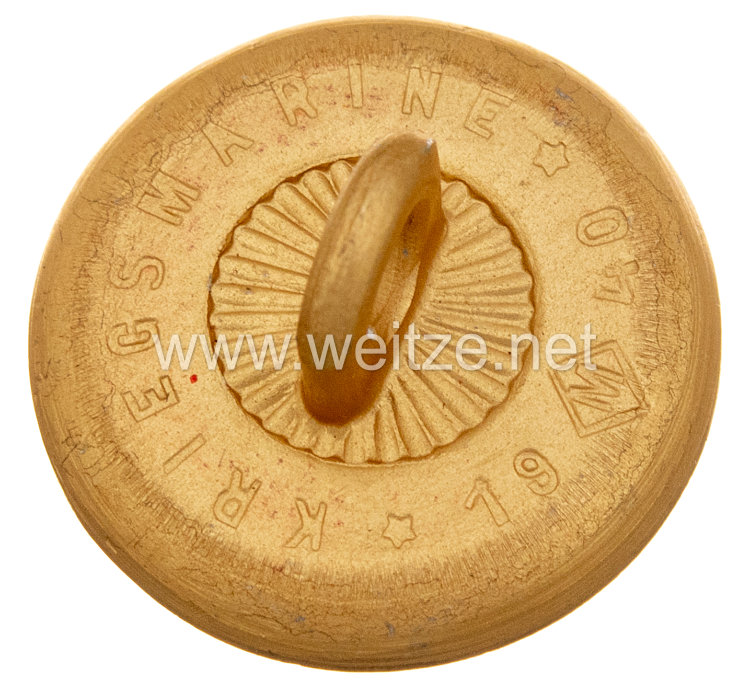
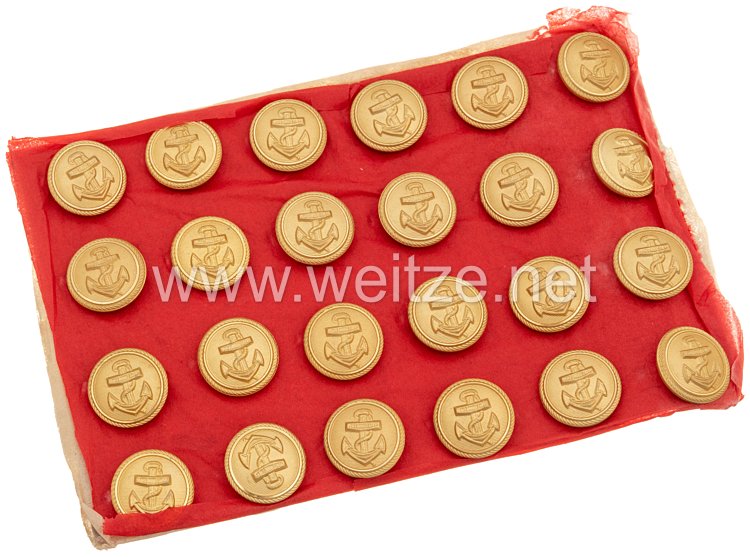
Aluminum, reverse stamped “Kriegsmarine”, identical manufacturer, dated 1940, 19 mm, condition 2.

PRICE PER PIECE:
385806
5,00

Kriegsmarine Uniform Buttons

Kriegsmarine uniform buttons from 1940 represent a significant aspect of German naval uniform equipment during World War II. These aluminum buttons with a diameter of 19 mm belong to the standardized equipment items that were produced and issued according to strict military regulations.

The Kriegsmarine, officially re-established on June 1, 1935, by the National Socialist regime, replaced the Reichsmarine of the Weimar Republic. Under the supreme command of Grand Admiral Erich Raeder (until 1943) and later Karl Dönitz, the Kriegsmarine developed into a significant naval force. The year 1940, when these buttons were dated, marks a phase of intensive military operations, including Operation Weserübung (invasion of Norway and Denmark) in April 1940.

The use of aluminum as a material for uniform buttons from 1940 onwards reflects the increasing economic constraints of the war. While brass or gold-plated alloys were frequently used in peacetime and at the beginning of the war, wartime shortages of raw materials led to a transition to more cost-effective and readily available materials. Aluminum offered the advantage of being lightweight, corrosion-resistant, and available in sufficient quantities.

The reverse stamping “Kriegsmarine” served for clear identification and assignment to the naval forces. This practice corresponded to the dress regulations (AnzBO) and uniform regulations, which precisely specified which components were to be used for which uniform parts. The manufacturer's marking also enabled quality control and traceability of production.

Uniform buttons of 19 mm size were typically used on various Kriegsmarine uniform parts, including jackets, coats, and uniform tunics of various ranks. The Kriegsmarine distinguished between several types of uniforms: the parade uniform, the service uniform, the work uniform, and special operational uniforms. Buttons of this size were primarily used on everyday service and dress uniforms.

The production of uniform equipment was strictly organized and supervised during the war. Various civilian manufacturers received contracts to produce standardized components. The dating to 1940 was accomplished through die stamps and enabled temporal classification of production. This was important for both military logistics and quality assurance.

The uniforming of the Kriegsmarine followed a long tradition dating back to the Imperial Navy. Many elements, including the characteristic dark blue color and certain patterns, were retained and adapted. However, the National Socialists introduced new symbolism, particularly the national emblem with swastika, which was attached to various uniform parts.

The condition grade 2 of these buttons indicates good preservation with slight signs of use. This is remarkable for objects over 80 years old and made from a relatively soft material like aluminum. Many such buttons typically show oxidation, scratches, or wear from buttoning and unbuttoning.

From a historical perspective, such seemingly simple objects as uniform buttons provide valuable insights into the material economy, production standards, and military organization of the Third Reich. They document the transition from the use of traditional materials to substitutes and demonstrate the increasing standardization and mass production of military equipment.

For collectors and historians, authentic, dated Kriegsmarine buttons are of interest as they help trace the development of uniforming and temporally classify uniform parts. The clear marking and dating makes them reliable reference objects for researching Kriegsmarine uniform history.

These buttons, though small in size, embody the broader narrative of wartime production, resource management, and the day-to-day realities of military service. They serve as tangible connections to the sailors who wore them and the complex industrial and logistical systems that supplied the German naval forces during one of history's most significant conflicts.