Federal Republic of Germany (FRG) Bread Bag
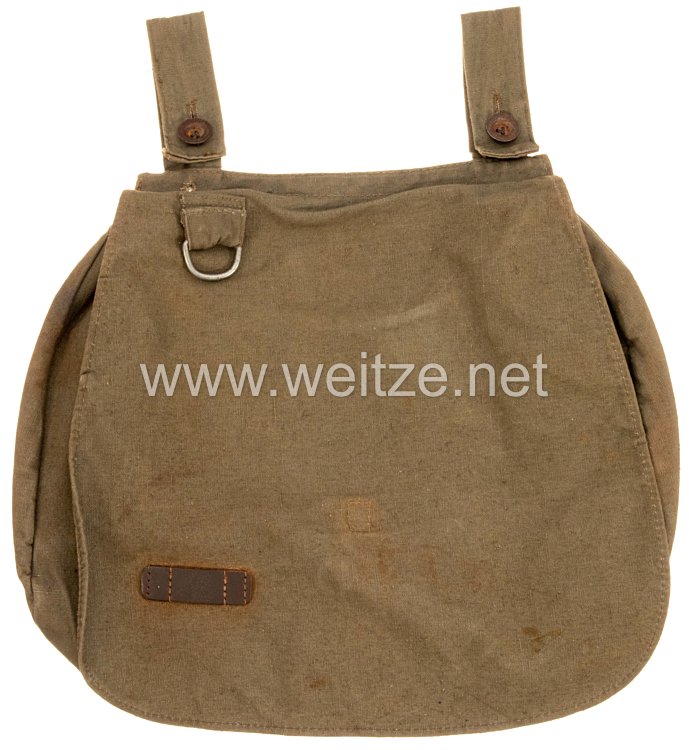
The bread bag (Brotbeutel) of the Bundeswehr in field grey represents an essential piece of equipment of the German armed forces during the early decades of the Federal Republic of Germany. This functional equipment component stands in a long tradition of military supply equipment and illustrates both continuity and change in German military history after 1945.
With the establishment of the Bundeswehr in 1955, the young Federal Republic faced the challenge of equipping its armed forces with modern, practical equipment. The bread bag, a designation dating back to the 19th century, remained an indispensable part of a soldier's personal equipment despite modernized design. Originally conceived for storing provisions, especially bread and other foodstuffs, the bread bag evolved into a multifunctional carrying system for various personal items.
The field grey coloring connects this piece of equipment with German military tradition. Field grey was introduced as the standard color of the German army in the early 20th century, replacing the more conspicuous uniform colors of the 19th century. This color offered better camouflage properties and became the characteristic color of German armed forces. After World War II and the rearmament of West Germany, the Bundeswehr initially adopted this proven coloring before other camouflage patterns and color schemes were introduced in later decades.
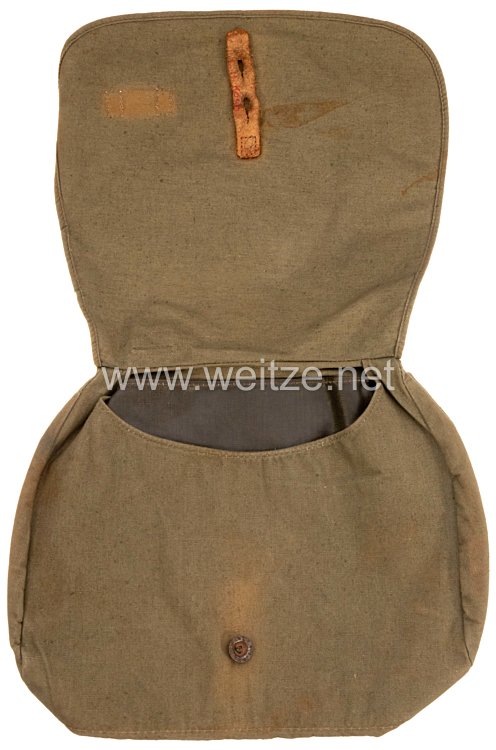
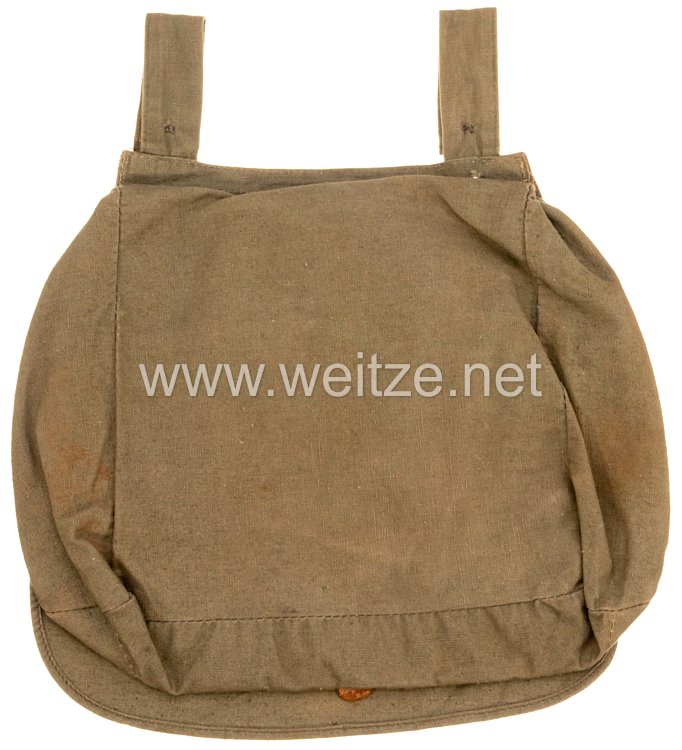
The bread bag of the early Bundeswehr typically consisted of robust cotton fabric or canvas material, which ensured durability and resistance to weather conditions. The construction followed practical considerations: a main compartment with flap closure, often secured by straps and buckles, and sometimes additional exterior pockets for small items. It was typically worn on the belt (Koppel), which together with other equipment pieces formed the carrying system.
During the 1950s and 1960s, the Bundeswehr underwent several equipment reforms. The Army Service Regulation (Heeresdienstvorschrift - HDv) regulated in detail the equipment and manner of wearing personal gear. The bread bag was firmly integrated into the overall concept of combat equipment. Soldiers used it not only for provisions but also for personal hygiene articles, spare socks, weapon cleaning supplies, and other necessary items for daily service.
The condition classification of military equipment items follows a standardized system. Condition 2 generally indicates good to very good preservation with slight signs of use but without significant damage or defects. This suggests that the piece was either little used in service or carefully maintained.
In the context of militaria collecting, equipment items from the early Bundeswehr have gained increasing importance in recent years. They document an important phase of German history in which the Federal Republic built up its defense capability as part of NATO while consciously breaking with the militaristic past of the German Reich. Democratic control of the armed forces and integration into Western alliance structures shaped the Bundeswehr from the beginning.
The bread bag also stands symbolically for the everyday reality of the soldier. While weapons and uniforms often take center stage in historical considerations, it is precisely the seemingly mundane equipment items that made service practicable. They tell of long marches, maneuvers, guard duties, and daily life in the barracks or in the field.
With the introduction of new equipment systems in the 1970s and 1980s, particularly the transition to Flecktarn patterns and more modern carrying systems, the field grey bread bags were gradually phased out. They were replaced by more functional pouches and backpacks that better met the changed requirements of modern warfare. Nevertheless, they remained in use for a long time, especially with reserve units and in basic training.
Today, these bread bags are sought-after collector's items that document an important chapter of Federal German military history. They recall the time of the Cold War when the Bundeswehr served as a bulwark against the eastern Warsaw Pact states and millions of young men performed their service through conscription.
The study of such equipment provides valuable insights into the material culture of the Bundeswehr and the daily life of soldiers during a period when Germany was divided and the threat of military conflict loomed large over Europe. These items represent not just military functionality but also the social and political context of their era, when West Germany established itself as a reliable partner in Western defense while developing a distinctly democratic military culture different from previous German armies.