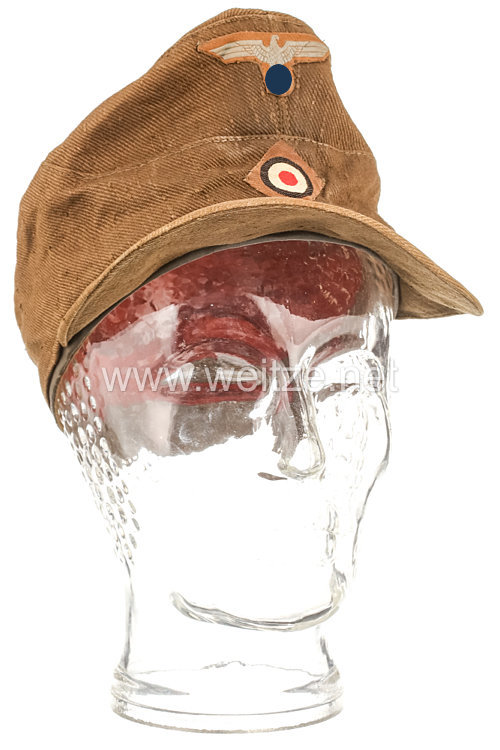
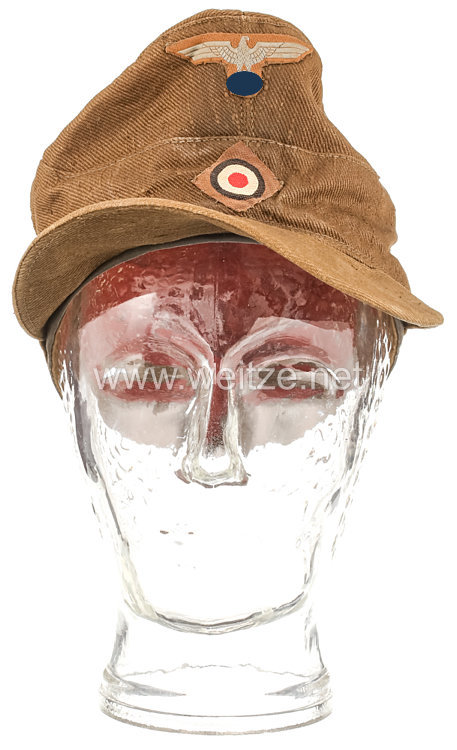
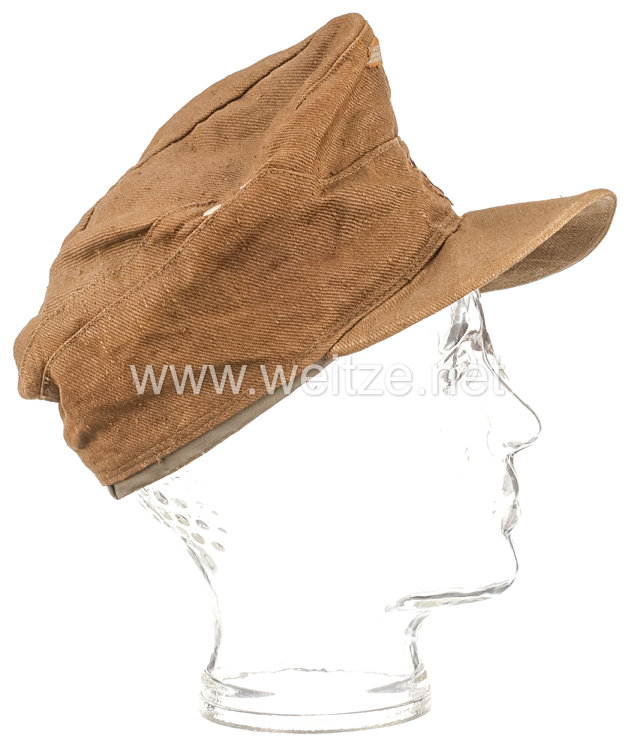
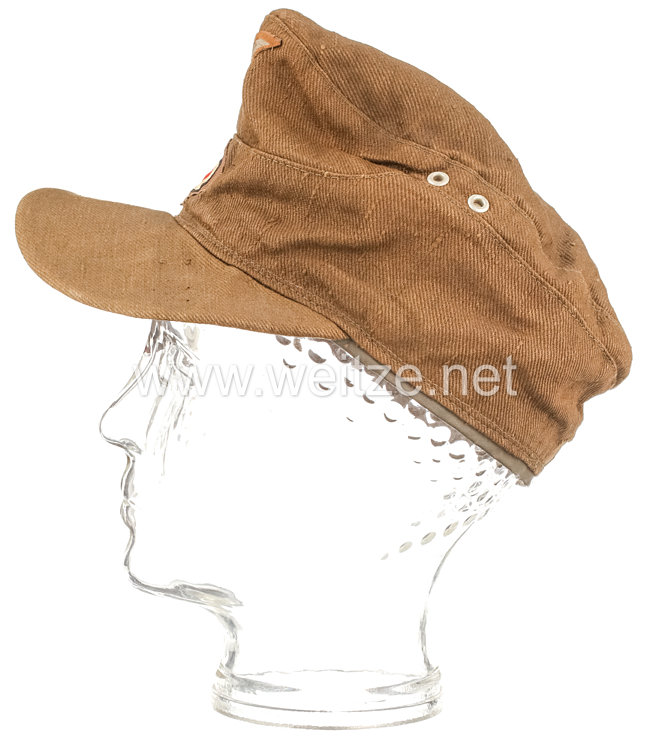
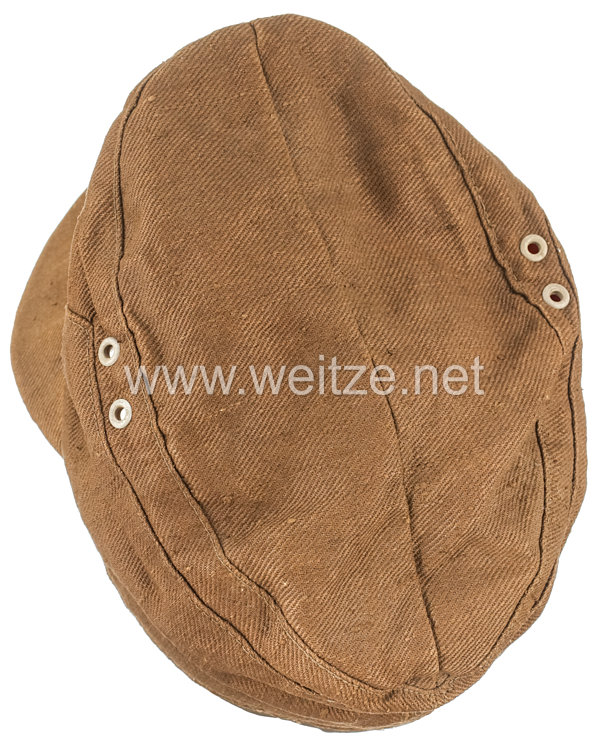
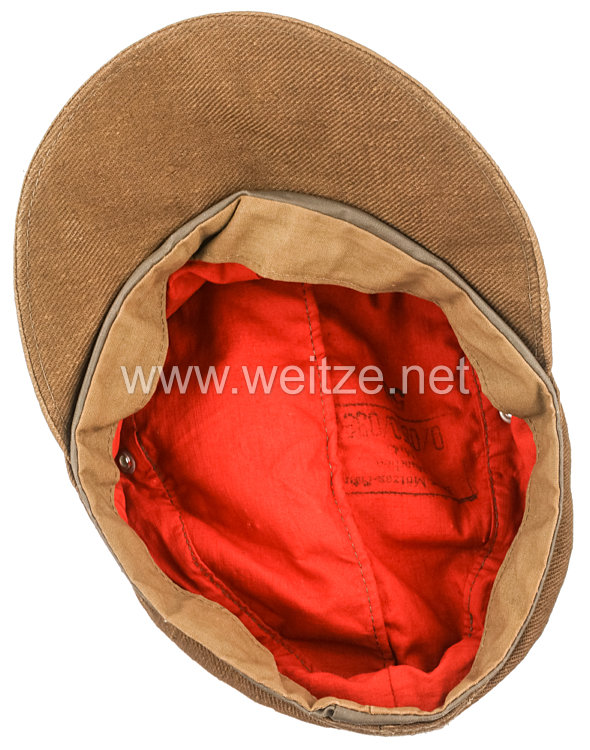
Wehrmacht Afrika Korps Tropical Field Cap M41 for Enlisted Men
The Wehrmacht Afrika Korps Tropical Field Cap M41 represents a characteristic piece of equipment used by German forces during the North African Campaign of World War II. This specialized headgear was developed to meet the extreme climatic conditions of the North African desert regions, where German troops operated between 1941 and 1943.
The German Afrika Korps (DAK) was established in February 1941 under the command of Lieutenant General Erwin Rommel and deployed to Libya to support Italian allied forces. The extreme temperatures, intense solar radiation, and sandy conditions of the North African desert required completely new equipment and uniforms that fundamentally differed from those used on the European theater of war.
The Tropical Field Cap M41 was introduced from 1941 as standard headgear for enlisted men in tropical deployment. Unlike the usual field-gray uniform items, this cap was made of olive-colored linen, a material that was both breathable and relatively lightweight. The light coloring also reflected solar radiation better than darker fabrics and offered wearers some protection from the intense heat.
The construction of the tropical field cap followed the basic design of the German field cap but featured specific adaptations for tropical use. The characteristic red lining inside served not only as reinforcement but was also a typical identifying feature of these headpieces. The downward-folding neck guard provided additional protection from the sun and could be folded up when needed.
The cap was fitted with special Bevo-woven insignia in tropical version. These badges, manufactured using the Bevo weaving process (Bandweberei Vereinigte Oesterreichische), were directly woven into the textile and displayed the national eagle and the black-white-red cockade. Unlike officers' caps, enlisted men's caps did not feature Soutache piping - the characteristic V-shaped decorations made of braided cord.
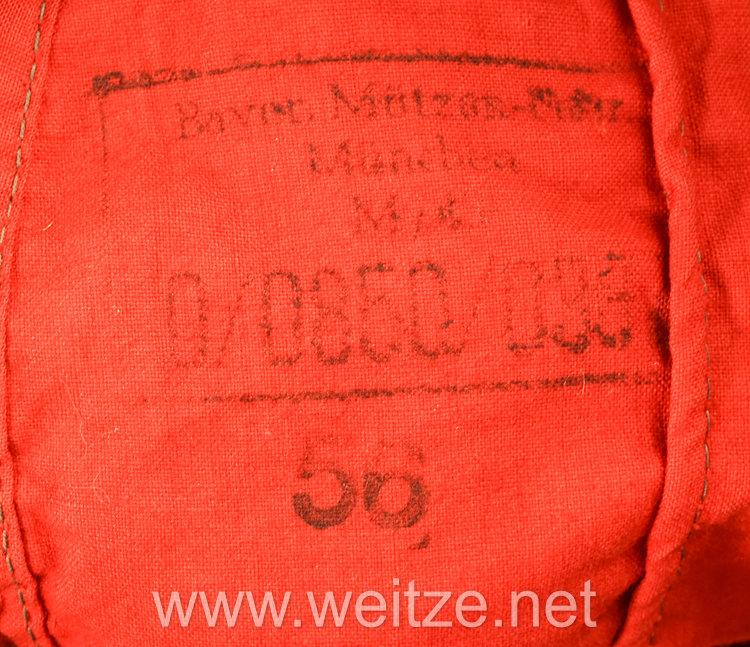
The manufacturer's stamp “Bayer. Mützen-München” (Bavarian Caps-Munich) indicates one of the many supplier companies that produced for the Wehrmacht. The Munich-based firm was among numerous civilian manufacturers integrated into the military procurement system. The stamping typically also included a contract number and production dates, enabling precise tracking of production.
The size designation of 56 corresponded to the German head circumference system, measured in centimeters. This standardization enabled efficient distribution and issue of equipment to the troops.
Service in the Afrika Korps placed special demands on all equipment items. The combination of extreme heat, sand, and intense UV radiation led to considerable wear. Linen proved relatively durable but bleached under intense sun exposure and was stressed by sand and dust.
The tropical field cap was typically worn together with the olive-colored or sand-colored tropical uniform. The entire tropical equipment included specially adapted uniforms, boots, and equipment items. Interestingly, these tropical uniforms were not worn exclusively in North Africa but were later also used in Southern Europe, the Balkans, and other warmer deployment areas.
After the capitulation of the Afrika Korps in May 1943 in Tunisia, many of these equipment items were captured by Allied troops or later entered collections. The characteristic appearance and historical significance of the African campaign have made the tropical field cap a sought-after collector's item.
From a military-historical perspective, the Tropical Field Cap M41 documents the Wehrmacht's efforts to adapt its equipment to different climate zones. It stands as an example of the logistical challenges of a war fought on multiple continents with vastly different environmental conditions. Today, such objects serve in museums and collections as important material witnesses of this era, enabling research and understanding of the material culture and everyday aspects of military life during World War II.
The cap's construction reflects the practical considerations of desert warfare. The lightweight linen material, while not as durable as wool, provided essential ventilation in temperatures that could exceed 40 degrees Celsius. The olive-tan coloring offered some camouflage benefit in the desert landscape, though the desert warfare of North Africa was characterized more by mechanized movement and long-range engagements than by infantry concealment.
These field caps remain significant artifacts for understanding the material history of the Second World War and the specific challenges of the North African theater, representing the intersection of military necessity, industrial production, and the harsh realities of desert combat.