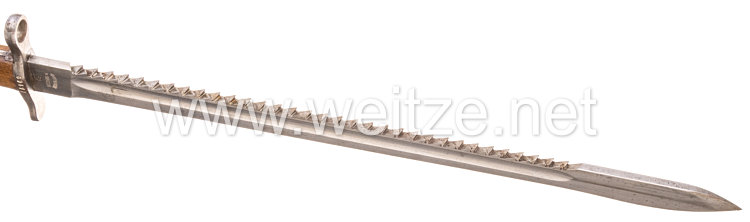
Swiss Pioneer Bayonet M 14

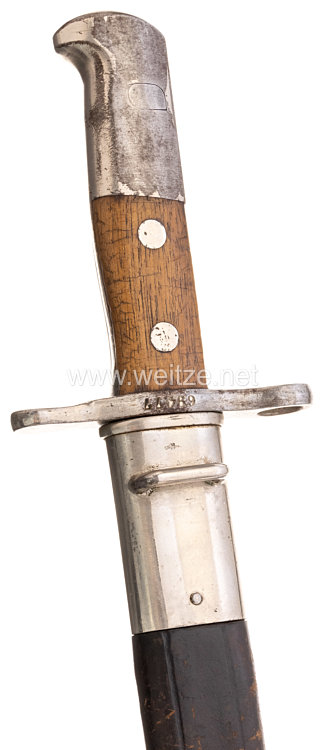
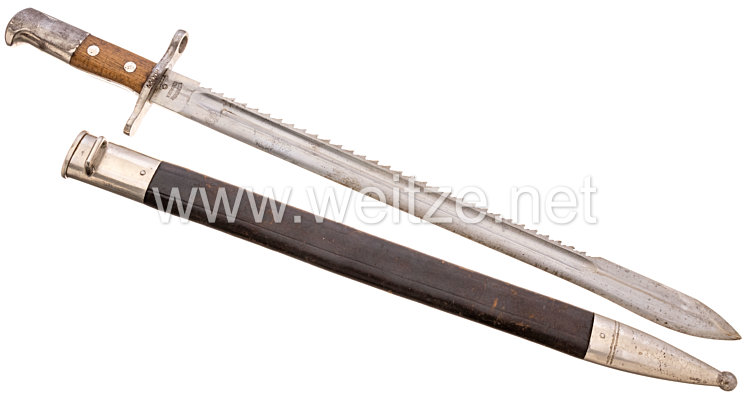
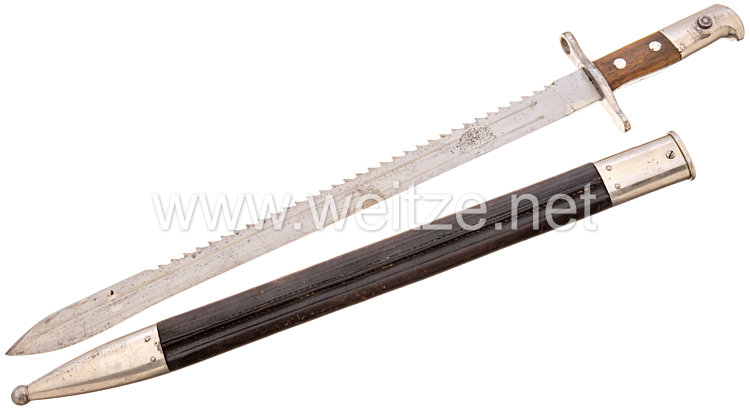
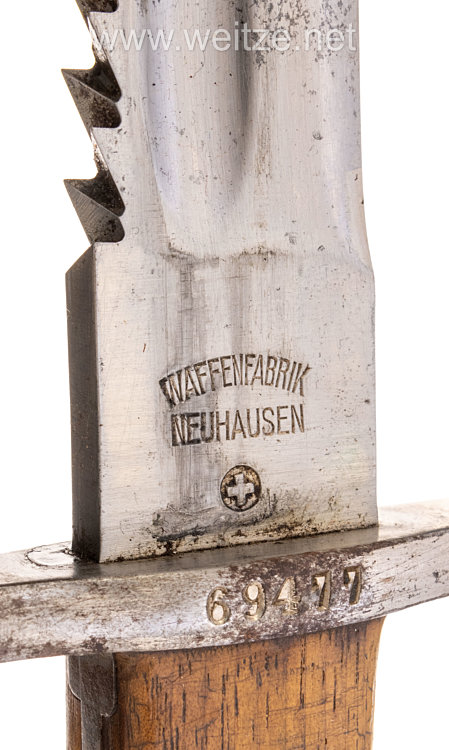
Single-fullered sawback blade with manufacturer “Waffenfabrik Neuhausen”, hard chrome-plated hilt, crossguard stamped “69477”, brown leather scabbard with steel fittings, worn but still in very good condition. Condition 2
435805
350,00

Swiss Pioneer Bayonet M 14

The Swiss Pioneer Bayonet M 14 represents a fascinating transition in the development of military multipurpose weapons at the beginning of the 20th century. This versatile tool was introduced as an integral component of the Swiss Army equipment and served well into the 20th century.

The M 14's origin story is closely linked to Switzerland's military modernization. Following the introduction of the Infantry Rifle Model 1911, Swiss Army leadership recognized the need for a robust, multifunctional bayonet that could serve both as a combat weapon and as a pioneer tool. The year 1914 marked the official introduction of this innovative design, which differed significantly from traditional spike bayonets.

The characteristic single-fullered saw-back blade was the heart of the M 14. The fuller reduced the blade's weight while the saw-back enabled the carrier to work wood and other materials. This combination made the bayonet an indispensable tool for pioneer troops who needed to construct fortifications in the field, remove obstacles, or build provisional shelters.

The Waffenfabrik Neuhausen, later known as Schweizerische Industrie-Gesellschaft (SIG), was the primary manufacturer of these bayonets. The company, founded in 1853 near the Rhine Falls at Schaffhausen, had already earned an excellent reputation for the precision and quality of its weapons production in the 19th century. The marking “Waffenfabrik Neuhausen” on the blade testifies to this traditional heritage and guaranteed the highest manufacturing standards.

The hard-chromed hilt was a technical innovation that addressed harsh use in various climates. The chrome plating offered excellent corrosion protection and ensured that the bayonet remained operational even under adverse conditions. This surface treatment was introduced in the early production years and became the standard for Swiss military edged weapons.

The number stamped on the crossguard is part of the Swiss Army's systematic numbering system. Each bayonet received a unique serial number, enabling precise inventory control and assignment to specific units. This practice reflected the well-known Swiss thoroughness in military administration and allowed complete traceability of equipment.

The brown leather scabbard with steel fittings followed the typical design of Swiss military scabbards of this era. The robust leather provided protection for the blade, while the steel fittings offered structural reinforcement and formed attachment points for the carrying system. The scabbard was designed to be attached to the infantry's belt equipment, typically on the soldier's left side.

The Pioneer Bayonet M 14 remained in active service for several decades. During World War I, the design proved itself, although Switzerland maintained its neutrality and did not engage in combat operations. However, the army was in constant mobilization readiness, and tens of thousands of soldiers carried this bayonet during border guard duty.

During the interwar period and World War II, the M 14 experienced its peak. The Swiss Army, again placed on defensive alert, relied on proven equipment. The pioneer bayonet proved particularly valuable in expanding Alpine positions and constructing defensive installations as part of the Réduit concept, Switzerland's strategy of armed resistance.

After World War II, the gradual replacement of the M 14 began, although it was still used in certain units into the 1960s and 1970s. The introduction of new weapon systems and more modern multipurpose tools eventually led to the retirement of this classic design.

Today, original Pioneer Bayonets M 14 are sought-after collectibles representing Swiss military history. Examples in good condition with original scabbards are particularly valuable, as they offer an authentic insight into the Swiss Army's equipment during one of the most turbulent periods of the 20th century.

r