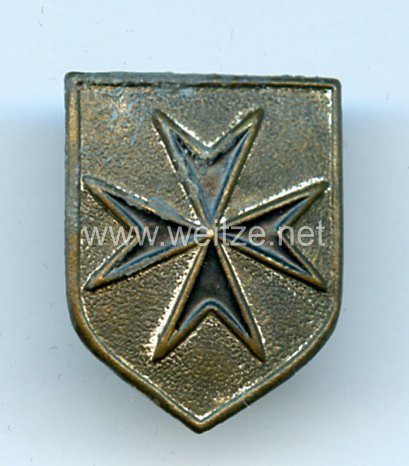
Nationalist and Patriotic Associations and Combat Leagues - Jungdeutscher Orden - Cap Badge of the Order Sisters, 1st Pattern

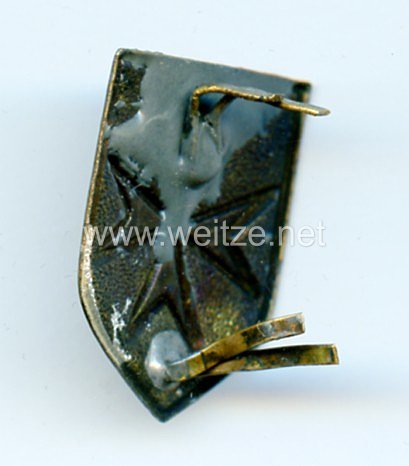
26 x 21 mm, one split pin newly attached on reverse, condition 2-3.
399305
40,00

Nationalist and Patriotic Associations and Combat Leagues - Jungdeutscher Orden - Cap Badge of the Order Sisters, 1st Pattern

Cap Badge of the Order Sisters of the Young German Order - First Pattern

This cap badge represents a significant artifact from the paramilitary and völkisch movements of the Weimar Republic. The Jungdeutscher Orden (Young German Order), also known by its abbreviation Jungdo, was founded in March 1920 by Artur Mahraun in Kassel and developed into one of the most influential paramilitary leagues of the early 1920s.

The Order emerged immediately after the Kapp Putsch in March 1920 and positioned itself as a republican-national organization, distinguishing itself from monarchist and openly anti-republican associations such as the Stahlhelm. Mahraun, a charismatic leader and publicist, organized the league according to quasi-medieval order structures with an elaborate ritual system, secret language, and hierarchical degrees. At its peak around 1924-1925, the Young German Order counted between 180,000 and 250,000 members.

The Ordensschwestern (Order Sisters) formed an integral part of the organizational structure. Unlike many other paramilitary leagues of the time, the Young German Order actively integrated women into its structures, albeit in separate formations. The Order Sisters undertook social, cultural, and propagandistic tasks within the movement. They organized welfare events, educational programs, and supported the paramilitary activities of male members through logistical work.

The cap badge in its first pattern, such as this specimen measuring 26 x 21 mm, was worn during the early phase of the Order between approximately 1920 and the mid-1920s. These badges served to identify membership among the Order Sisters and were attached to headgear, typically a uniform-style cap or beret. The reverse attachment was made using split pins, as documented with this example, where one of the pins has been replaced.

The symbolism of the Young German Order was oriented toward national and völkisch motifs, though the Order always emphasized that it stood on the ground of the Weimar Constitution. This distinguished it from more radical völkisch groups, although the Jungdo also exhibited antisemitic and antidemocratic tendencies. The organization advocated an authoritarian state ideal and strived for a “national renewal” of Germany.

From 1924 onward, the Young German Order increasingly transformed from a paramilitary defense league into a political movement. In 1927, Mahraun founded the Volksnationale Reichsvereinigung (People's National Reich Association) as the political arm of the Order, which however never achieved significant electoral success. The Great Depression and the rise of the NSDAP led to a rapid decline in the organization's significance.

After the Nazi seizure of power in 1933, the Young German Order came under pressure and dissolved itself in June 1933. Many members joined NS organizations, while others, including Mahraun himself, withdrew or entered opposition. The uniforms, badges, and insignia were confiscated or destroyed by former members, making original objects like this cap badge rare historical witnesses today.

The described badge with its condition rating of 2-3 shows the typical signs of wear from a used object of this era. The fact that one pin was replaced indicates that the badge was actually in use and possibly worn over several years. Such details provide insight into the material culture of the paramilitary associations of the Weimar Republic.

For military-historical research, objects like this cap badge are of considerable significance, as they document organizational structures, the role of women in paramilitary associations, and the material culture of the political combat leagues of the interwar period. They complement written sources and enable a more comprehensive understanding of the complex political landscape of the Weimar Republic.

r