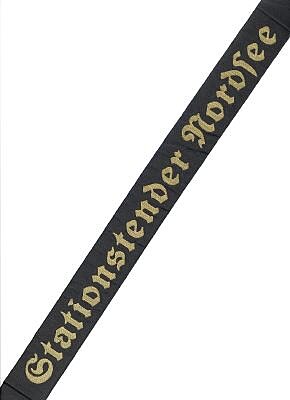
Kriegsmarine Cap Tally "Stationstender Nordsee"

Metal thread woven construction, unworn, still in original packaging. Condition 1
34805
100,00

Kriegsmarine Cap Tally "Stationstender Nordsee"

The Kriegsmarine cap tally "Stationstender Nordsee" represents a fascinating chapter of German naval history during World War II. Cap tallies have been an essential component of naval uniforms since the 19th century, serving to identify a sailor's assignment to a specific ship or unit.

The Kriegsmarine, the official designation of the German Navy from 1935 to 1945, continued the tradition of cap tallies that had been established in the Imperial Navy. Following the Nazi seizure of power in 1933 and the rearmament of the Wehrmacht from 1935 onwards, the Kriegsmarine was systematically expanded. Uniform regulations were precisely defined, with the cap tally officially designated as "Bandaufschrift" (band inscription).

Stationstender (station tenders) were specialized supply vessels that fulfilled an important logistical function within the naval organization. These ships served as floating workshops and supply units for smaller warships such as torpedo boats, U-boats, minesweepers, and other units that did not have direct access to naval yards. The term "tender" traditionally designated escort and supply vessels.

The designation "Nordsee" (North Sea) indicates the operational area of this particular tender. The North Sea was a strategically decisive maritime region for German warfare during World War II. Intensive naval operations took place here, including U-boat operations, mine laying, coastal defense, and securing sea routes to Norway and Scandinavia.

The metal-thread woven construction of this cap tally corresponds to the high-quality variant intended for enlisted men and petty officers. These bands were manufactured with golden-yellow or silver metal threads on a black background. Production took place in specialized textile facilities working for the Navy. The quality of the weaving was precisely regulated, with the typeface and proportions following exact specifications.

The inscriptions on cap tallies followed a standardized format. Ships typically bore only the ship's name, shore establishments the location name, and specialized units such as tenders the corresponding functional designation. The present band with the inscription "Stationstender Nordsee" clearly identifies assignment to the crew of this supply vessel.

The fact that this specimen remains unworn and in original packaging makes it a rare historical artifact. Most cap tallies were worn and subjected to corresponding wear from seawater, sun, and the harsh reality of shipboard life. Originally packaged pieces are extraordinarily rare, as they were either stored as replacements aboard ships or kept in depots, from where they were frequently lost or destroyed after the war's end.

Living conditions aboard a station tender differed significantly from those on combat vessels. The crews were often composed of experienced technicians, mechanics, and specialists responsible for the maintenance and repair of other ships. These tenders often lay in protected harbors or fjords and were less exposed to the dangers of direct combat than front-line vessels.

After the collapse of the Third Reich in 1945, most Kriegsmarine units were dissolved, ships confiscated or scuttled. Uniform items, including cap tallies, were often taken as souvenirs or systematically destroyed. This explains the present-day rarity of well-preserved specimens.

From a collection history perspective, cap tallies are important documents of naval history. They permit the reconstruction of ship inventories and unit organization. For maritime historical research, they provide valuable insights into the organization and structure of the Kriegsmarine. The present specimen in its pristine condition represents an exceptional document of German naval history.

r