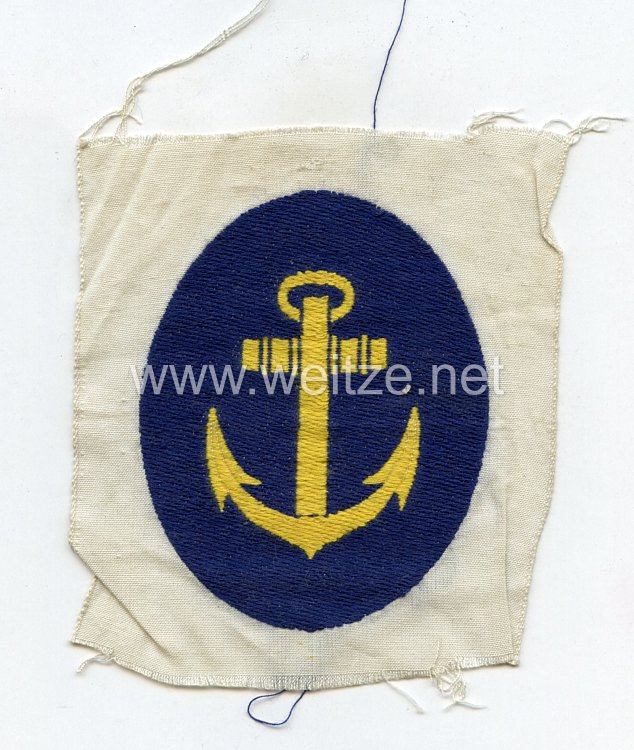
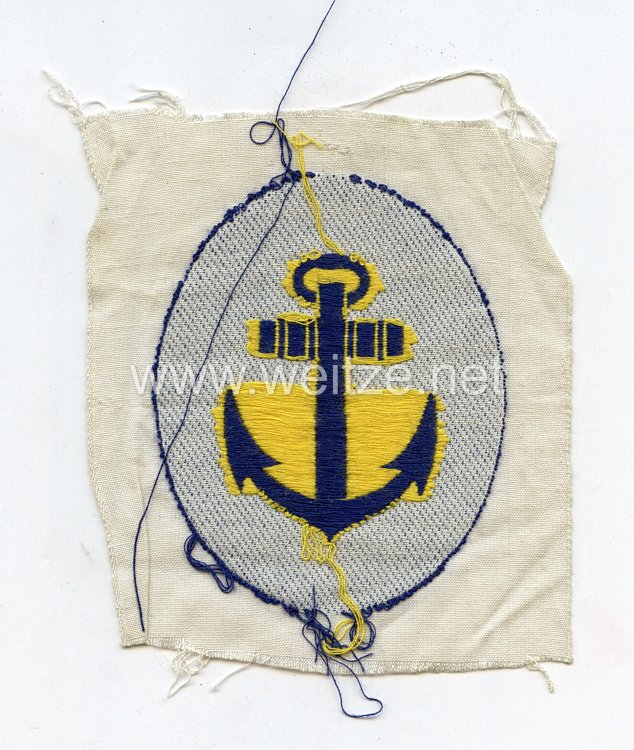
Kriegsmarine Sports Uniform Badge for Petty Officers

Woven construction. Unissued condition, condition grade 2.
436205
25,00

Kriegsmarine Sports Uniform Badge for Petty Officers

The Kriegsmarine Sport Suit Badge for Petty Officers represents a fascinating example of Third Reich military uniform regulations. This woven badge was specifically designed for the sports clothing of German Kriegsmarine petty officers and reflects the importance that Nazi Germany placed on physical fitness within its armed forces.

The Kriegsmarine, as the official designation of the German Navy from 1935 to 1945, emerged after the reintroduction of universal conscription and Germany's official departure from the Treaty of Versailles. Grand Admiral Erich Raeder and later Karl Dönitz commanded this service branch, which played a central role in both surface and submarine warfare during World War II.

The introduction of special sports badges for the Kriegsmarine occurred within the framework of comprehensive regulations governing service dress and insignia. The Dress Regulations for the Kriegsmarine (Anzugordnung or AO) detailed the wearing of various uniform items and badges. Specific regulations existed for sports uniforms, distinguishing between officers, petty officers, and enlisted ranks.

This badge in woven construction represents the typical manufacturing technique of the period. Woven badges were produced on special looms and were characterized by their durability and light weight. Unlike embroidered or metal versions, woven badges were particularly suitable for sports clothing as they were flexible and conformed to the wearer's movements.

The distinction between different ranks was of fundamental importance in the Kriegsmarine. Petty officers (Unteroffiziere) formed the backbone of the navy and included ranks from Maat to Oberbootsmann. They wore specific rank insignia and identifying marks that distinguished them from enlisted personnel and officers. The sports badge for petty officers differed in design and execution from those of other rank groups.

Physical fitness played a central role in all branches of the Wehrmacht. Regular sports and military physical exercises were an integral part of daily service life. The Kriegsmarine placed particular emphasis on swimming abilities, endurance, and strength, as the demands on crews of warships and submarines were especially high. The sports suit was worn during physical training, sporting events, and exercise sessions.

The production of such badges was carried out by specialized companies authorized by the Wehrmacht. The quality of execution varied depending on the manufacturer and production period. Early wartime productions often exhibited higher quality than later manufactures, where material shortages led to compromises.

The present specimen in unworn condition is of particular interest to collectors and historians. The preservation of such badges over more than eight decades required careful storage. Many textile badges from this period have not survived or show considerable damage from moths, moisture, or light exposure.

After the war ended in 1945, the Kriegsmarine was dissolved, and all its insignia and badges lost their official function. Control Council Law No. 34 of August 20, 1946, regulated the dissolution of the Wehrmacht and prohibited the public wearing of its uniforms and badges. Many uniform items and badges were destroyed, confiscated, or kept by former members as mementos.

In modern military historical research, such objects serve as important sources for understanding organizational structure, uniform regulations, and daily life in the Kriegsmarine. They document the detailed hierarchy and the significance of external markings in the military apparatus of Nazi Germany.

Collections of such military historical objects are housed today in museums such as the Military History Museum of the Bundeswehr in Dresden, the German Historical Museum in Berlin, and numerous maritime museums. They serve historical research and education, whereby the context of their creation and use must always be critically reflected upon.

The study of such insignia contributes to our understanding of how military organizations of the period maintained discipline, hierarchy, and identity through visual symbols. The sports badge, though seemingly minor compared to combat decorations, reflects the comprehensive system of military regulation that governed every aspect of service life in the Third Reich's armed forces.