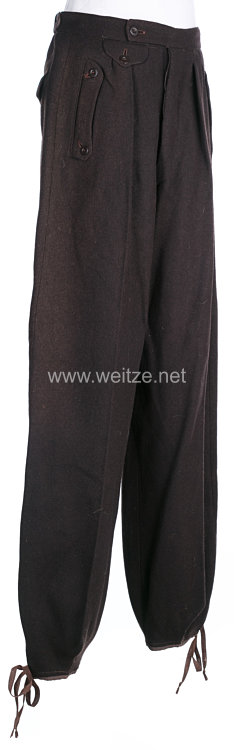
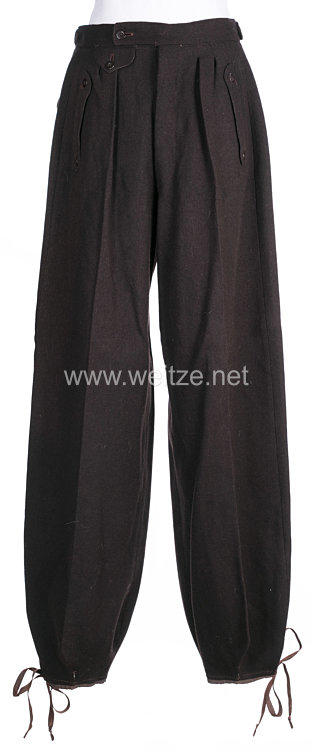
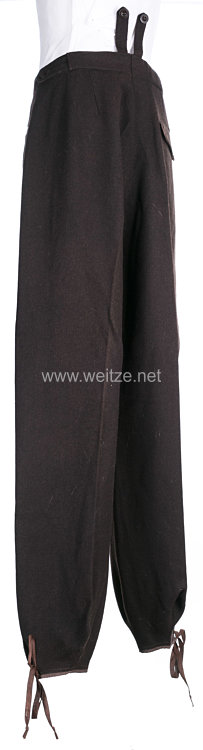
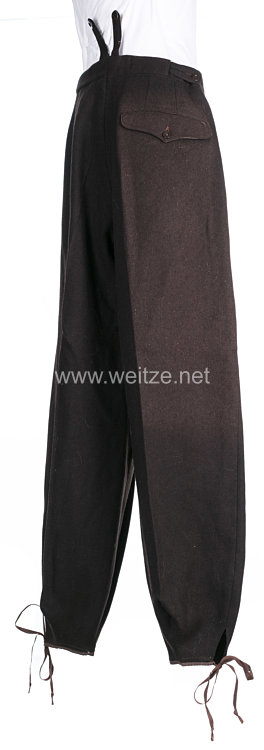
HJ Brown Long Ski Pants for Winter Uniform
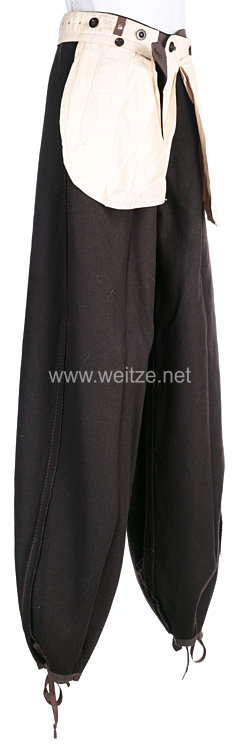
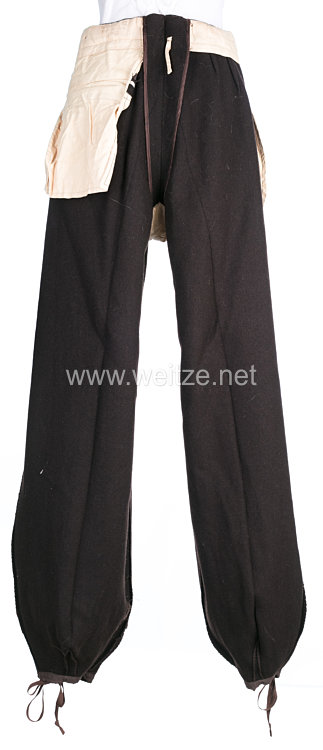
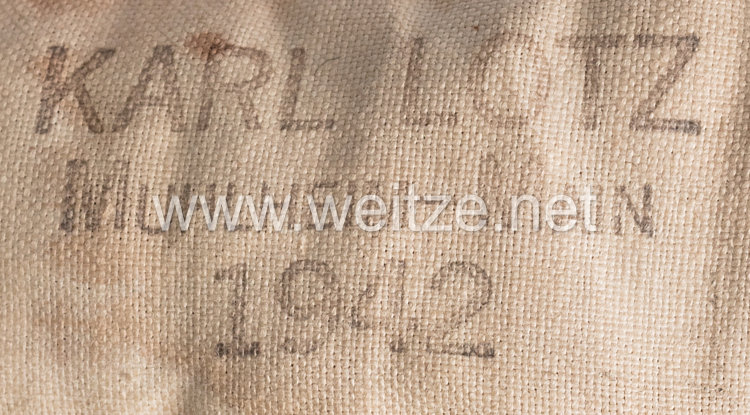
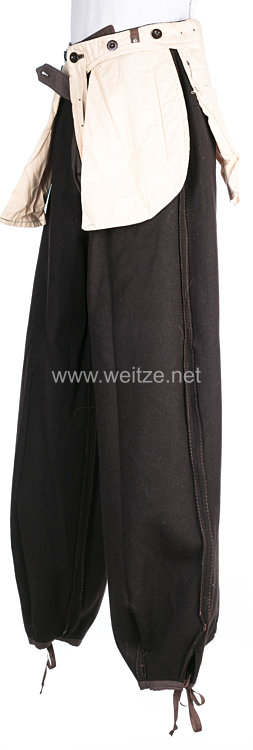
This brown ski pants of the Hitler Youth from 1942 represents an important aspect of the uniforming and equipment of the Nazi youth organization during World War II. Made from brown wool, this garment bears the manufacturer's stamp “Karl Lotz Mühlheim Main 1942” and documents both industrial production and the increasing militarization of German youth during this period.
The Hitler Youth (Hitlerjugend, HJ) was founded in 1926 and developed after 1933 into the state youth organization of the Third Reich. From December 1936, membership was effectively mandatory for all German youth. The organization comprised the HJ for boys aged 14 to 18 and the German Young People (Deutsches Jungvolk) for those aged 10 to 14. Uniforming played a central role in ideological education and was intended to convey camaraderie, discipline, and military virtues.
The winter uniform of the HJ became necessary as the organization conducted extensive outdoor activities, including cross-country marches, camping, and from 1939 increasingly pre-military training. Particularly during the winter months, the youth required suitable clothing for ski training and winter exercises. The brown color corresponded to the official coloring of NSDAP organizations and was meant to symbolize ideological solidarity.
The production by Karl Lotz in Mühlheim am Main in 1942 is of particular historical significance. At this time, Germany was in its third year of war, and resources were becoming increasingly scarce. The textile industry was heavily affected by raw material shortages, yet the equipment of the HJ had to be maintained, as the organization played an important role in the war economy and in preparing future soldiers. Mühlheim am Main was a significant industrial location in the Rhine-Main area, where various companies were involved in the production of uniforms and equipment.
The technical specifications of the ski pants - a waist circumference of 70 cm and a length of 106 cm - indicate manufacture for a youth or young adult. The use of brown wool as material was typical for this period, although the quality of wool increasingly varied as the war progressed. Wool provided necessary protection against cold and was suitable for winter sports activities, even though it became heavy when wet.
From 1942 onwards, the military orientation of the HJ intensified considerably. The youth were increasingly deployed in anti-aircraft auxiliary services (Flakhelfer), and pre-military training was systematized. Skiing and winter field exercises were part of this training, as they were considered important skills for combat deployment, especially on the Eastern Front. The Wehrmacht employed ski units in Scandinavia and on the Eastern Front, and the HJ was supposed to provide corresponding foundations.
The manufacturer identification by stamp was prescribed and enabled tracking of production as well as quality control. Such markings are today of great value to collectors and historians, as they prove the provenance and authenticity of objects. The stamp also documents the close interconnection between private industry and Nazi organizations during the war.
The condition of the object as “worn” is historically significant. This is not an unworn collector's item, but an actually used garment that was worn by a youth during the war years. This gives the object special documentary value, as it testifies to the lived reality of German youth during this period.
After the war ended in 1945, the Hitler Youth was dissolved and banned by the Allies. Uniforms and equipment were largely destroyed or repurposed. Surviving pieces such as these ski pants are therefore rare today and serve as material witnesses to a dark epoch of German history.
From today's perspective, such objects are important sources for researching National Socialism, youth education in the Third Reich, and everyday history during World War II. They remind us of the systematic indoctrination and militarization of an entire generation and warn us to remain vigilant against totalitarian ideologies.