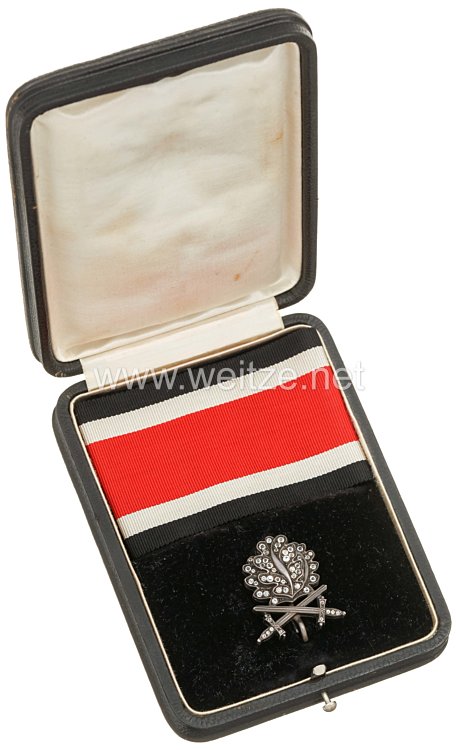
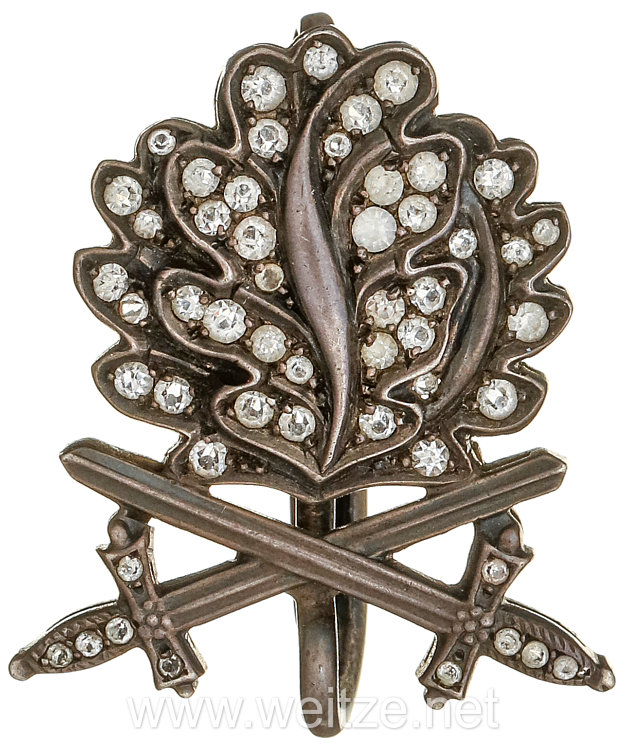
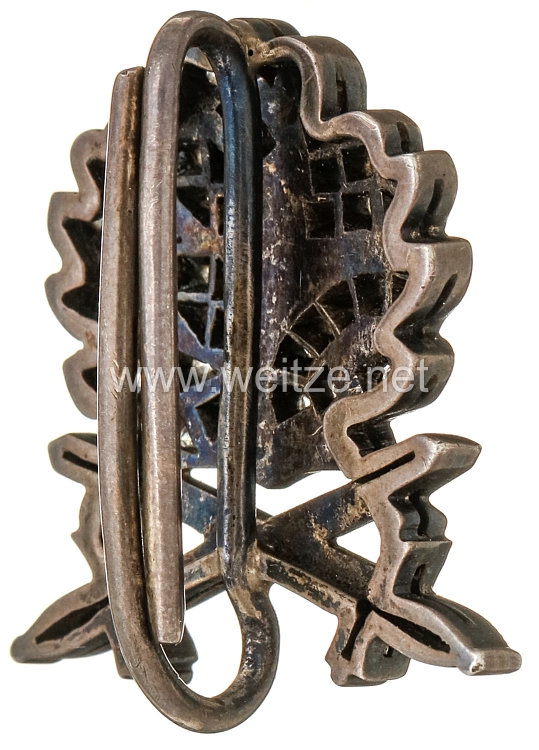
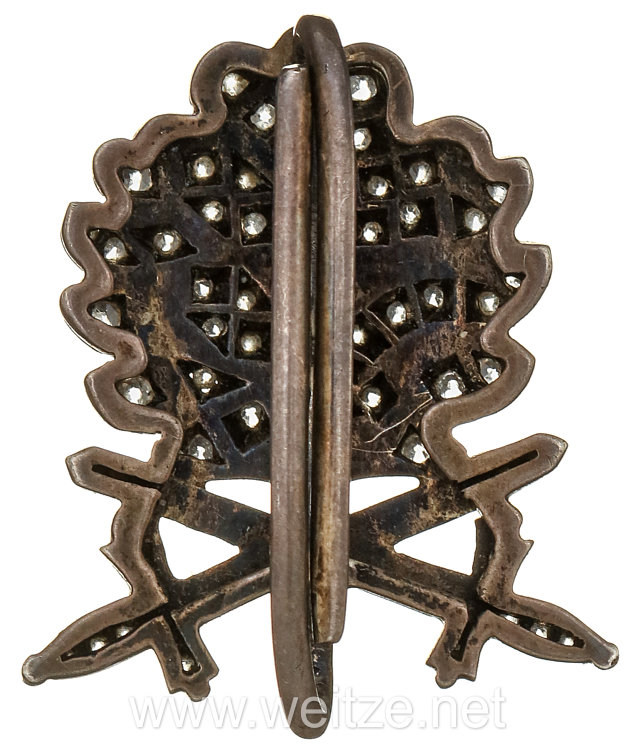
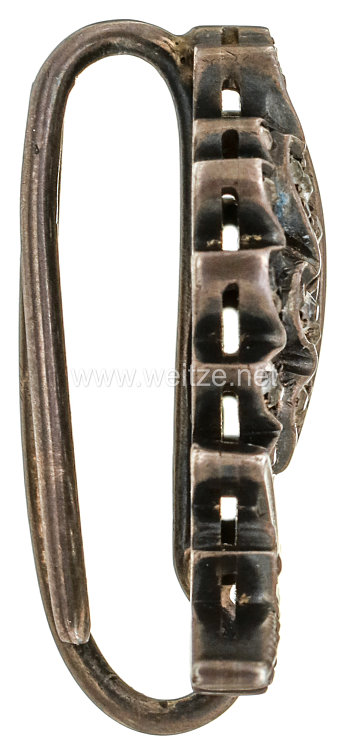
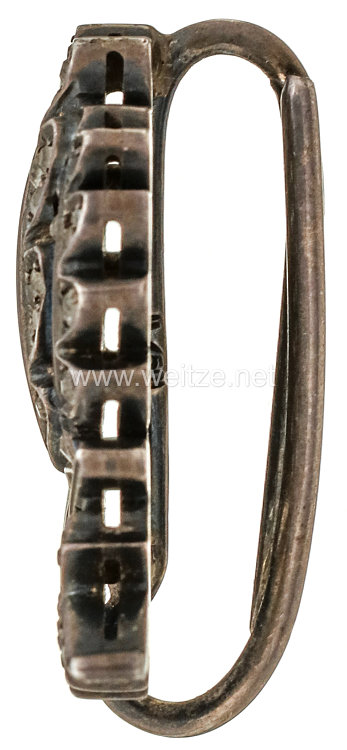
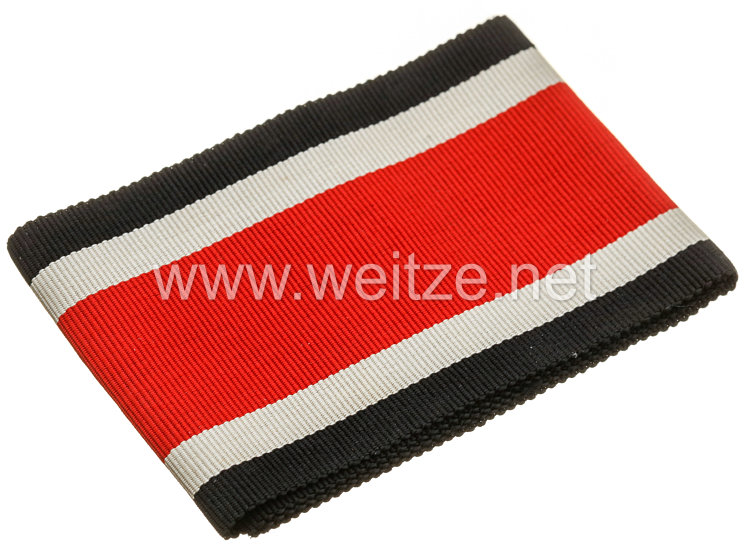
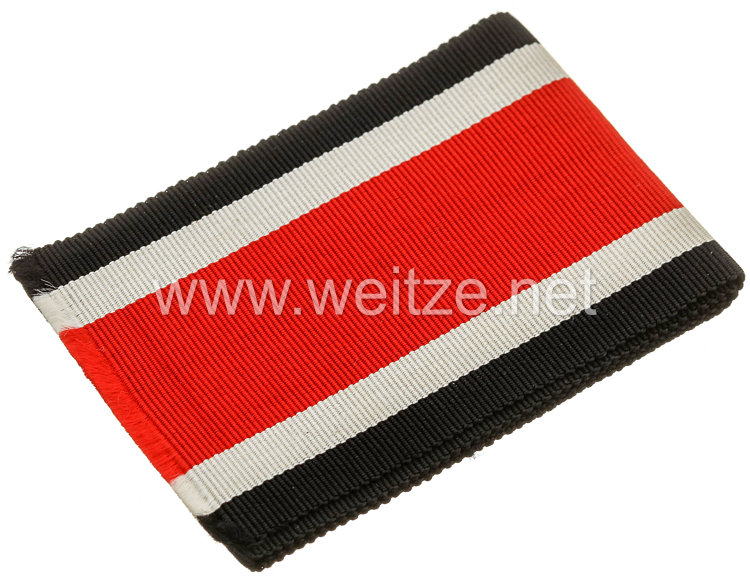
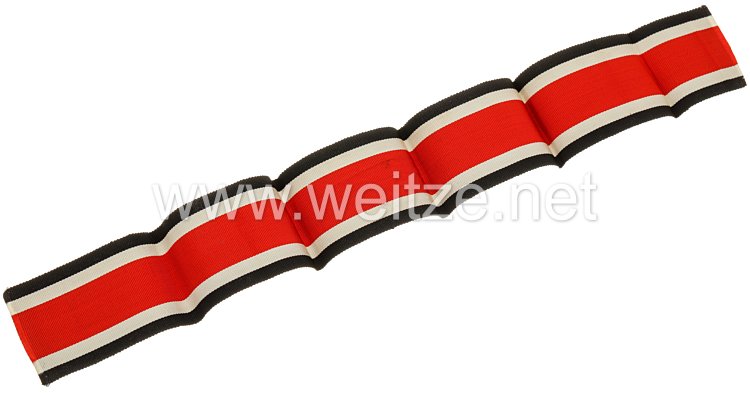
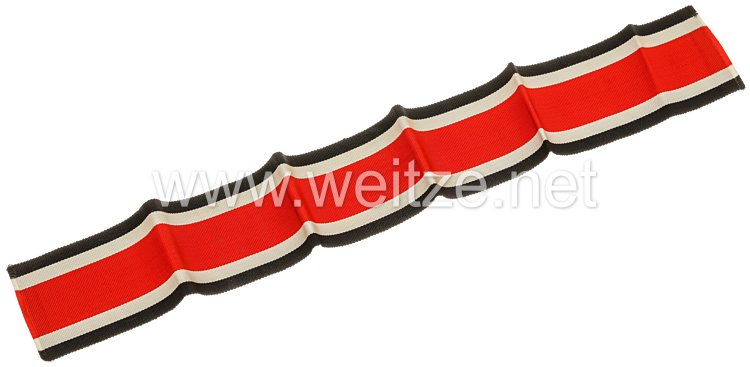
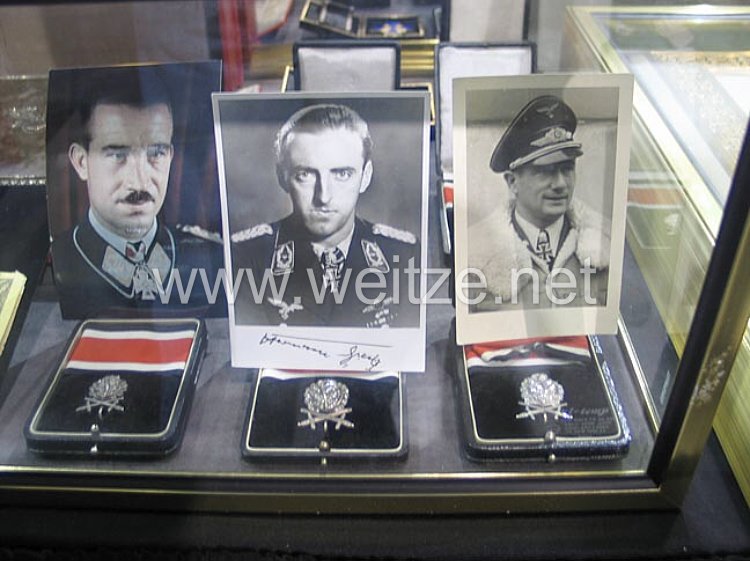
Eichenlaub mit Schwertern und Brillanten zum Ritterkreuz des Eisernen Kreuzes 1939 - 1. Modell aus dem Besitz von Adolf Galland
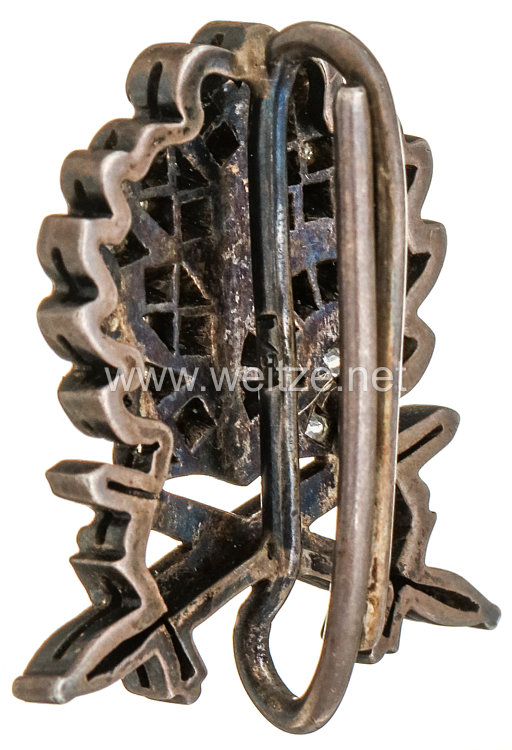
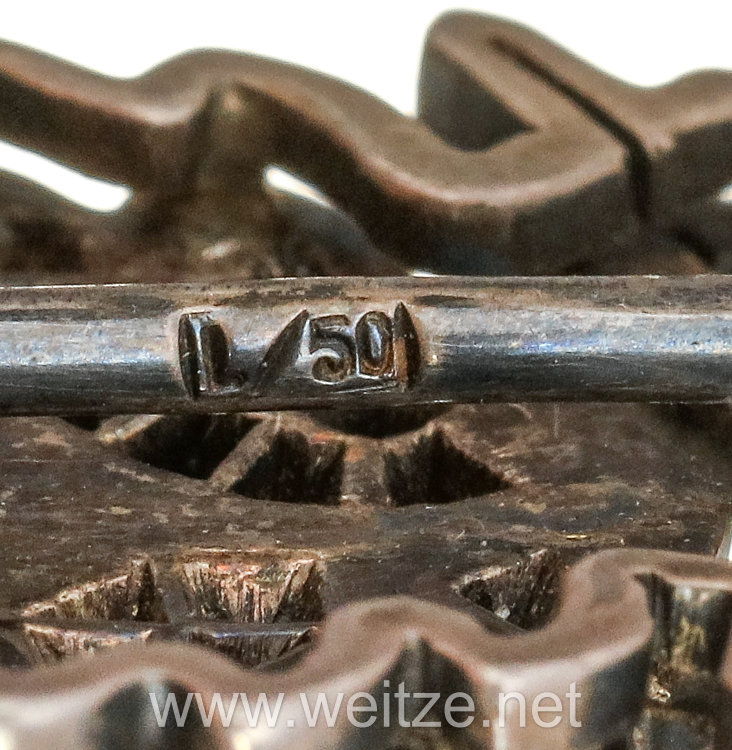
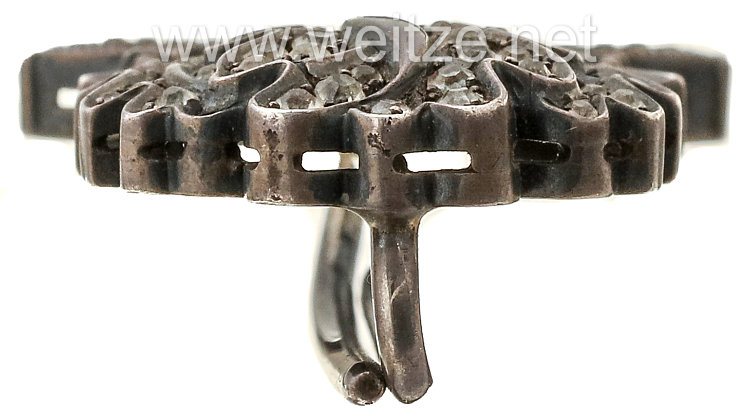
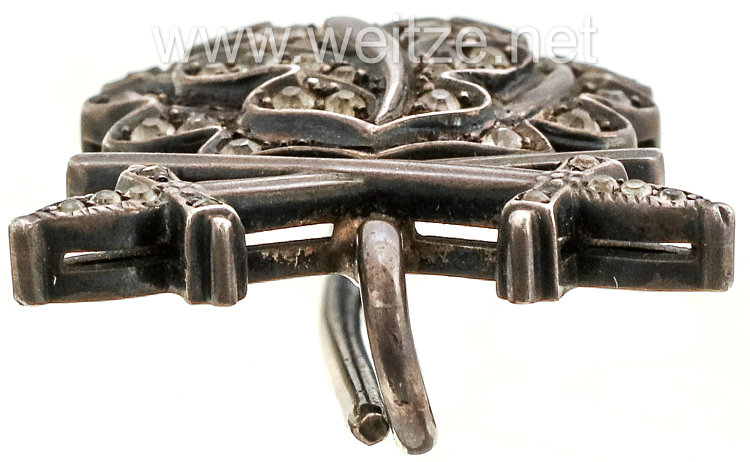
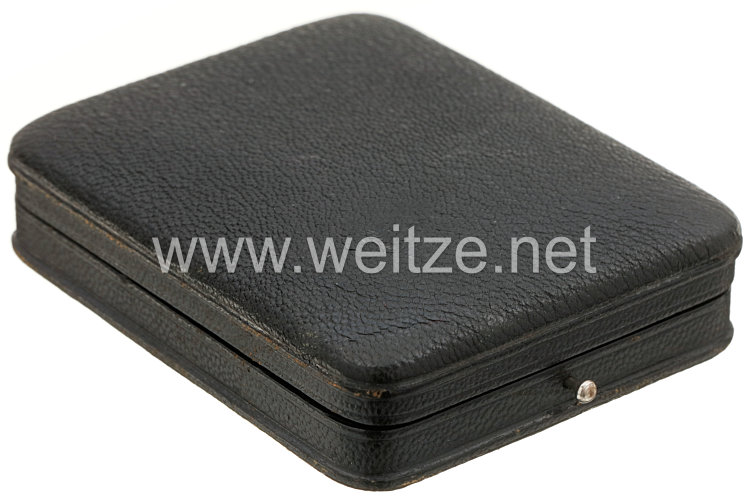
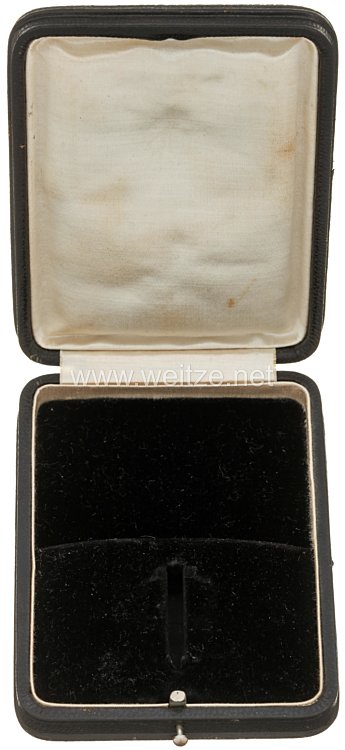
Es handelt sich hierbei um das 1. Modell, welches nur 4 Mal verliehen wurde an Werner Mölders, Adolf Galland, Gordon Gollob und Hermann Graf, gefertigt ab Juli 1941 von der Firma Gebrüder Godet & Co., Berlin . Das 1. Modell war in Silber geprägt auf den Werkzeugen für das Eichenlaub und Schwerter, mit 52 à jour gefassten Brillanten auf dem Eichenlaub und der Griffen und Parierstangen der Schwerter. Rückseitig wurde für die Verbesserung der Stabilität ein Außenrahmen aufgebracht, der, um den maximalen Lichteinfall zu gewährleisten, seitlich überwiegend geöffnet blieb. Der Halsbandring aus gezogenem Silberdraht ist unten verlängert und nach vorne gebogen, um dem anhängendem Ritterkreuz entsprechend Raum zu geben. Die Sprungringenden sind abgerundet. Breite des Eichenlaubs 20 mm, Gesamtbreite 24,3 mm, Gewicht 8,6 g. . Das Stück hat auf dem Sprungring seitlich die Stempelung "L/50". Komplett im passenden Verleihungsetui 1. Modell mit gewölbtem Deckel, schwarzer Lederbezug, Druckknopfverschluss und verdecktem Scharnier. Innen mit weißem Seidenfutter. Das schwarze Samtbett gewölbt mit maßgeschneiderten Ausschnitten für den Bandring und das einliegende Halsband , Länge 37 cm. Leicht getragen mit schöner Patina, in gutem Zustand.
Dieses Stück ist abgebildet im Fachbuch von Dietrich Maerz "Das Ritterkreuz des Eisernen Kreuzes, auf Seite 296 bis 298.
Ex-Sammlung Wolfe-Hardin, USA. Anbei ein Foto aus der alten Ausstellungsvitrine von Steven Wolfe und Neil Hardin, Long Beach, California.
Das identisch gefertigte Stück, welches am 22.11.1941 an Oberst Werner Mölders überreicht wurde, wurde bei der Fa. Hermann Historica versteigert. Aus den Memoiren von Adolf Galland geht hervor, dass Hermann Göring nicht zufrieden war mit der Größe und Qualität der ersten Ausführung dieser Brillantauszeichnung. Daher wurde sie überarbeitet und der zweite Typ entwickelt, der dann an alle weitere Brillantenträger bis zum Ende de Krieges verliehen wurde. Extrem selten, eines der ganz wenigen Originale.
Der Name Adolf Galland ist mit einer der großartigsten Karrieren der Luftkriegsgeschichte verbunden. Bereits in seiner Jugend ein begeisterter Segelflieger, trat Galland 1932 in die offiziell noch nicht bestehende neue deutsche Luftwaffe ein. 1933 nahm er an der geheimen Ausbildung in Italien teil, 1934 erfolgte die Beförderung zum Leutnant, nachdem ein Flugunfall seine Karriere schon beinahe beendet hatte. 1937 konnte Oberleutnant Galland in der "Legion Condor" im Spanischen Bürgerkrieg erste Erfahrungen in der Erdkampfunterstützung sowie als Staffelkapitän sammeln. Galland war mit seiner 3. /J.88 so erfolgreich, dass er 1939 mit dem Spanienkreuz mit Schwertern in Gold mit Brillanten ausgezeichnet wurde. Aufgrund seiner Jagdbombererfahrungen gleich zu Beginn des Polenfeldzuges als Staffelkapitän in der II./Lehrgeschwader 2 eingesetzt, flog Hauptmann Galland täglich bis zu vier Einsätze. Dafür erhielt bereits 1939 das Eiserne Kreuz 1. Klasse. Erst nach unzähligen Versetzungsgesuchen an das Oberkommando der Luftwaffe stimmte Göring dem Wechsel zu und ließ ihn als Geschwaderadjutanten in das Jagdgeschwader 27 versetzen. Während des Westfeldzuges am 12.05.40 gleich dreimal erfolgreich, erzielte Galland bis zur französischen Kapitulation 17 bestätigte Luftsiege, wofür er als einer der ersten Jagdflieger das Ritterkreuz zum Eisernen Kreuz erhielt. Am 6. Juni 1940 wurde Galland Kommandeur der III. Gruppe des Jagdgeschwaders 26 "Schlageter", am 22. August übernahm er als 28jähriger Major die Führung des bereits die Geschwaders. Am 24. September 1940 erhielt er für seinen 40. Luftsieg das Eichenlaub zum Ritterkreuz. Im Juni 1941 meldete er aber seinen 70. Luftsieg, der ihm als ersten Offizier die Verleihung der Schwerter zum Ritterkreuz mit Eichenlaub einbrachte, damals die höchste Tapferkeitsauszeichnung! Im Sommer schoss der Kommodore insgesamt 24 britische Gegner ab und wurde zum bereits fünften Mal im Wehrmachtsbericht erwähnt. Am 28. Januar 1942 erhielt Galland nach Mölders als zweiter Soldat die Brillanten zum Ritterkreuz mit Eichenlaub und Schwertern mit der Beförderung zum Oberst Als der Werner Mölders nur kurze Zeit später bei einem Flugunfall ums Leben kam, wurde Oberst Galland im Frühjahr 1942 als dessen Nachfolger zum General der Jagdflieger ernannt. Am 19. November 1942 Beförderung zum Generalmajor, dem jüngsten General der Wehrmacht. Am 11.04.44 wurde Adolf Galland für seine Leistungen als Kommandeur der Jagdfliegerkräfte zum Generalleutnant befördert. Ende Januar 1945 kam es nach „unüberwindlichen Differenzen“ zwischen Galland und Hermann Göring zu seiner Ablösung als General der Jagdflieger. Galland erhielt aber auf Drängen Hitlers den Befehl, den „Jagdverband 44“ aufzustellen, der mit Me 262 ausgerüstet werden sollte. Viele der erfolgreichsten deutschen Jagdflieger meldeten sich noch kurz vor der absehbaren Niederlage zu dieser Eliteeinheit. Galland wurden 104 feindliche Abschüsse anerkannt.
Adolf Galland starb am 9. Februar 1996 in Remagen-Oberwinter.
Dieses Stück ist abgebildet im Fachbuch von Dietrich Maerz "Das Ritterkreuz des Eisernen Kreuzes, auf Seite 296 bis 298.
Ex-Sammlung Wolfe-Hardin, USA. Anbei ein Foto aus der alten Ausstellungsvitrine von Steven Wolfe und Neil Hardin, Long Beach, California.
Das identisch gefertigte Stück, welches am 22.11.1941 an Oberst Werner Mölders überreicht wurde, wurde bei der Fa. Hermann Historica versteigert. Aus den Memoiren von Adolf Galland geht hervor, dass Hermann Göring nicht zufrieden war mit der Größe und Qualität der ersten Ausführung dieser Brillantauszeichnung. Daher wurde sie überarbeitet und der zweite Typ entwickelt, der dann an alle weitere Brillantenträger bis zum Ende de Krieges verliehen wurde. Extrem selten, eines der ganz wenigen Originale.
Der Name Adolf Galland ist mit einer der großartigsten Karrieren der Luftkriegsgeschichte verbunden. Bereits in seiner Jugend ein begeisterter Segelflieger, trat Galland 1932 in die offiziell noch nicht bestehende neue deutsche Luftwaffe ein. 1933 nahm er an der geheimen Ausbildung in Italien teil, 1934 erfolgte die Beförderung zum Leutnant, nachdem ein Flugunfall seine Karriere schon beinahe beendet hatte. 1937 konnte Oberleutnant Galland in der "Legion Condor" im Spanischen Bürgerkrieg erste Erfahrungen in der Erdkampfunterstützung sowie als Staffelkapitän sammeln. Galland war mit seiner 3. /J.88 so erfolgreich, dass er 1939 mit dem Spanienkreuz mit Schwertern in Gold mit Brillanten ausgezeichnet wurde. Aufgrund seiner Jagdbombererfahrungen gleich zu Beginn des Polenfeldzuges als Staffelkapitän in der II./Lehrgeschwader 2 eingesetzt, flog Hauptmann Galland täglich bis zu vier Einsätze. Dafür erhielt bereits 1939 das Eiserne Kreuz 1. Klasse. Erst nach unzähligen Versetzungsgesuchen an das Oberkommando der Luftwaffe stimmte Göring dem Wechsel zu und ließ ihn als Geschwaderadjutanten in das Jagdgeschwader 27 versetzen. Während des Westfeldzuges am 12.05.40 gleich dreimal erfolgreich, erzielte Galland bis zur französischen Kapitulation 17 bestätigte Luftsiege, wofür er als einer der ersten Jagdflieger das Ritterkreuz zum Eisernen Kreuz erhielt. Am 6. Juni 1940 wurde Galland Kommandeur der III. Gruppe des Jagdgeschwaders 26 "Schlageter", am 22. August übernahm er als 28jähriger Major die Führung des bereits die Geschwaders. Am 24. September 1940 erhielt er für seinen 40. Luftsieg das Eichenlaub zum Ritterkreuz. Im Juni 1941 meldete er aber seinen 70. Luftsieg, der ihm als ersten Offizier die Verleihung der Schwerter zum Ritterkreuz mit Eichenlaub einbrachte, damals die höchste Tapferkeitsauszeichnung! Im Sommer schoss der Kommodore insgesamt 24 britische Gegner ab und wurde zum bereits fünften Mal im Wehrmachtsbericht erwähnt. Am 28. Januar 1942 erhielt Galland nach Mölders als zweiter Soldat die Brillanten zum Ritterkreuz mit Eichenlaub und Schwertern mit der Beförderung zum Oberst Als der Werner Mölders nur kurze Zeit später bei einem Flugunfall ums Leben kam, wurde Oberst Galland im Frühjahr 1942 als dessen Nachfolger zum General der Jagdflieger ernannt. Am 19. November 1942 Beförderung zum Generalmajor, dem jüngsten General der Wehrmacht. Am 11.04.44 wurde Adolf Galland für seine Leistungen als Kommandeur der Jagdfliegerkräfte zum Generalleutnant befördert. Ende Januar 1945 kam es nach „unüberwindlichen Differenzen“ zwischen Galland und Hermann Göring zu seiner Ablösung als General der Jagdflieger. Galland erhielt aber auf Drängen Hitlers den Befehl, den „Jagdverband 44“ aufzustellen, der mit Me 262 ausgerüstet werden sollte. Viele der erfolgreichsten deutschen Jagdflieger meldeten sich noch kurz vor der absehbaren Niederlage zu dieser Eliteeinheit. Galland wurden 104 feindliche Abschüsse anerkannt.
Adolf Galland starb am 9. Februar 1996 in Remagen-Oberwinter.