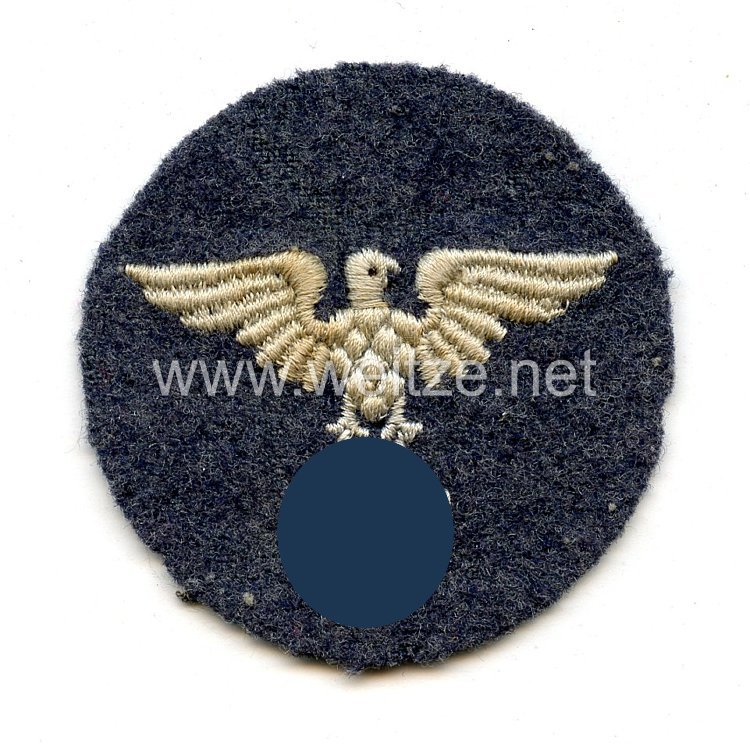
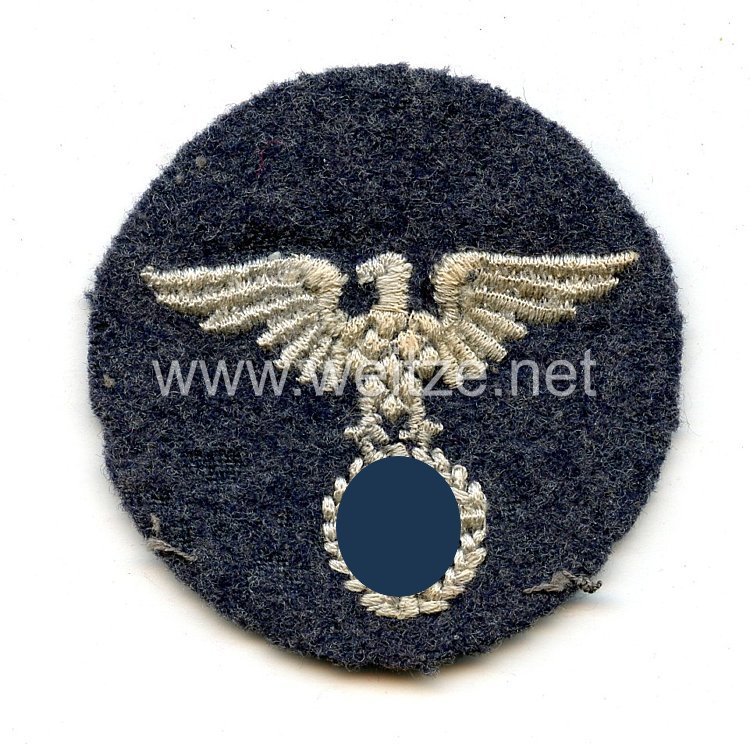
Deutscher Luftsportverband (DLV) Enlisted Ranks Sleeve Eagle
The sleeve eagle of the Deutscher Luftsportverband (DLV) for enlisted ranks represents a significant artifact of German aviation history during the interwar period. This insignia embodies a crucial phase in the development of German air forces between 1933 and 1935, when Germany operated under the restrictions of the Treaty of Versailles.
The German Air Sports Association (DLV) was established in March 1933 and served as a cover organization for the secret rearmament of the German air force. Officially presented as a civilian sports organization, the DLV actually fulfilled military training functions. Under the leadership of Hermann Göring, the association coordinated aviation training and created the personnel foundation for the later Luftwaffe, which was officially announced on March 1, 1935.
The present specimen shows the characteristic design for enlisted personnel, meaning non-commissioned officers and lower ranks. The eagle was manufactured on Luftwaffe cloth, indicating the close connection to the later air force. The use of LW cloth suggests that such badges were partly produced with the coming official Luftwaffe in mind, or that stocks were later transferred.
The design of the DLV eagle differed distinctly from later Luftwaffe insignia. The stylized eagle was typically depicted facing left and featured a simple, functional design. This enlisted version was usually manufactured through machine weaving or embroidery, in contrast to the more elaborate hand-embroidered versions for officers.
The historical context of these badges is closely linked to German rearmament policy of the early 1930s. The Treaty of Versailles of 1919 had prohibited Germany from any military aviation. The Weimar Republic partially circumvented these provisions through civilian flight schools and sports associations. With the Nazi seizure of power in 1933, this policy was systematized and intensified.
The DLV assumed control over all aviation activities in Germany and incorporated various existing aviation sports clubs. The organization operated flight schools, glider training programs, and theoretical instruction. Thousands of young men received their initial aviation training here, which was later continued in the Luftwaffe.
The wearing of the sleeve eagle was precisely regulated. It was worn on the left upper arm and identified membership in the DLV. The enlisted version was simpler than the officer versions and reflected the military hierarchy that was already established despite the civilian cover.
With the official founding of the Luftwaffe on March 1, 1935, the DLV's role as a cover organization ended. Many DLV members were directly transferred into the new Luftwaffe. DLV uniforms and insignia were replaced with official Luftwaffe uniforming. While the DLV continued to exist in a reduced form, it now focused on civilian air sports activities and preliminary training.
Collectible items like the present specimen are important historical documents today. They document the transitional phase between postwar restrictions and the construction of the new air force. The stated condition “lightly worn, condition 2-” indicates that this badge was actually used in service, which increases its historical value.
The authenticity of such pieces can be verified through various characteristics: the type of weaving or embroidery, the material used, the reverse side construction, and the overall quality of manufacture. Original DLV badges from the period typically show the manufacturing quality of the 1930s with natural signs of wear.
In military historical research, DLV insignia are considered important sources for understanding German rearmament policy. They illustrate how systematically Germany circumvented the Versailles provisions and built a covert military infrastructure years before official rearmament.
These artifacts serve as tangible reminders of a period when Germany deliberately blurred the lines between civilian and military aviation. The DLV badges represent not just organizational membership, but participation in a larger strategic deception that would have profound consequences for European history. For collectors and historians alike, they provide crucial insight into the methods and timeline of German rearmament in the 1930s.