Großkreuz des Eisernen Kreuzes 1939
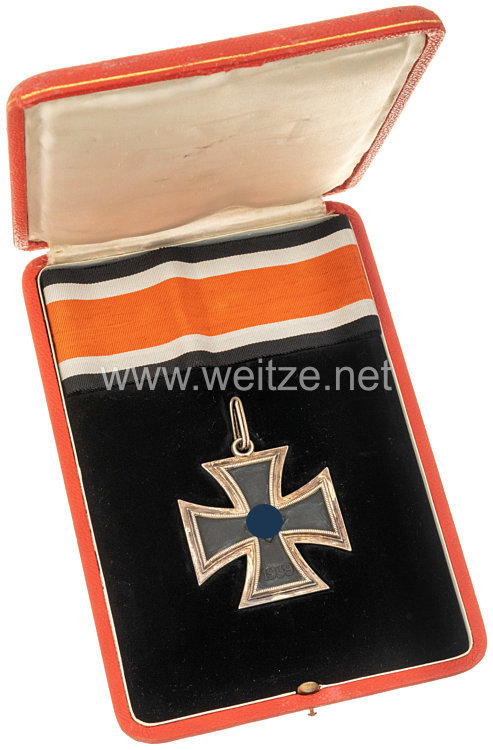
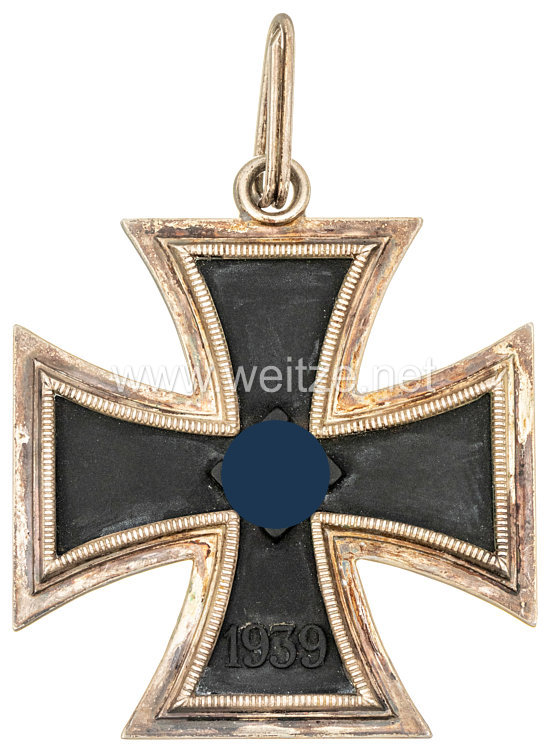
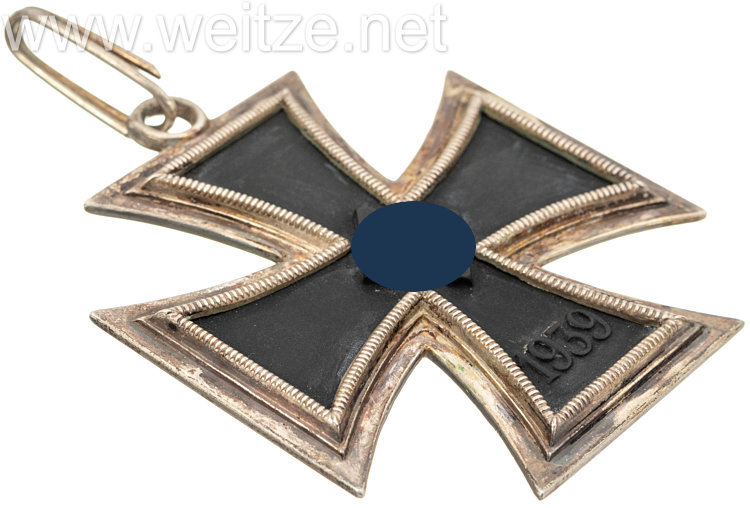
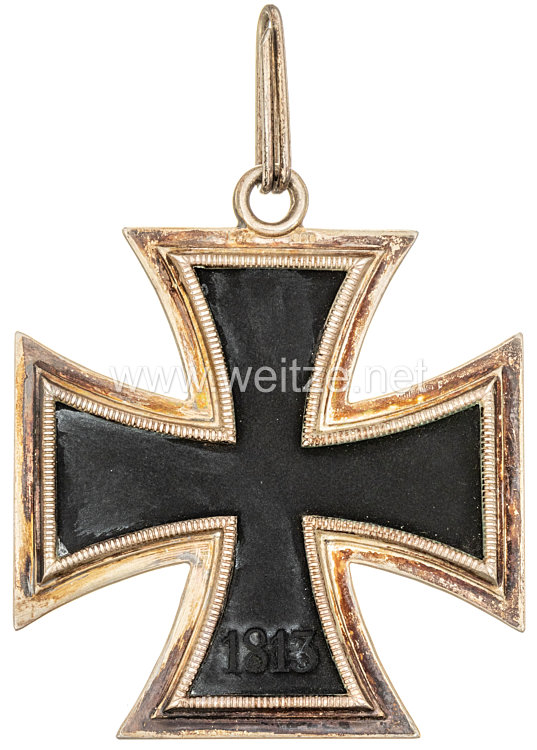
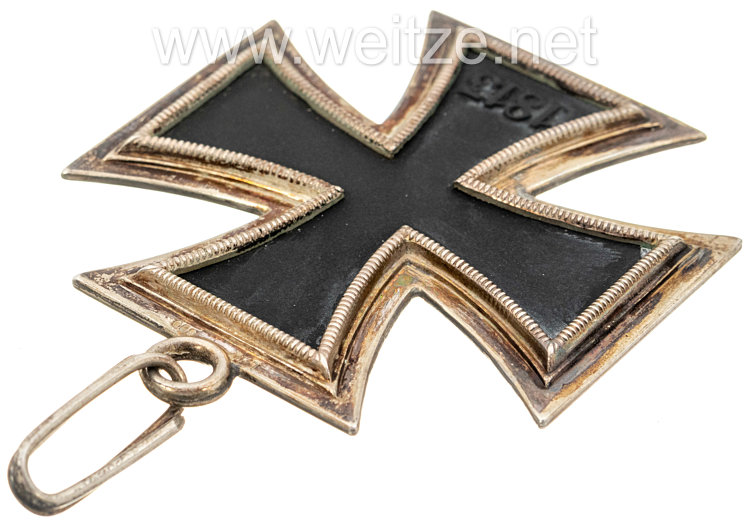
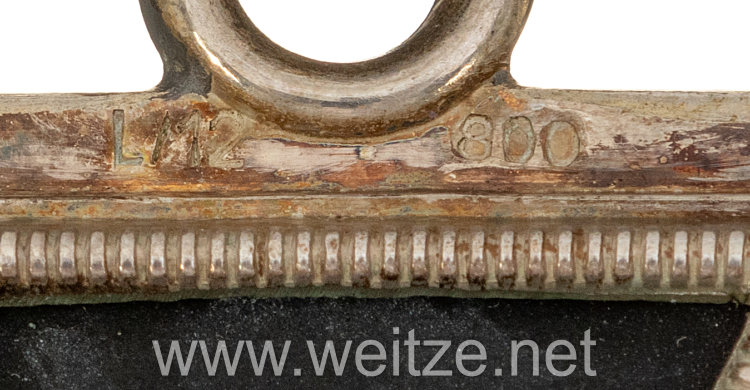
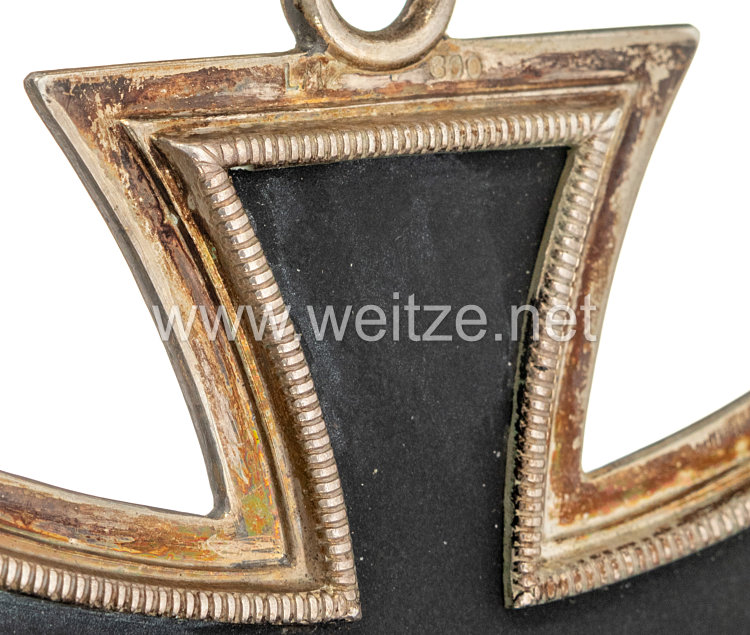
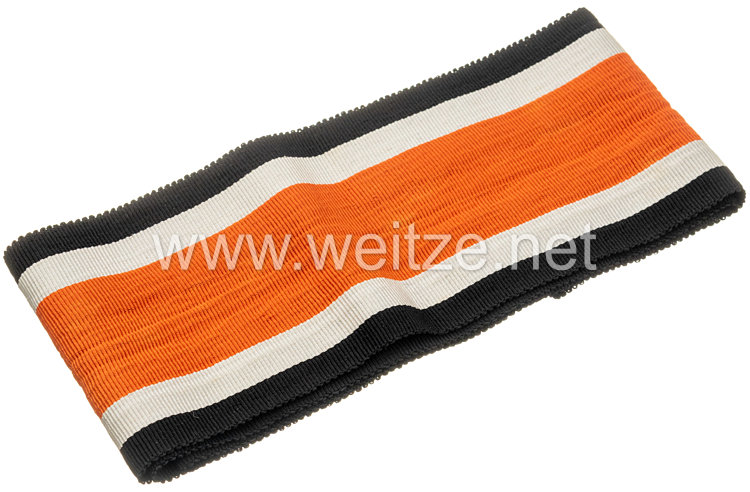
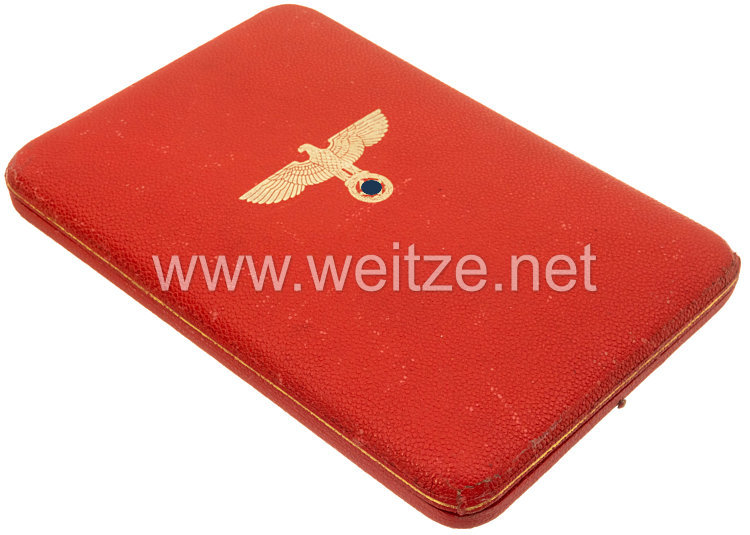
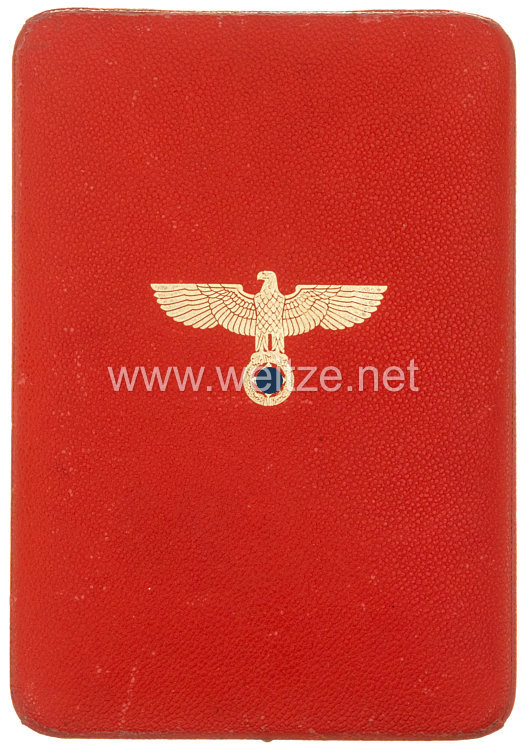
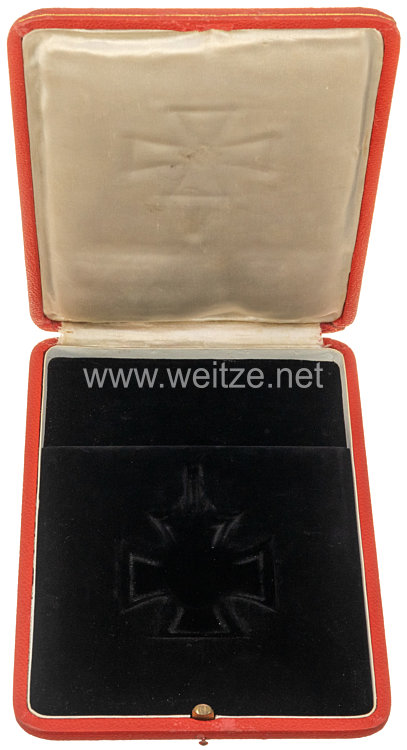
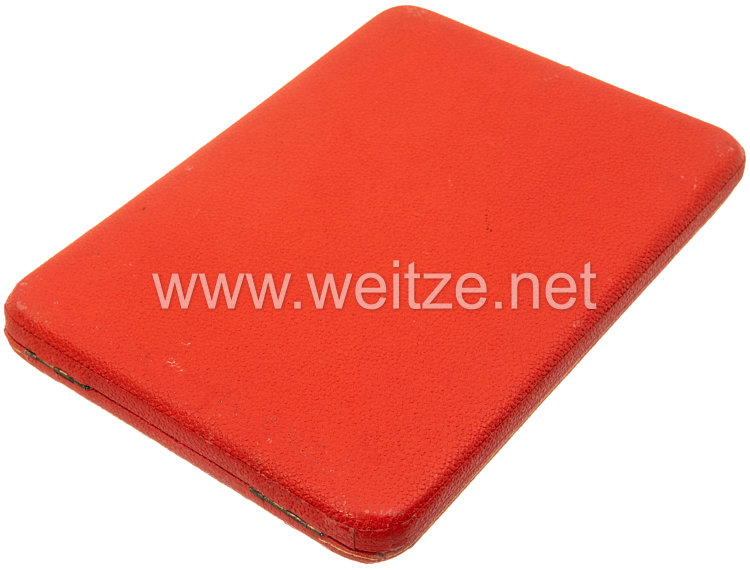
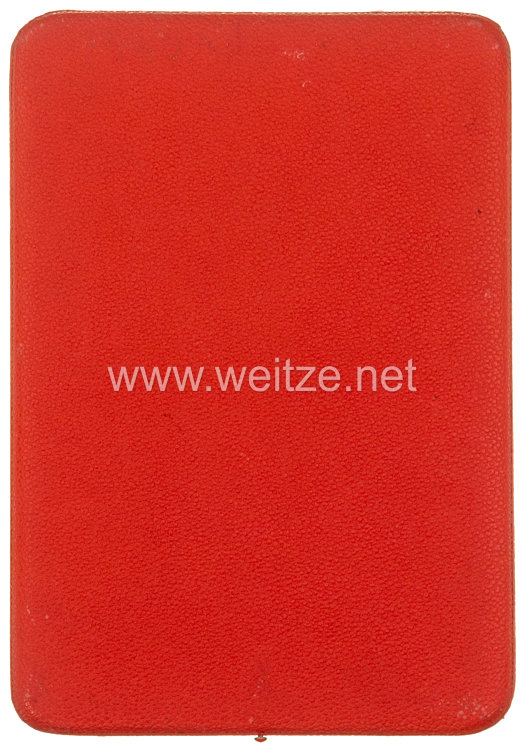
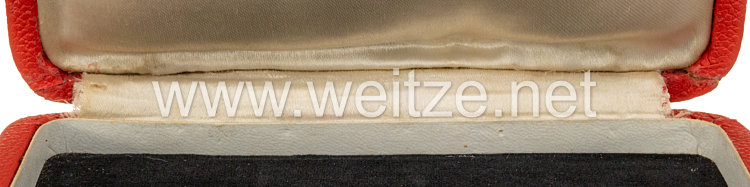
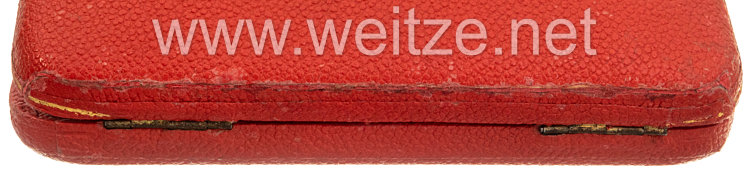
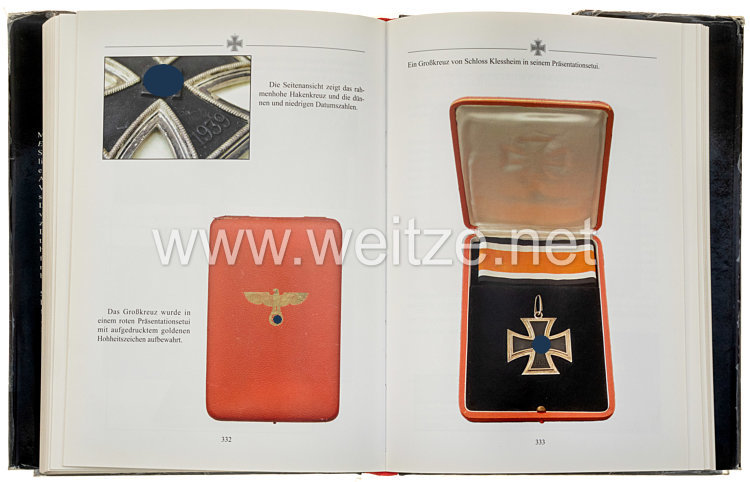
Es handelt sich bei dem Stück um die klassische Fertigung der Fa. C.E. Juncker, Berlin. Matt geschwärzter Eisenkern mit Silberzarge. Rückseitig gestempelt "L/12" sowie "800" Silber, der Bandring in der typischen Juncker-Fertigung, allerdings ungestempelt. Der Silberrahmen auf der Rückseite mit dem typischen minimalen punktartigen Prägefehler am oberen linken Ende des 12 Uhr Arms. Komplett mit dem original Halstrageband, Länge 72 cm. Das Großkreuz mit leichter Patina, Zustand 2+. In dem besonderen Verleihungsetui. Das Etui mit rotem Leder bezogen in der gleichen Farbe wie die Ritterkreuzmappen. Der etwas restaurierte Deckel mit Gold geprägtem Hoheitsadler. Der umlaufende Rand geprägt mit umlaufender Goldkante und einer parallel geprägten Zierrille auf der Unterseite. Vorn der Druckknopf in "Pilzform" rot lackiert, hinten 2 Scharniere, magnetisch. Innen mit weißem Seidenfutter und schwarzem Samtbett mit der Aussparung für das Großkreuz, sowie oben eine Aussparung für das Band zum Ritterkreuz. Maße des Etuis 21,5 x 15 cm, Höhe 22 mm.
Das Großkreuz gehörte zum Bestand der Ordenskanzlei und befand sich zu Kriegsende ausgelagert auf Schloss Kleßheim , dem Gästehaus des Führers in der Nähe von Salzburg. Im April 1945 wurde das Schloß von US Soldaten geplündert, das Stück war dann US-Kriegsbeute.
Das Großkreuz des Eisernen Kreuzes wurde an Hermann Göring am 19. Juli 1940 während der historischen Reichstagssitzung anlässlich des Sieges über Frankreich von Adolf Hitler mit folgenden Worten verliehen:
„Ich muß nun an die Spitze den Mann stellen, bei dem es mir schwer fällt, den genügenden Dank für die Verdienste zu finden, die seinen Namen mit der Bewegung, dem Staat und vor allem der deutschen Luftwaffe verbinden. Ich ernenne ihn daher zum Reichsmarschall des Großdeutschen Reiches und verleihe ihm das Großkreuz des Eisernen Kreuzes.“
Göring blieb im ganzen weiteren Verlauf des 2. Weltkrieges der einzige Inhaber des Großkreuzes. Allerdings waren für die Zeit nach dem "Endsieg" weitere Verleihungen an die großen Heeresführer geplant.
Die Großkreuze 1939 wurden ausschließlich von der Firma C.E. Juncker, Berlin gefertigt. Von diesen Stücken wurden mit Sicherheit mehrere Exemplare hergestellt. Wie viele sich im Besitz Hermann Görings befanden, ist nicht mehr bekannt. Weltweit sind keine 5 Stück mit Verleihungsetui bekannt , die alle aus dem Bestand der Ordenskanzlei in Schloß Kleßheim stammen.
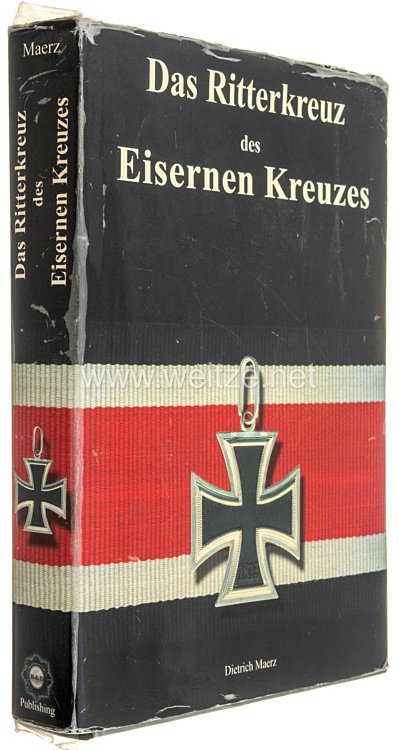
Ein vergleichbares Stück mit Etui ist abgebildet im Fachbuch von Dietrich Maerz "Das Ritterkreuz des Eisernen Kreuzes" auf Seite 326 - 333.
Das Großkreuz gehörte zum Bestand der Ordenskanzlei und befand sich zu Kriegsende ausgelagert auf Schloss Kleßheim , dem Gästehaus des Führers in der Nähe von Salzburg. Im April 1945 wurde das Schloß von US Soldaten geplündert, das Stück war dann US-Kriegsbeute.
Das Großkreuz des Eisernen Kreuzes wurde an Hermann Göring am 19. Juli 1940 während der historischen Reichstagssitzung anlässlich des Sieges über Frankreich von Adolf Hitler mit folgenden Worten verliehen:
„Ich muß nun an die Spitze den Mann stellen, bei dem es mir schwer fällt, den genügenden Dank für die Verdienste zu finden, die seinen Namen mit der Bewegung, dem Staat und vor allem der deutschen Luftwaffe verbinden. Ich ernenne ihn daher zum Reichsmarschall des Großdeutschen Reiches und verleihe ihm das Großkreuz des Eisernen Kreuzes.“
Göring blieb im ganzen weiteren Verlauf des 2. Weltkrieges der einzige Inhaber des Großkreuzes. Allerdings waren für die Zeit nach dem "Endsieg" weitere Verleihungen an die großen Heeresführer geplant.
Die Großkreuze 1939 wurden ausschließlich von der Firma C.E. Juncker, Berlin gefertigt. Von diesen Stücken wurden mit Sicherheit mehrere Exemplare hergestellt. Wie viele sich im Besitz Hermann Görings befanden, ist nicht mehr bekannt. Weltweit sind keine 5 Stück mit Verleihungsetui bekannt , die alle aus dem Bestand der Ordenskanzlei in Schloß Kleßheim stammen.
Ein vergleichbares Stück mit Etui ist abgebildet im Fachbuch von Dietrich Maerz "Das Ritterkreuz des Eisernen Kreuzes" auf Seite 326 - 333.