Luftwaffe Single Collar Tab Blank for Generalfeldmarschall Hermann Göring
This unfinished collar tab blank represents an extraordinary historical artifact from the history of the Luftwaffe in the Third Reich. This incomplete piece of a uniform for the highest military rank illustrates the elaborate manufacturing processes and the special importance attached to uniform design in the National Socialist military hierarchy.
Hermann Göring, who held the rank of Generalfeldmarschall (Field Marshal) of the Luftwaffe from 1935 and was promoted to the unique rank of Reichsmarschall in 1940, was known for his predilection for ostentatious uniforms and insignia. As Commander-in-Chief of the Luftwaffe and one of the most powerful men in the Nazi regime, he commissioned numerous custom-made and individual uniform pieces that reflected his status and vanity.
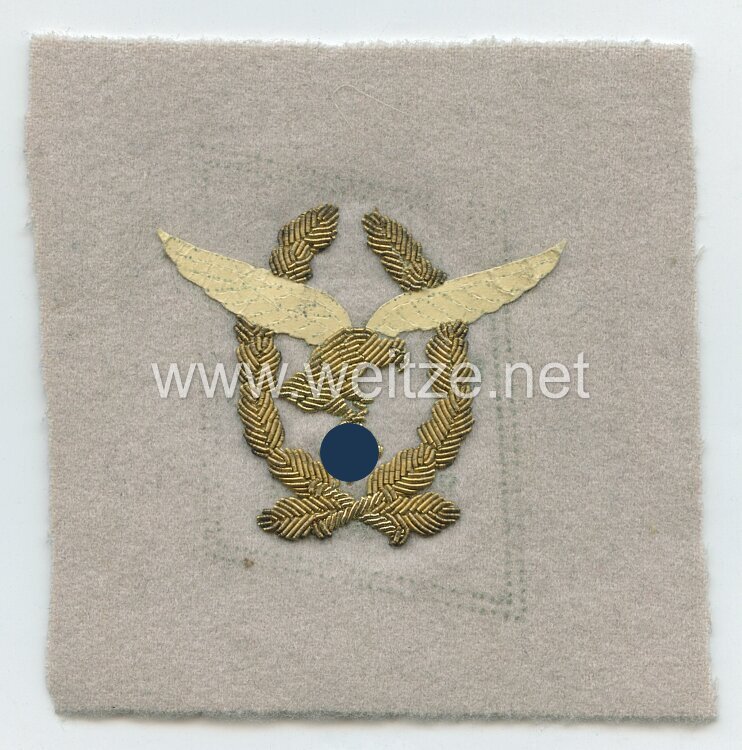
The collar tabs (Kragenspiegel) of the Luftwaffe were central identifying features for rank and service branch. This example shows the characteristic Luftwaffe eagle of the first model with hanging tail feathers, as used in the early phase of the Luftwaffe from approximately 1935 to 1939. The dating to around 1938 corresponds to a phase of intensive rearmament and expansion of German air forces.
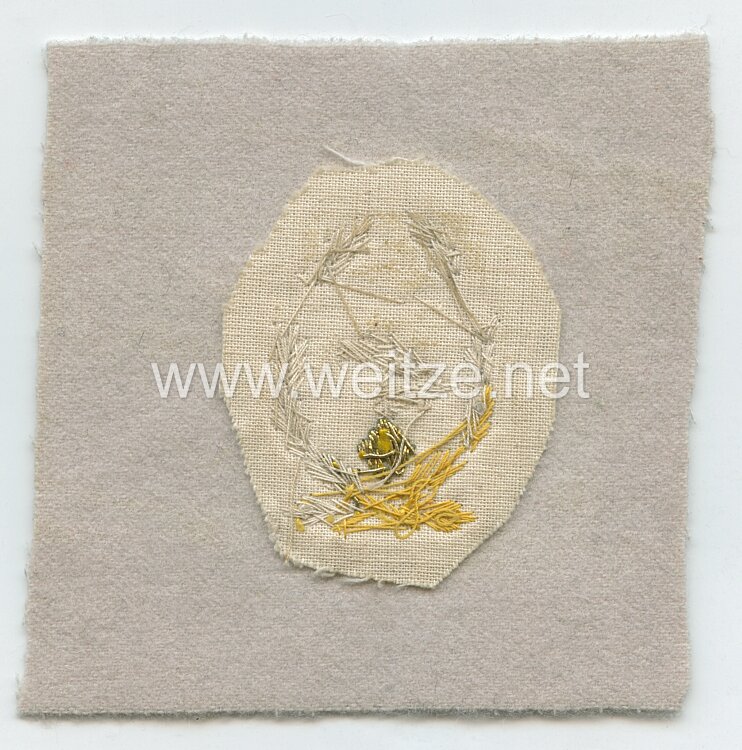
The manufacturing technique is remarkable: the eagle was executed in hand-embroidered metal thread in gold on light gray cloth. This elaborate handwork was reserved for the highest officer ranks. The fact that the wings were not yet fully embroidered gives us a rare insight into the multi-stage manufacturing process of such prestige objects. Specialized craft businesses, often traditional passementerie workshops, produced these pieces with meticulous attention to detail.
The first model of the Luftwaffe eagle differed from the later second model primarily in the form of the tail feathers and wing position. The hanging tail feathers were characteristic of the early years of the Luftwaffe and were later replaced by a more stylized form. This development reflects the general tendency toward simplification and standardization of uniform production that became increasingly necessary with the beginning of the war in 1939.
For a Generalfeldmarschall like Göring, special uniform regulations applied that differed considerably from those of lower ranks. The use of genuine gold thread, the quality of the cloth, and the artistic execution of the embroidery were privileges that emphasized exclusive status. Collar tabs were worn in pairs, with the right and left sides often designed as mirror images.
The unfinished state of this piece raises interesting questions. Possibly the commission was not completed because Göring's ideas changed, which would not have been unusual given his known capriciousness. Similarly, a change in uniform regulations or the transition to the second eagle model could have led to this blank not being completed.
From a collection-historical perspective, such blanks are of particular value as they document manufacturing techniques and have survived much more rarely than finished uniform pieces. They provide insights into workshop practices and the technical skills of craftsmen of the time. The conservation of such textiles requires special care, as the metal threads and carrier material react differently to environmental influences.
The historical significance of this object lies not only in its connection to one of the most controversial figures of World War II, but also in its function as material testimony to the military culture of the Nazi regime. The elaborate design of military insignia served to visualize hierarchies and stage power. Göring, who used his uniforms as a means of self-representation, embodied these aspects to a particular degree.
For military historical research and collectors, such objects represent important primary sources that provide information about production methods, material use, and the symbolic significance of military rank insignia. They are part of the material heritage of a dark epoch in German history and require critical and contextualizing examination.
The light gray cloth, typical for Luftwaffe uniforms, and the gold embroidery work exemplify the high standards of craftsmanship maintained even in the production of military regalia. The incomplete nature of this piece allows modern observers to appreciate the complexity and skill required to create these elaborate insignia, which combined artistic expression with strict adherence to military regulations and symbolism.